The Oldest NBA Player Ever: Records, Longevity, and the Science of Survival in the Modern League
The Oldest NBA Player Ever: Records, Longevity, and the Science of Survival in the Modern League
The NBA is a league defined by youth, athleticism, and explosive movement, yet within its hyper-competitive ecosystem, a select group of athletes has defied the odds to extend their careers well into their late 30s and beyond. The record for the oldest player to ever appear in an NBA game is held by Nat Hickey, a relic of a different era who suited up at 45 years old during the 1947-48 season. This article examines the landscape of veteran longevity, highlighting the current benchmarks set by players like LeBron James and Vince Carter, while exploring the physiological, strategic, and commercial factors that allow certain stars to transcend the typical career arc.
The modern era of NBA longevity is defined by two distinct benchmarks: the official record for the oldest participant in a game and the unofficial standard of sustained excellence held by the league's megastars. While the official record belongs to a generation that played under vastly different rules, the contemporary conversation centers on active players who are rewriting the narrative of what an athletic career can look like. The physical toll of the sport makes these achievements remarkable, turning the longevity of a player like LeBron James into a subject of scientific and media fascination.
The Historical Benchmark: Nat Hickey and the Pre-Modern Era
To understand the current landscape, one must first look back at the absolute record. On March 12, 1948, the Providence Steamrollers hosted the St. Louis Bombers in what remains the most extreme example of NBA longevity. Player-coach Nat Hickey, born in 1902, activated himself for the game after his team was hit with a rash of injuries. At 45 years and 363 days old, Hickey became the oldest player to ever suit up for an NBA game.
While Hickey’s appearance was largely a product of circumstance—a pragmatic solution to an injury crisis—his story highlights a fundamental shift in the game.
- The Physical Regimen: Hickey played in an era where the pace of the game was slower, and the athletic demands were significantly less intense than today.
- The Rulebook: The strategies and rules of the 1940s did not emphasize the speed, verticality, and endless switching that characterize the modern NBA.
- The Market: The NBA was still in its infancy as a major commercial enterprise, and the concept of a "superteam" or maximum-salary veteran was non-existent.
Hickey’s record is a historical footnote, but it serves as a ceiling against which modern players are measured. It represents a time when the game was more about survival and opportunism than about peak athletic performance over a two-decade span.
The Active Standard Bearers: LeBron James and the Ageless Giant
In the 21st century, the title of "oldest player" is defined by consistency and sustained greatness rather than a single, desperate appearance. The unofficial record for the oldest player to start an NBA game is widely attributed to LeBron James. On January 3, 2023, at the age of 38 years and 239 days, James started for the Los Angeles Lakers against the Phoenix Suns. While this did not break the official record, it redefined the conversation around longevity by showcasing a player operating at an elite competitive level, not just filling a roster spot.
LeBron’s durability is the result of a multi-faceted approach to the game.
- Training Regimen: His commitment to fitness, recovery, and body maintenance is arguably more rigorous than that of any player in his 20s.
- Game Management: He has mastered the art of load management, preserving his energy over a grueling 82-game season.
- Basketball IQ: His understanding of the game allows him to influence plays without relying solely on athletic explosiveness.
"He takes care of his body like it's a business asset, and it's the best investment he's ever made," said one unnamed Western Conference coach in a 2022 interview, highlighting the professional approach required to maintain such longevity.
The Archetype of the Modern Veteran: Vince Carter and the Ageless Wonder
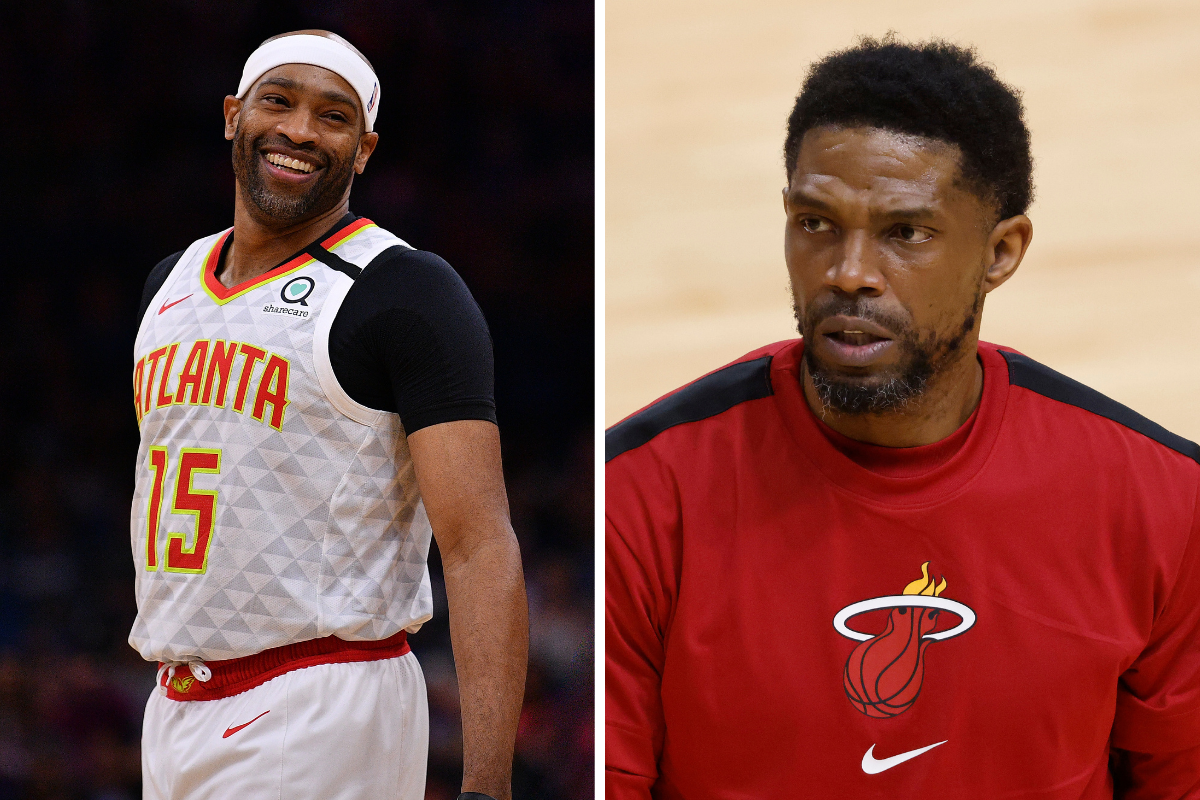
If LeBron represents the peak of sustained excellence, Vince Carter represents the archetype of the high-flying, air-blasting veteran who refused to retire. Carter’s NBA career spanned an incredible 22 seasons, concluding in the 2020-21 campaign. At 43 years old during his final season with the Atlanta Hawks, he became the oldest player in the league, a fact he embraced with the same enthusiasm that defined his Hall of Fame career.
Carter’s longevity was a masterclass in adaptation.
- Evolution of Skill: He transitioned from a high-flying scoring guard to a veteran facilitator and locker-room leader.
- Physical Adaptation: He reduced his explosive athleticism to conserve energy while maintaining his iconic hang time and defensive intensity.
- Cultural Impact: He became a beloved figure across the league, respected by players and fans alike for his resilience and passion.
Carter often spoke about the mental aspect of playing beyond one's physical prime. "Your mind is your greatest asset," he reflected in a 2018 interview. "When your body starts to slow down, you have to rely on your experience and your anticipation of the game."
The Science of Longevity: What Keeps the Engine Running?
The ability to play at the highest level into one’s late 30s is no accident. It is the result of advances in sports science, nutrition, and recovery that were unavailable to previous generations. Modern players have access to a toolkit that allows them to monitor and manage their bodies with unprecedented precision.
Key factors contributing to extended careers include:
1. **Advanced Sports Medicine:** Techniques like Platelet-Rich Plasma (PRP) therapy and sophisticated physical therapy protocols allow players to recover from injuries that would have ended careers a generation ago.
2. **Data Analytics:** Teams use biomechanical data to adjust a player's movement, reducing stress on joints and muscles. This "load management" is critical for preventing burnout and injury.
3. **Nutritional Science:** Diets are highly customized to optimize energy levels, recovery, and longevity, moving beyond simple caloric intake to focus on cellular health and inflammation reduction.
These advances have created a new paradigm where a 37-year-old can be viewed not as a spent force, but as a seasoned veteran in their prime.
The Strategic Shift: Embracing the Grind
The NBA’s business strategy has also evolved to capitalize on veteran presence. The league has become a global marketplace, and marquee veterans like LeBron James and Chris Paul are international brands who drive viewership and merchandising sales. Teams are often willing to build their rosters around a single aging superstar because the return on investment—in terms of ticket sales, media rights, and championships—is so high.
This strategic shift is evident in roster construction:
- **The "Superteam" Phenomenon:** Veterans often seek out contenders, leveraging their experience to help win championships, which extends their relevance and contract value.
- **The Mentorship Role:** Older players are increasingly valued for their leadership and ability to accelerate the development of younger talent.
- **The Financial Incentive:** Maximum contracts are now awarded to players who can prove they can perform at an elite level well into their mid-30s.
The "oldest player" narrative is no longer just about survival; it is a component of a team's brand and a testament to the player's enduring marketability.
Related Post
The Oldest NBA Player Ever: A Legend's Legacy
Timeless Titans: The Oldest NBA Players Dominating The Hardwood In 2024
Who Is The Oldest Nba Player Right Now: Veteran Stars Dominating The 2024-25 Court
The Ageless NBA: How the League's Oldest Players Defy Time and Redefine Longevity