The Pinkerton Detective Agency: How America's First Private Spy Network Became the Shadow Guardians of Industry
The Pinkerton Detective Agency: How America's First Private Spy Network Became the Shadow Guardians of Industry
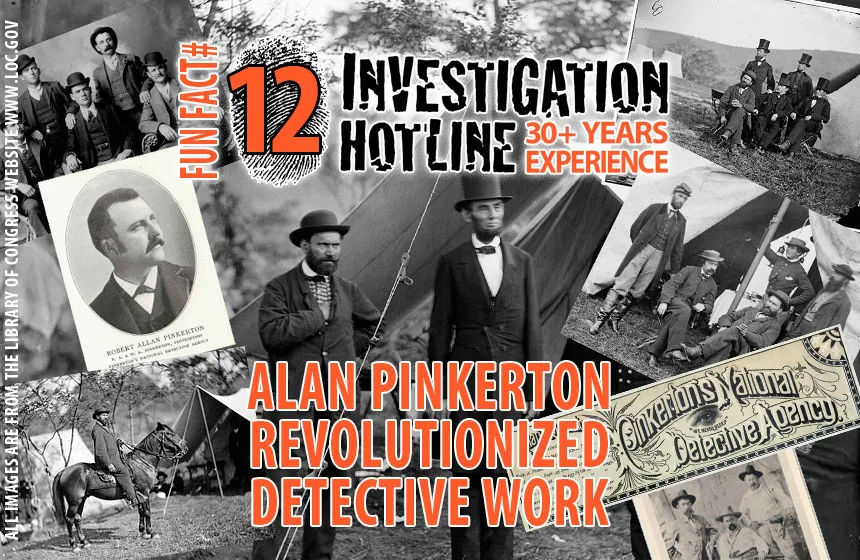
The Pinkerton Detective Agency, founded in the 1850s, evolved from a modest Chicago detective office into the largest private law enforcement apparatus in the world. For more than a century, the agency provided industrialists, railroads, and eventually the U.S. government with intelligence, security, and investigative services that often blurred the line between protection and provocation. This is the story of how a single firm shaped the modern landscape of corporate security, labor relations, and federal policing.
When Allan Pinkerton fled a burglary in Glasgow in 1842 and landed in America, he carried little more than a cooper’s trade and a keen eye for observation. He soon opened a barrel-making shop in Chicago, where his skills at tracking counterfeiters led to a sideline in detective work. By 1850, Pinkerton had founded a formal agency, billing himself as "an agent of the law" who operated for private clients but possessed the powers of a public officer.
The agency’s rise coincided with the violent birth of American industrialization. Railroads were pushing west, factories were humming, and workers were organizing. In this environment, capitalists saw not employees but threats, and Pinkerton’s men became the private army that would infiltrate unions, chase thieves, and guard armaments. The agency’s official motto, "We Never Sleep," signaled a new era of permanent, commercial vigilance.
As railroads became the nation’s first great corporations, they faced a new enemy: outlaws. Trains carried cash, gold, and goods across vast, sparsely populated terrain, creating a moving target for robbers. Pinkerton agents, riding shotgun and investigating leads, positioned themselves as the only reliable shield against these raids. The agency built a network of informants along the tracks, established the first detailed files on known criminals, and developed techniques for tracing fugitives across state lines.
In one of its earliest and most famous cases, Pinkerton traced a series of train robberies to a gang operating in the Midwest. Agents followed a trail of pawn tickets, witness descriptions, and suspicious sightings to identify and apprehend the culprits, proving that private investigators could operate with the efficiency and reach traditionally reserved for public police. This success established the template for modern corporate investigations, turning Pinkerton into the de facto security arm of the railroad industry.
The agency’s methods were systematic. Pinkerton agents collected photographs, biographies, and character references, creating an early criminal database that would become the envy of law enforcement. They used coded communications, undercover operatives, and meticulous record-keeping to track suspects. When a crime occurred, teams were deployed immediately, often arriving before local authorities. The result was a level of responsiveness that many municipal departments could not match.
The very tactics that made Pinkerton indispensable in protecting property also made it a lightning rod for controversy. As unions grew in the late nineteenth century, industrialists turned to Pinkerton to break strikes, gather intelligence on labor leaders, and physically confront picketers. The agency did not merely guard factories; it gathered dossiers on organizers, infiltrated meetings, and supplied information that often led to blacklists and firings. To labor leaders, Pinkerton was not a protector but a weapon of management.
The agency’s involvement in the 1892 Homestead Strike illustrates this role with stark clarity. When workers at the Carnegie Steel plant in Homestead, Pennsylvania, went on strike over wage cuts, the company hired Pinkerton agents to protect the property and intimidate the strikers. The confrontation turned bloody when a skirmish on the riverbank left several dead and dozens injured. The event cemented Pinkerton’s image in the public mind as the hired fist of corporate America, a symbol of the imbalance of power between labor and capital.
In response to public outrage and political pressure, states began to pass laws restricting the use of private police and limiting the powers of detectives. Pinkerton navigated this new landscape by rebranding. The agency diversified its services, offering executive protection, fraud investigations, and background checks for private clients. It also expanded into the burgeoning field of industrial security, designing safety programs and loss-prevention systems for corporations that wanted to reduce theft and accidents without relying solely on armed guards.
During the early twentieth century, Pinkerton’s influence extended into the federal government. When the United States entered World War I, the agency provided counterintelligence services, surveilling suspected enemy agents and monitoring labor activity for signs of subversion. It offered its files and expertise to the Department of Justice and the military, effectively acting as an extension of the state. This period marked a turning point, as the line between private detective and government contractor began to blur.
The agency’s reach also touched the emerging field of corporate due diligence. Pinkerton conducted in-depth background checks on employees, suppliers, and business partners, helping companies manage risk in an increasingly complex marketplace. These investigations ranged from verifying the credentials of executives to uncovering fraud in procurement processes. The model of the third-party audit, now standard in corporate governance, has its roots in this era of commercial suspicion and accountability.
In the decades that followed, Pinkerton adapted to new threats, from corporate espionage and intellectual property theft to cybersecurity and data protection. The agency’s modern clients include technology firms, pharmaceutical companies, and financial institutions, all of whom face sophisticated adversaries. While the tools have changed—from wiretaps to digital forensics—the core mission remains the same: to gather intelligence and manage risk in a volatile environment.
Today, the name Pinkerton evokes a long history of controversy and capability. The agency’s logo, a lone eye watching over a pyramid, remains one of the most recognizable symbols in private security. It represents not just vigilance but the complex legacy of a company that helped define the relationship between business, law, and civil society. Pinkerton did more than solve crimes; it helped construct the architecture of modern corporate protection and government surveillance.
For historians and security professionals alike, Pinkerton serves as both a model and a warning. Its innovations in investigation and intelligence gathering set standards that endure, while its excesses during the labor wars remind us of the dangers when security is placed above rights. The agency’s journey from cooper’s shop to global security contractor reflects the evolving priorities of American capitalism, revealing how the protection of property has often been intertwined with the control of people.
The story of Pinkerton is ultimately the story of America’s own struggle to balance order and freedom, capital and labor, private interests and public trust. The agency never slept, and in its wake, it left a transformed world—one where private security is a powerful industry and the work of detection is both a profession and a profound moral question.
Related Post
The Legendary Pinkerton Detective Agency: Unpacking the History and Mystery of America's Toughest Private Eyes