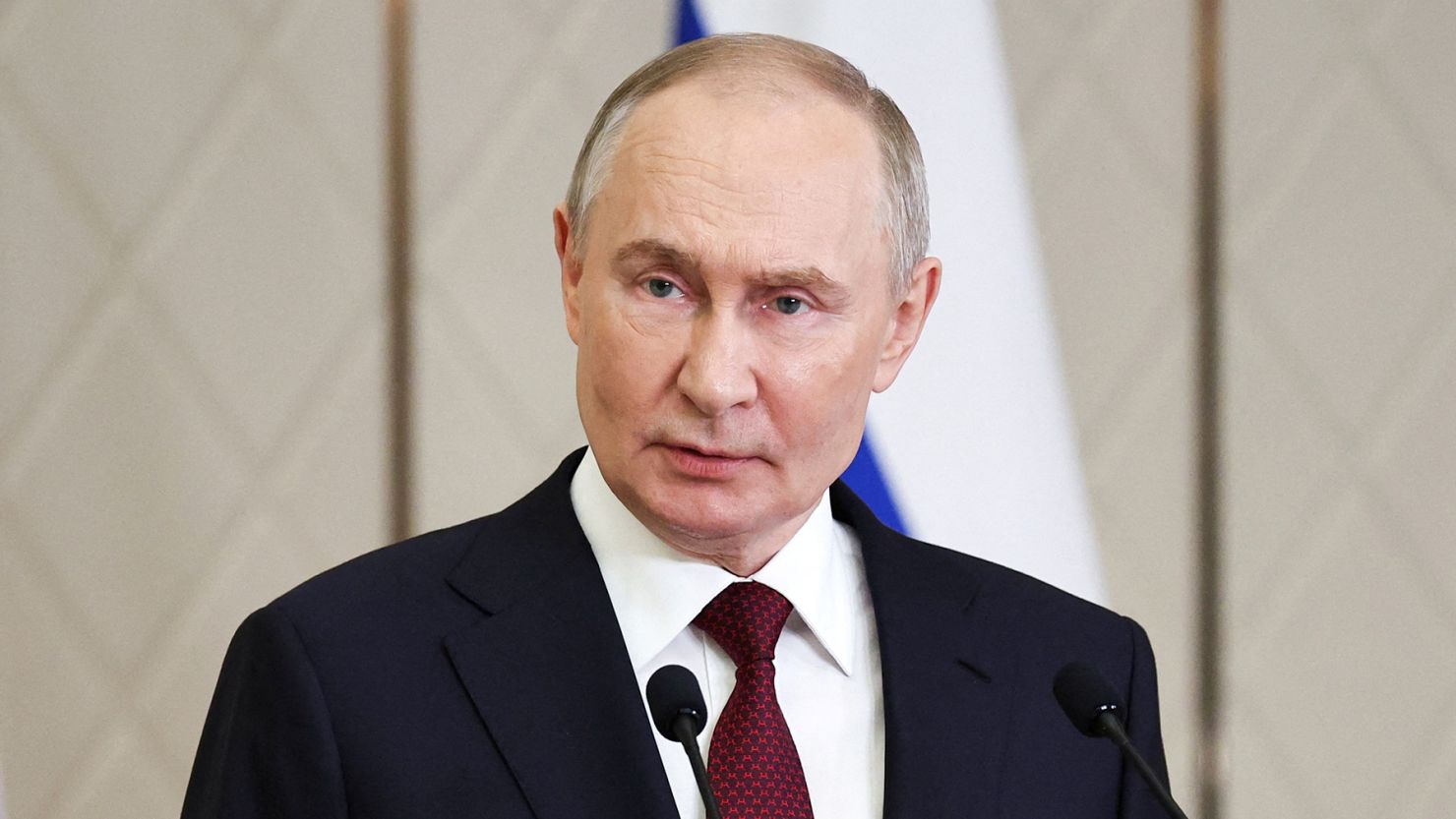
The Putin Net Worth Mystery: How Much Wealth Does The Russian Leader Really Possess?
The Putin Net Worth Mystery: How Much Wealth Does The Russian Leader Really Possess?
Determining the exact net worth of Vladimir Putin remains one of the most challenging exercises in modern financial intelligence. Public estimates range from modest official declarations to multi-billion dollar projections derived from leaked documents and investigative journalism. This article examines the various methodologies, sources, and controversies surrounding attempts to calculate the Putin net worth, separating verifiable data from informed speculation.
The Official Narrative: Documented Declared Wealth
According to official documents filed with the Russian government and publicly released, Vladimir Putin’s declared net worth is remarkably modest for a man who has held supreme political power for over two decades. Russian law requires public officials to declare their income, expenses, and property holdings, and Putin has consistently submitted these declarations.
- Salary: As President, Putin earns an annual salary of approximately 16.5 million rubles (roughly $200,000 USD), a figure publicly available in the federal budget.
- Official Property: The declarations indicate that Putin and his immediate family reside in a modest apartment in Moscow and use a state-provided residence in the Moscow suburb of Novo-Ogarovo.
- Vehicle Fleet: Official records list standard government-provided vehicles for security and transportation purposes, not luxury automobiles.
- Financial Assets: Declared bank accounts, including savings and investment holdings, are reported to be in the range of tens of thousands of dollars, not billions.
Putin has frequently pointed to these official declarations as evidence of his personal financial transparency. In response to persistent questions about his wealth, his press secretaries have often cited these documents, suggesting that his actual assets align with these public records. The implication is that his standard of living is consistent with his official salary and pension.
The Leaks Revolution: Pandora and the Panama Papers
The primary source of the alternative narratives regarding Putin’s net worth comes from massive data leaks that exposed the hidden financial activities of the global elite. Two significant breaches, the Panama Papers in 2016 and the Pandora Papers in 2021, revealed a complex web of offshore entities and shell companies that, while not always directly proving Putin’s ownership, strongly suggest a vast hidden fortune.
These documents did not typically show a bank account directly in Putin’s name holding billions of dollars. Instead, they exposed a sophisticated network where wealth is allegedly held through a constellation of trusts, companies, and nominees—individuals who act as legal owners on paper while the true beneficial owner remains hidden. Investigative journalists have connected these structures to people extremely close to Putin, often referred to as his "inner circle" or "siloviki."
Key Examples from the Leaks
The Pandora Papers, for instance, revealed a network of offshore companies linked to a childhood friend from the KGB, Vladimir Kozhin. These companies were shown to have significant transactions involving luxury real estate and art investments. While Kozhin has denied holding assets for Putin, the paper trail illustrates the mechanisms through which wealth can be diverted and concealed.
Furthermore, the investigative outlet iStories, in collaboration with international partners, published detailed analyses suggesting that Putin and his family control a portfolio of high-value assets. This portfolio includes:
- Stakes in major Russian energy companies, effectively giving him control over a significant portion of the nation's hydrocarbon wealth.
- Luxury real estate both within Russia, such as palatial residences in the Black Sea resort of Sochi, and internationally, including properties in Europe.
- A vast collection of fine art, watches, and rare wines, stored in secure facilities and frequently referenced in investigations as a form of wealth storage.
Methodologies and the Range of Estimates
Estimating Putin’s net worth is not a simple process of checking a single document. It requires aggregating data from leaked records, analyzing the Russian economy, and making inferences based on the scale of state projects and personal privileges. Different organizations and analysts use varying methodologies, leading to a wide range of figures.
Common Estimation Methods
Financial analysts and investigative journalists employ several primary methods to arrive at their estimates:
- Document Analysis: This involves combing through leaked financial documents, court records, and property registries to identify assets traceable to Putin and his close associates.
- Economic Inference: This method looks at the scale of corruption and "disappearing" state funds. Organizations like Transparency International estimate that billions in Russian state funds are siphoned off annually by elite officials. A portion of these funds are presumed to flow directly to Putin.
- Lifestyle Audit: This involves analyzing the visible trappings of wealth—yachts, private jets, palaces, and security details—and calculating the operational and acquisition costs of maintaining such a lifestyle, then comparing it to his declared income.
Using these methods, the estimates vary dramatically. While the official stance suggests a net worth in the low millions, external estimates offer a stark contrast:
- Low Estimates: Some analysts who strictly adhere to verifiable asset data, excluding speculative offshore holdings, place the net worth in the range of $200 million to $400 million.
- Medium Estimates: More common investigative reports, particularly those relying heavily on the Pandora and Panama Papers, suggest a net worth between $70 billion and $200 billion at various points, potentially making him one of the richest individuals in the world.
- High Estimates: A few outlier analyses have proposed figures exceeding $300 billion, though these are generally considered less reliable and often based on aggregating state wealth with personal holdings, a controversial methodological choice.
The Strategic Use of Wealth
Regardless of the exact figure, the alleged scale of Putin’s hidden wealth points to a system where political power and financial enrichment are deeply intertwined. The accumulation of vast personal wealth serves multiple strategic purposes for the Kremlin leader.
First, it acts as a powerful incentive and control mechanism for the oligarchs and security services who form the bedrock of his support. By allowing them to amass fortunes, provided they remain loyal and carry out the state's bidding, Putin ensures their complicity. His own vast wealth is the ultimate assurance of this system.
Second, the wealth is a tool for geopolitical influence. Through opaque investment vehicles and state-backed entities, Russian capital can be deployed to gain influence in foreign countries, from energy markets to political parties, without official attribution. Alleged ownership of luxury assets abroad also serves as a symbol of personal success and impunity on the global stage.
The Unanswerable Question and Its Implications
Ultimately, the true extent of Vladimir Putin’s net worth may never be definitively proven or disproven. The very nature of the alleged wealth—hidden in shell companies, held by proxies, and obscured by state secrecy—is designed to be opaque. Every time a piece of the puzzle is uncovered, such as the Pandora Papers, the response has been a familiar denial followed by a pivot to the official declarations.
This enduring mystery is perhaps the most significant point. It underscores a central reality of Putin’s Russia: the fusion of state power and personal wealth. The question is no longer just about a number on a balance sheet, but about the nature of a political system where the line between the state and the ruler is indistinguishable, and where vast public resources are allegedly funneled into private coffars. The lack of transparency is not an oversight; it is a fundamental feature of the system he has built.
Related Post

RUSSIA'S BENEFACTOR: PUTIN'S ESTIMATED NET WORTH DUE IN 2025