The Secret Life of AM and PM: How These Tiny Letters Structure Our Days and Societies
The Secret Life of AM and PM: How These Tiny Letters Structure Our Days and Societies
The letters AM and PM silently govern our waking hours, dictating when we start work, schedule meetings, and even conduct international trade. These designations, rooted in ancient astronomy and Latin, are far more than simple labels on a clock face; they are fundamental units of time that organize modern life. This article explores the history, mechanics, and critical role of AM and PM in technology, business, and global coordination.
The Historical Genesis: From Sundials to Latin
The concept of dividing the day into two halves predates modern timekeeping. Ancient civilizations, including the Egyptians and Babylonians, observed the sun's path, naturally segmenting the day into daylight and darkness. However, the specific terms we use today have Latin origins.
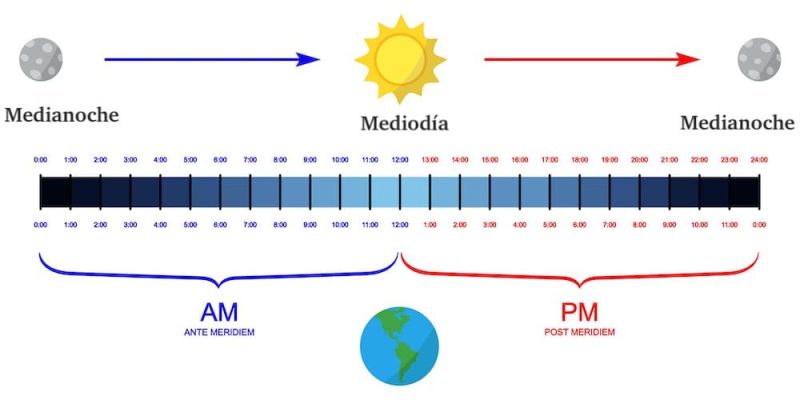
AM stands for "Ante Meridiem," which is Latin for "before midday." PM stands for "Post Meridiem," meaning "after midday." This system was formalized by the Roman civilization, which used water clocks and sundials to track time. The division, however, was not always the consistent 12-hour cycle we know today. Ancient hours varied in length depending on the season, as daylight hours changed throughout the year. The standardization of the 24-hour day, and consequently the fixed AM/PM structure, became a necessity with the rise of precise mechanical clocks in medieval Europe.
The Mechanics: How Clocks Interpret the Cycle
At its core, the 12-hour clock is a cycle that repeats twice daily. The mechanism is straightforward but often a source of confusion for children and those new to the system.
- 12:00 AM: This denotes midnight, the very start of a new day. It is the transition from one day to the next.
- 1:00 AM to 11:59 AM: This is the Ante Meridiem period, covering the hours from midnight just past until just before noon.
- 12:00 PM: This denotes noon, the moment when the sun reaches its highest point in the sky for that day.
- 1:00 PM to 11:59 PM: This is the Post Meridiem period, covering the hours from noon until midnight.
A common point of confusion arises at the transition points. For example, 12:30 in the morning is 12:30 AM, not 12:30 PM. Similarly, 12:30 in the afternoon is 12:30 PM. The key is to remember that "PM" begins at noon and continues until midnight.
Global Coordination: The 24-Hour Alternative
While the AM/PM system is prevalent in the United States and a handful of other countries, much of the world operates on the 24-hour clock, particularly in Europe, military operations, and international business. In this system, the day runs from 00:00 to 23:59, eliminating the need for AM and PM altogether.
This distinction is not merely academic; it has real-world consequences. A failure to correctly interpret AM and PM can lead to missed flights, delayed medical appointments, and critical errors in logistics. The 24-hour clock is lauded for its precision and unambiguity.
"In high-stakes environments like air traffic control or hospital emergency rooms, there is zero tolerance for error," says Dr. Aris Thorne, a professor of time management and logistics at the University of Global Systems. "The 24-hour format removes the cognitive load of conversion and potential misinterpretation. It is a universal language that ensures clarity."
Digital Dilemmas: Technology and the AM/PM Format
Our digital devices have complicated the AM/PM landscape. While computers and servers often rely on the 24-hour system internally, user interfaces are frequently configured for 12-hour displays. This requires a constant mental translation for users.
Scheduling software, calendar apps, and international collaboration tools must grapple with time zone differences and format preferences. A meeting set for "2 PM" in New York might be "7 PM" in London. The underlying UTC (Coordinated Universal Time) is the true global reference, but for the end-user, the AM/PM indicator remains the primary signal for when an event is scheduled.
The rise of digital assistants like Siri and Alexa has introduced another layer of complexity. These systems must parse natural language commands like "Set a reminder for 8 tomorrow morning." The AI must correctly interpret "morning" as AM, demonstrating how deeply embedded these antiquated Latin terms are in our modern vernacular and technology.
The Business World: Deadlines and Deliveries
For businesses, AM and PM are not just about telling time; they are about logistics, productivity, and customer service. Shipping companies use them to define cut-off times. A package labeled for "Same-Day Delivery by 3 PM PM" sets a clear, albeit midday, deadline for dispatch.
Financial markets open and close at specific times denoted by AM and PM. The New York Stock Exchange, for example, operates from 9:30 AM ET to 4:00 PM ET. Missing the opening bell or the closing bell can mean the difference between profit and loss.
- Customer Service: Support hours are almost always listed in AM/PM (e.g., "Mon-Fri, 9 AM to 5 PM") to align with the general public's understanding of the workday.
- Healthcare: Hospital staff rely on AM and PM to schedule medication, surgeries, and therapy sessions, ensuring treatments align with patient needs and physician availability.
- Transportation: Flight and train schedules are a complex web of AM and PM times, requiring passengers to be acutely aware of the designations to avoid boarding errors.
Cultural Nuances: Morning Meetings and Evening Routines
The cultural perception of AM and PM can vary. In some cultures, the midday meal is the primary meal of the day, making the PM hours a period of rest and family time. In others, the evening is the prime social and working hours, extending deep into the PM.
The "9-to-5" workday is a cultural construct that exists entirely within the AM/PM framework. It defines the boundary between personal time (AM, for waking and preparing) and professional time (PM, for work).
Whether it is the quiet of the AM hour before the office buzzes to life or the hum of activity in the late PM, these time blocks shape our routines and rhythms. They are the invisible scaffolding upon which our daily lives are built, a testament to an ancient way of measuring the sun that continues to dictate the pace of the modern world.
Related Post
What Does AM and PM Mean for Time? Decoding the 12-Hour Clock System
AM and PM: What Do They Really Mean, and Why Do We Still Confuse Them?
Mastering The Clock: Unlocking The Meaning Of AM And PM For Time

Uncover the Secrets of AM and PM: What Do These Acronyms Really Stand For?