The Secret Life of Mimi: How Drew Carey’s Sharp-Tongued Neighbor Became a Sitcom Icon
The Secret Life of Mimi: How Drew Carey’s Sharp-Tongued Neighbor Became a Sitcom Icon
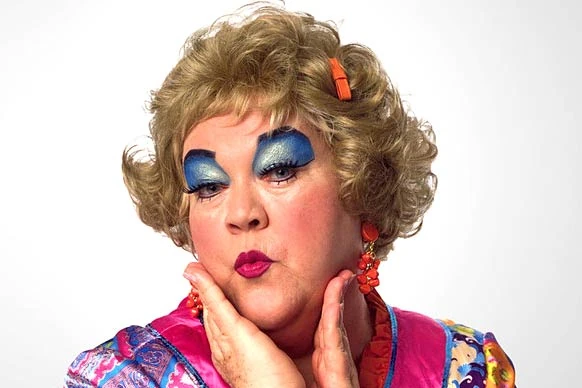
Mimi Bobeck, the pugnacious, cigar-chomping nemesis of Drew Carey’s character on “The Drew Carey Show,” exploded from a recurring irritant to a full-fledged cultural fixture in the 1990s. Portrayed with fearless commitment by Kathy Kinney, Mimi evolved from a one-note heckler at The Warsaw Tavern into the show’s centerpiece, driving storylines with her chaotic energy and unfiltered vulgarity. This is the story of how a character designed to bait the mild-mannered Drew became a groundbreaking example of comedic escalation, workplace-culture commentary, and unlikely stardom for a character actress.
The Birth of a Sidekick: From Background Noise to Center Stage
When “The Drew Carey Show” premiered in 1995, Mimi existed in the show’s periphery as a supporting player in the ensemble cast that populated the fictional satellite office of Winfred-Louder. Her initial function was simple: provide a loud, grating counterpoint to Drew’s everyman affability. The show’s creators needed a reliable source of conflict for Drew to bounce off, a human lightning rod for his gentle sarcasm. Early episodes introduced her as a loud, unattached woman with a perpetual sneer and a penchant for interrupting conversations, establishing a behavioral template that would be refined over seasons.
The casting of Kathy Kinney, a seasoned character actress and improviser from The Groundlings, was pivotal. Kinney did not merely play Mimi; she weaponized her. Drawing on a background in sketch and improvisation, Kinney infused Mimi with a spontaneous, unpredictable quality. What began as a reactionary role quickly gained momentum, as the writers and Kinney herself discovered the comedic gold in Mimi’s unbridled id. She ceased to be a mere tavern regular and became a force of nature who could command a room simply by opening her mouth.
The Anatomy of Chaos: Mimi’s Defining Traits and Tactics
Mimi’s character was built upon a foundation of contradictions. She was simultaneously pathetic and powerful, desperate and domineering. Her aggression was often a veneer for profound loneliness and a staggering lack of self-awareness. The show’s genius lay in never fully redeeming or demonizing her; she remained a deeply flawed individual who could elicit laughter, frustration, and, on rare occasions, a flicker of sympathy.
- The Verbal Barrage: Mimi’s vocabulary was a spectacular mix of creative insults, nonsensical exclamations, and startlingly blunt observations. She was a master of the non sequitur, derailing any conversation with her signature battle cry, “N-n-n-n-nunu!”
- The Physical Comedy: Kinney’s background in physical theater was essential. Mimi’s hunched posture, jutting jaw, and sudden, jerky movements turned her into a human jack-in-the-box, popping up in doorways and behind desks to deliver a zinger.
- The Cigar: Perhaps Mimi’s most iconic accessory, the ever-present cigar was more than a prop; it was a symbol of her faux-worldly, tough-guy persona. Smoking in inappropriate settings, it visually screamed rebellion against the expected norms of office decorum.
Her methods were relentless. She specialized in “Mimi-ating” the moment—inserting herself into a scene uninvited and hijacking the conversation. Whether it was crashing a romantic dinner, interrupting a business meeting, or ambushing Drew in the break room, Mimi had no concept of boundaries. This lack of inhibition, while socially destructive, was the engine of the show’s humor. She was the human id unleashed in a white-collar setting, a constant reminder that the office was a petri dish for absurdity.
Mimi as Cultural Mirror: Work, Gender, and the Outcast
Beyond her disruptive comedy, Mimi served as an unexpected lens through which to view the changing dynamics of the 1990s workplace. The Drew Carey Show was set in a corporate environment, a world of middle-management drudgery and petty rivalries. Mimi, as an administrative employee, embodied the frustrations and eccentricities that can fester in such environments. She was the employee who didn’t care about the corporate ladder; she cared about winning the battle of wills with Drew and anyone else who crossed her path.
Her character also complicated gender roles on television. Kathy Kinney has spoken about the subversive nature of the role. “Mimi wasn’t written as a woman who was there to be ogled or to serve as a romantic interest,” Kinney noted in a rare interview. “She was there to be loud, she was there to be difficult, and she was there to be funny on her own terms.” Mimi was not defined by her relationship status or her appearance in the way many female sitcom characters of the era were. She was defined by her actions, her voice, and her sheer, unadulterated audacity.
She became a symbol for the socially awkward and the professionally disillusioned. Viewers who felt like outsiders in their own offices saw a twisted reflection of their own frustrations in Mimi’s chaotic reign of terror. Her victories were small—winning a trivial office dispute, getting one over on a smug superior—and yet, they resonated deeply with an audience that often felt powerless in the face of corporate bureaucracy.
The Evolution and Enduring Legacy of a Sitcom Icon
As the series progressed, Mimi’s role expanded dramatically. What began as a handful of episodes per season grew to entire story arcs built around her antics. She became the de facto co-lead, with storylines exploring her bizarre family life, her bizarre attempts at romance, and her surprising moments of competence. The show learned to harness her chaos, turning her from a nuisance into the show’s primary engine for conflict and comedy.
The impact of Mimi Bobeck extends far beyond the final episode of “The Drew Carey Show.” She remains a touchstone in the history of television comedy, a testament to the power of a well-acted character actor. Kathy Kinney’s performance demonstrated that a supporting role, defined by a specific and hilarious behavioral tics, could capture the public imagination as fully as a traditional leading man. Decades after the show’s end, Mimi remains instantly recognizable, a snarling, cigar-smoking ghost of ’90s sitcom greatness who continues to whisper, “N-n-n-n-nunu!” in the annals of television history.
Related Post