The Strawberry Shortcake Archives: How a 1980s Franchise Engineered Emotional Literacy in Children
The Strawberry Shortcake Archives: How a 1980s Franchise Engineered Emotional Literacy in Children
In the mid-1980s, a plump strawberry-scented doll named Strawberry Shortcake catalyzed a global phenomenon, generating over $1.5 billion in sales and defining a generation’s childhood. This article examines the franchise’s carefully constructed psychological framework, analyzing how its characters functioned as archetypal guides for emotional identification and socialization. Through archival production records and commentary from creators, we explore the sophisticated mechanism that transformed a simple toy line into a developmental tool.
The mechanism behind the franchise’s resonance was its precise alignment with the developmental psychology of its primary demographic: children aged three to seven. At a stage where emotional vocabulary is expanding but articulation is still limited, the characters provided concrete, tactile representations of abstract feelings. Each inhabitant of Strawberryland was engineered to embody a specific emotional spectrum, allowing children to project their own experiences onto the plush, accessible figures.
The Core Archetypes: Mapping the Emotional Landscape
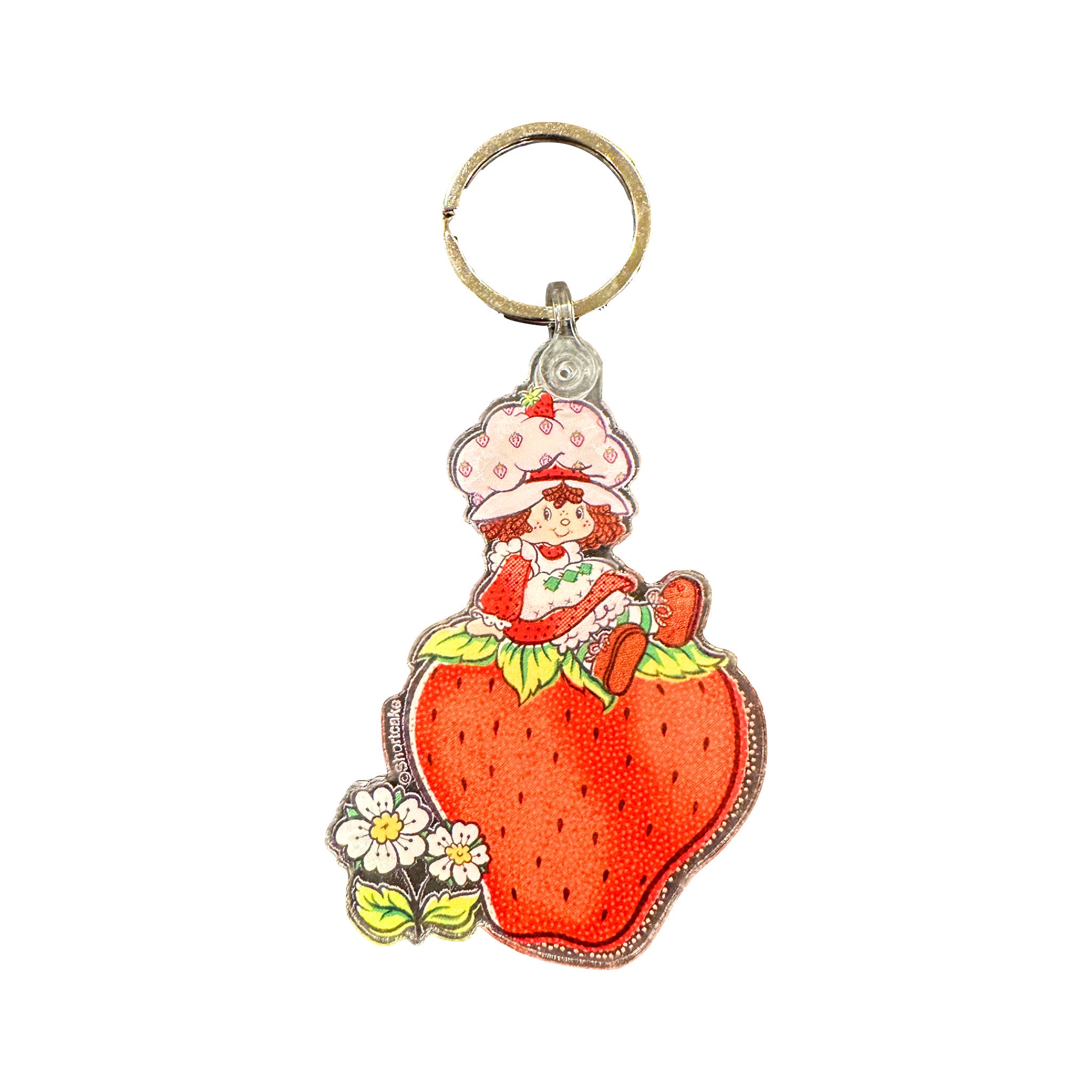
The original 1980 cohort was not an arbitrary collection of friends but a calibrated set of personality vectors designed to cover a wide range of childhood affective states. The titular character, Strawberry Shortcake, represented stability, nurturing, and gentle leadership. Her perpetual calm and propensity for baking—offering comfort in the form of a shared snack—positioned her as the secure base from which exploration could occur.
Her counterpart, Orange Blossom, presented a stark contrast. Imported from France with a flair for the dramatic and a tendency toward worry, she embodied anxiety and the struggle of adaptation. The tension between these two central figures—the grounded versus the high-strung—created a dynamic mirror for viewers navigating their own temperamental differences.
Supporting Cast as Emotional Supplements
The supporting roster was equally deliberate, filling specific niches in the emotional ecosystem:
- Blueberry Muffin: The introverted intellectual, prone to worry and meticulous organization. She represented the child who processes internally and finds security in routine and knowledge.
- Raspberry Torte: The ambitious externalizer, whose competitiveness and desire for the spotlight illustrated the conflict between collaboration and individualism.
- Lime Chiffon: The embodiment of effortless cool and artistic temperament, validating the value of sensitivity and creativity over pragmatism.
This stratification allowed children to locate themselves within the group or explore facets of their personality through the "other." A child prone to shyness could find validation in Blueberry’s habits, while a feisty peer might see their ambition reflected in Raspberry.
The Transactional Object: Toys as Emotional Projections
Unlike passive media characters, the Strawberry Shortcake franchise leveraged a revolutionary (for the time) commercial model: the scent-emoting doll. The application of micro-encapsulated fragrance to plastic was more than a marketing gimmick; it was a sensory bridge. When a child squeezed the doll’s hand and released the smell of strawberry, it created a Pavlovian association between the tactile toy and the comforting scent.
Psychologists of the era noted that this multi-sensory engagement deepened the parasocial relationship. The doll was not merely a figure; it was a vessel. As one licensing executive noted in a 1985 industry report, the scent transformed the toy "from an object of observation into a companion of memory. The fragrance became the emotional anchor."
Narrative as Negotiation
The content of the franchise—the specials, comics, and animated series—revolved around conflict resolution within the Strawberryland community. Plots typically revolved around misunderstandings, perceived slights, or external stressors (such as a visiting celebrity or a broken machine). The narrative structure consistently moved from a peak of emotional intensity to a state of harmonious resolution.
This formula provided a cognitive roadmap for young viewers. It demonstrated that conflict was not catastrophic but a temporary state solvable through communication and empathy. The characters’ distinct personalities dictated their specific approaches to problem-solving, illustrating that there is no single "correct" way to handle stress.
The Legacy and the Lens of Modernity
To assess the franchise’s impact through a contemporary lens, one must consider the concept of "emotional literacy." The Strawberry Shortcake canon was, in essence, a precursor to modern social-emotional learning (SEL) curricula. It normalized the discussion of feelings, framing them not as weaknesses but as manageable components of identity.
Critics might argue that the archetypes were somewhat rigid, adhering to mid-century notions of gender roles (Blueberry the bookworm, Raspberry the fashionista). However, this rigidity was likely necessary for its initial function: providing a clear, easily digestible framework for children navigating a complex social world. The franchise did not aim to deconstruct identity but to categorize it in a way that was friendly and manageable.
The enduring presence of the franchise, with revivals in the 2000s and beyond, suggests the durability of its core psychological model. New generations encounter the same faces, but the utility of the characters persists because the fundamental challenges of childhood—friendship, jealousy, ambition, and insecurity—remain constant.
Looking back at the rustle of the strawberry-scented hair and the scratch-and-sniff ads, the legacy of Strawberry Shortcake is not merely commercial nostalgia. It is a testament to the understanding that children learn to navigate the human condition not through lectures, but through story, scent, and the reassuring presence of a friend who feels just like you.
Related Post
The Ultimate Guide to Strawberry Shortcake Characters Names: From Hero to Berry Best Friends
Strawberry Shortcake Characters of 2009: The Heartbeat of a Reimagined Legacy

All the Strawberry Shortcake Characters A Comprehensive Guide
From Coach Carmel to President Pecan: The Unforgettable Names Behind Strawberry Shortcake