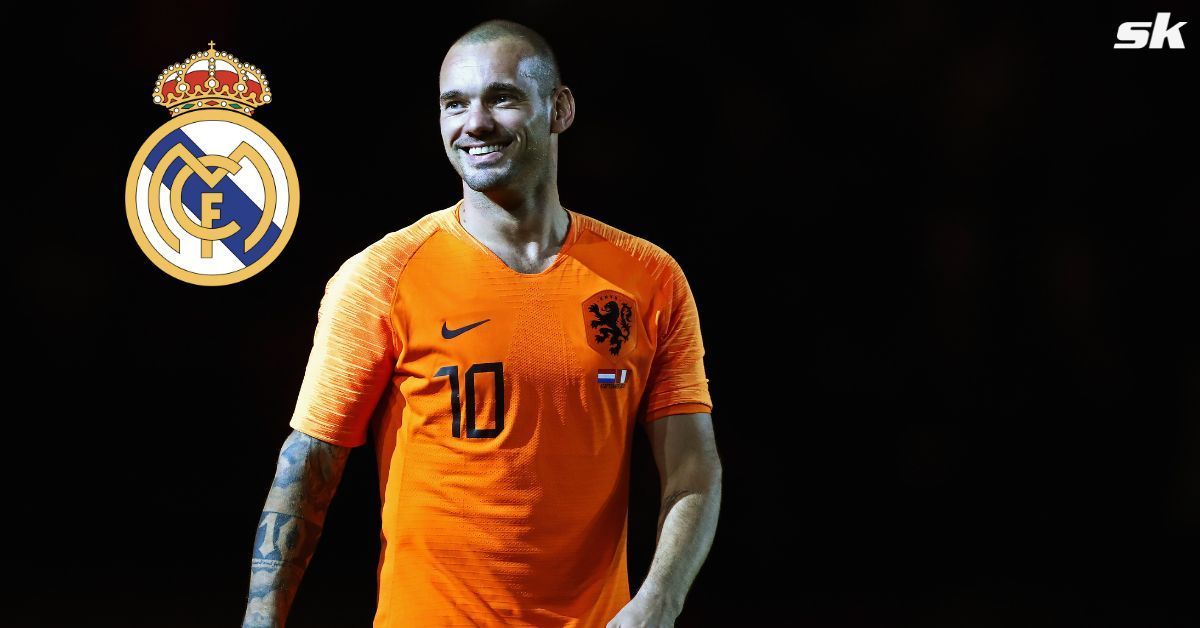
The Tactical Alchemy of Sneijder: How a Single Midfielder Orchestrated an Entire Football Revolution
The Tactical Alchemy of Sneijder: How a Single Midfielder Orchestrated an Entire Football Revolution
Wesley Sneijder’s career serves as a definitive case study in how a single, transcendent talent can redefine the tactical architecture of an entire team. At his peak, the Dutch midfielder functioned as the central nervous system of elite squads, transforming rigid formations into fluid, vertical attacking units through his unique blend of vision, precision, and relentless work rate. This article examines the technical and strategic mechanisms that made Sneijder the catalyst for some of the most memorable football witnessed in the 21st century.
The archetype of the modern number ten has evolved significantly over the past three decades, moving away from the traditional poacher toward a playmaker who initiates from deeper zones. Sneijder exemplified this evolution, operating not just as a distributor but as the primary creative engine. His ability to receive the ball under pressure and immediately identify a vertical pass option turned possession into progression instantly. He was the fulcrum upon which entire attacking sequences pivoted, a role that demanded an exceptional understanding of spatial dynamics and an unwavering commitment to the team’s strategic objective.
To fully appreciate Sneijder’s impact, one must dissect the specific tactical elements that defined his game. His positioning was rarely static; he perpetually sought the pockets of space between the lines, particularly the crucial zone between the opposition’s midfield and defensive lines. This strategic positioning allowed him to receive the ball in areas where he could effectively turn and drive forward. Additionally, his passing range was extraordinary, capable of delivering incisive through balls with both feet and from acute angles. This threat forced defenders to commit to him, thereby creating opportunities for his teammates to make runs behind the defensive wall.
Sneijder’s influence is perhaps most vividly illustrated through his performance during the 2010 FIFA World Cup in South Africa. Under the guidance of manager Bert van Marwijk, the Netherlands implemented a direct, counter-attacking system that relied heavily on the swift transition from defense to attack. Sneijder was the ignition point for these rapid advances. His partnership with Rafael van der Vaart in midfield created a dynamic duo capable of dismantling organized defenses. The goal he scored against Brazil in the quarter-finals stands as a testament to his tactical intelligence. He received the ball deep, bypassed the Brazilian midfield press with a precise diagonal switch, and then carved open the defense with a moment of individual brilliance before delivering a killer pass for Mark van Bommel to score. This sequence encapsulates his entire value proposition: disrupting the opponent’s structure and creating advantages out of nothing.
Another critical aspect of Sneijder’s game was his relentless work ethic, which often went unnoticed in the glory of his creative feats. In the high-pressing era that gained prominence during his later career, his ability to participate in the defensive phase was paramount. He would track back aggressively to intercept passes, shielding the back line and allowing his teammates to maintain their defensive shape. This two-way commitment transformed him from a pure attacker into a complete midfielder, a player who could win the ball and then immediately launch the attack. His stamina and tactical discipline allowed him to cover vast distances across the pitch, fulfilling the requirements of a system that demanded both defensive robustness and attacking flair.
Sneijder’s technical proficiency also manifested in his dribbling ability, though it was often deployed as a strategic tool rather than an end in itself. He used subtle body feints and changes of pace to navigate tight spaces, drawing multiple defenders toward him and creating gaps for his teammates. This selflessness was a hallmark of his play; he was always looking to improve the collective position, not just to showcase individual skill. His capacity to retain possession under duress was crucial in maintaining the team’s rhythm, especially when facing high-intensity pressing games. He acted as a stabilizer, a calm presence who could reset the tempo of the match with a simple diagonal pass or a composed dribble.
The synergy between Sneijder and the strikers he served was another vital component of his tactical success. He had an intuitive understanding of the runs of players like Wesley Sneijder, Robin van Persie, and Klaas-Jan Huntelaar. He knew when to play a ball early for a feet-first run and when to wait for a late, attacking surge into the box. This telepathic connection with the forwards allowed the team to exploit defensive gaps with surgical precision. His vision was not just about seeing the pass, but about anticipating the movement of players several seconds in advance, a skill that is exceptionally rare at the highest level of competition.
Furthermore, Sneijder’s mentality proved invaluable in high-stakes environments. The pressure of performing on the world’s biggest stages did not diminish his output; if anything, it sharpened his focus. In knockout football, where margins are minimal, his ability to deliver a decisive pass or score a crucial goal in the 60th to 80th minute was often the difference between victory and elimination. His performances in UEFA European Championships and World Cups consistently showcased a player who thrived under the brightest lights. He possessed a footballing intelligence that allowed him to read the game and make decisions that less composed players might defer from.
The influence of Sneijder extends beyond specific matches, impacting how modern midfielders are evaluated and developed. His profile demonstrated that a midfielder could be the primary source of goalscoring threat without sacrificing their playmaking duties. This hybrid role has since become a coveted attribute, with scouts and coaches looking for players who can thread a needle as well as find the back of the net. His legacy is seen in the rise of complete midfielders who are expected to contribute significantly in all three phases of the game: defense, transition, and attack.
In examining his partnerships, such as the one with Mark van Basten during their time at AC Milan or with Kevin-Prince Boateng at Inter Milan, one sees a player who adapted his style to maximize the strengths of his colleagues. He was the catalyst that allowed different tactical systems to function at an elite level. Whether deployed in a 4-3-3, a 4-2-3-1, or a 3-5-2, Sneijder’s positioning and movement were the constants that ensured the system’s effectiveness. He provided the balance between creativity and pragmatism that is so difficult to achieve in the modern game.
Ultimately, Wesley Sneijder’s career is a narrative of maximizing potential within a structured framework. He was not a maverick who operated outside the system; rather, he was the system’s beating heart. His tactical intelligence, combined with his physical capabilities and technical skills, made him an indispensable asset for any team that possessed him. The evolution of midfield play in the decades following his peak is, in many ways, an attempt to replicate the rare combination of attributes he brought to the pitch. He remains a benchmark for what a modern midfielder can achieve when intellect, skill, and dedication converge.
Related Post

Meet the Master: Unpacking the Unstoppable Career of Wesley Sneijder