The TDCJ Commissary System: How Inmate Purchasing Works Inside Texas Prisons
The TDCJ Commissary System: How Inmate Purchasing Works Inside Texas Prisons
The Texas Department of Criminal Justice (TDCJ) commissary system serves as the primary retail network for people inside state prisons, providing essential hygiene products, food, and authorized clothing. Funded through inmate earnings and personal deposits from families, the commissary operates as a controlled economy that shapes daily life behind bars. This article explains how the system functions, what items are available, and the rules governing commissary access in TDCJ facilities.
TDCJ commissaries function as centralized stores within prisons, stocking a standardized set of basic goods approved by the agency. Unlike free-world supermarkets, commissaries operate on a restricted inventory designed to meet fundamental needs while maintaining security and order. Items are typically purchased using funds added to an inmate’s personal account by family members or, in some cases, from wages earned through prison work assignments. The process is highly regulated, with set shopping days, purchase limits, and price controls intended to ensure fairness and transparency.
Each TDCJ prison is required to operate a commissary that meets minimum standards for food and hygiene access. The agency provides a commissary list that outlines approved products and general pricing, although specific items and availability can vary by facility. Inmates are usually assigned a monthly shopping schedule based on their housing unit, with clear rules about how much they can spend per visit. These rules are enforced by facility staff and monitored as part of the broader prison management system.
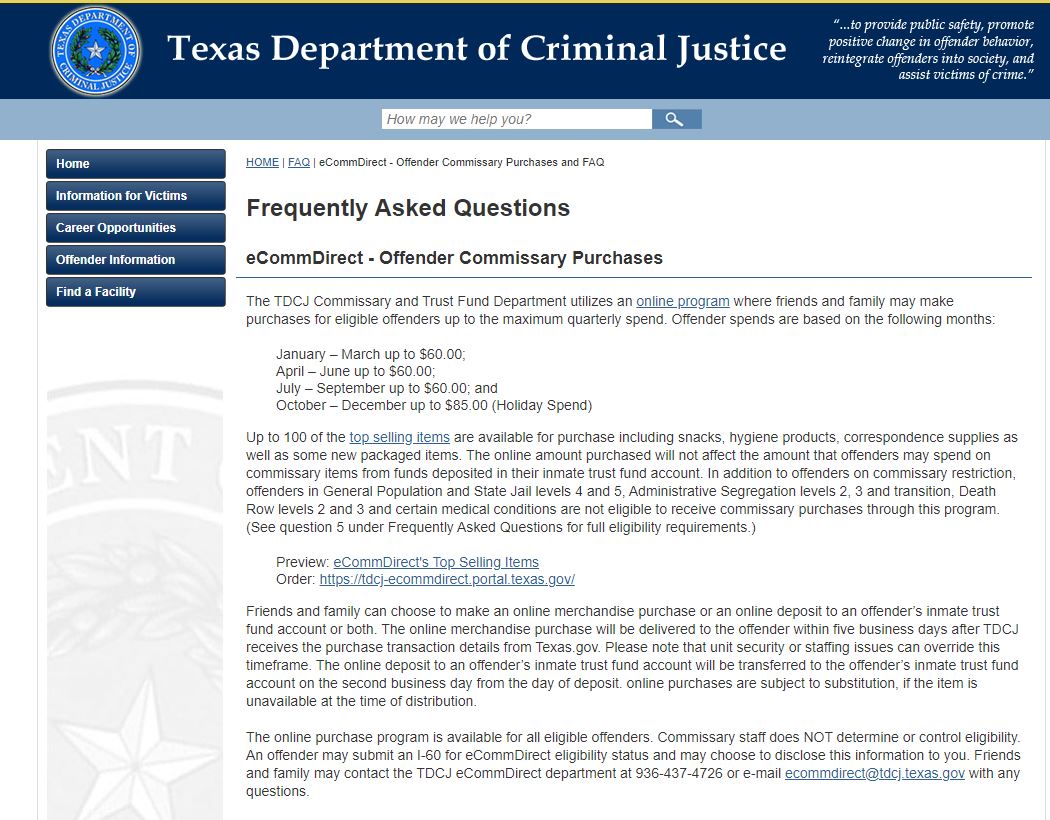
Families play a critical role in supporting commissary needs, as many incarcerated people rely on outside funds to maintain basic hygiene and nutrition. Money can be added to an inmate’s account through online deposits, phone calls, or in-person visits at select locations, depending on facility procedures. When funds are low, inmates may eat limited meals from the prison kitchen or use emergency provisions, but regular access to commissary goods is seen as essential for health and dignity.
- Personal hygiene products, including soap, shampoo, toothpaste, and deodorant
- Basic food items such as ramen noodles, canned tuna, and snack foods
- Clothing and undergarments approved by TDCJ standards
- Limited writing and school supplies for educational programs
- Stamps and envelopes for correspondence with family and legal representatives
The pricing and availability of commissary items are controlled by the state, with periodic reviews conducted by TDCJ administration. Prices are generally kept flat for long periods, though adjustments can occur based on supply contracts and agency policy changes. Inmates and their families often track these changes through prison newsletters, advocacy groups, and informal communication networks across facilities.
Work assignments inside TDCJ prisons may provide small wages, which some incarcerated people use to supplement family deposits and purchase additional items on commissary. These wages are typically modest and vary by job type, ranging from facility maintenance to textile work performed in prison shops. In practice, most people depend heavily on outside financial support, as wages alone rarely cover full commissary needs for even basic monthly requirements.
Access to commissary is not automatic and can be restricted as a disciplinary measure. Inmates who violate facility rules or engage in prohibited behavior may lose commissary privileges for a defined period, which can significantly affect their daily quality of life. The ability to shop remains a powerful incentive for positive behavior and participation in programs, even as advocates argue that restrictions can undermine efforts to support successful reentry.
TDCJ has implemented some technology upgrades in recent years, including electronic account tracking and online deposit options for families. These changes are intended to reduce errors, increase transparency, and streamline the process of adding funds to inmate accounts. However, challenges remain in ensuring that all families, particularly those without reliable internet access or banking services, can participate effectively in the system.
Advocacy organizations have raised concerns about the affordability and adequacy of TDCJ commissary offerings, particularly for people requiring special dietary needs or medical supplies. While the agency states that commissary access meets basic standards, critics argue that limited choices and rising costs of external products create hardship for incarcerated people and their families. These ongoing debates highlight the tension between security, cost control, and humane treatment within the prison economy.
The TDCJ commissary system reflects the broader goals of correctional management in Texas, balancing order, fiscal responsibility, and basic care for people in custody. As policies evolve and oversight continues, commissary practices will likely remain a focal point for discussions about prison conditions and family support. Understanding how the system works helps clarify the everyday realities of incarceration and the complex relationships between inmates, staff, and the outside communities that sustain them.
Related Post
Ecomm Tdcj Commissary: Revolutionizing Inmate Shopping Experience
The Inside Scoop on TDCJ Commissary: What You Need to Know

Unlocking a Slice of Home: TDCJ Commissary Ecommdirect Commissary for Inmates
The Evolution of Prison Commissaries: How Ecomm Tdcj Commissary Revolutionizes the Way Inmates Shop