The True Cost of a Lifetime Gym Membership: Breaking Down Price, Value, and Hidden Fees
The True Cost of a Lifetime Gym Membership: Breaking Down Price, Value, and Hidden Fees
Lifetime fitness memberships promise unlimited access for a single upfront payment, but the reality is far more complex than the slogan suggests. The actual cost extends far beyond the initial sign-up fee, encompassing long-term value, hidden charges, and personal usage patterns. This analysis dissects the financial anatomy of a Lifetime gym membership, comparing it to alternatives and revealing what truly influences the price you pay.
Understanding the Lifetime Model: More Than Just a One-Time Fee
The term "Lifetime" is strategically appealing, suggesting a permanent solution to fitness needs. However, it primarily refers to the duration of the contract, not necessarily the life of the facility. These memberships are structured as long-term agreements, typically spanning 12, 24, or even 36 months. The significant upfront charge is designed to offset the revenue lost from members who might otherwise cancel after a few months.
Unlike monthly subscriptions, Lifetime memberships require a substantial initial investment. This capital-intensive model allows gyms to secure cash flow upfront, but it places the onus on the consumer to ensure they get their money's worth. The value, therefore, is not inherent in the label "lifetime" but in the individual's commitment and usage frequency.
Deconstructing the Price Tag: What You're Actually Paying For
The cost of a Lifetime membership is not a single, fixed number. It varies dramatically based on location, facility size, brand reputation, and included amenities. A breakdown of the components reveals where your money is going.
1. The Base Membership Fee
This is the core cost for facility access. Prices can range from a few hundred dollars for a basic suburban location to over a thousand for a premium urban flagship club with extensive amenities like swimming pools, rock climbing walls, and spa services.
2. The Non-Refundable Initiation Fee
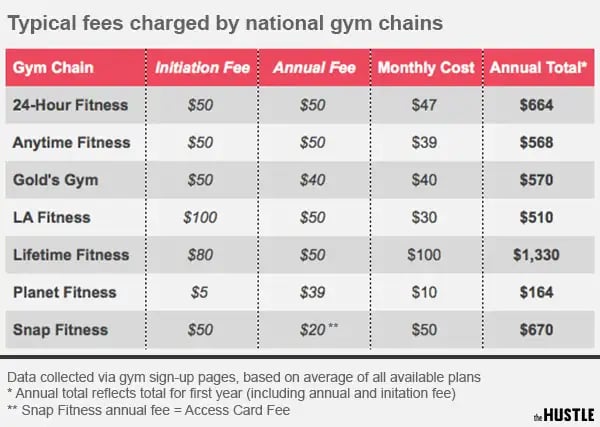
Often ranging from $50 to $200, this one-time administrative charge is standard across the industry. It covers the cost of processing your membership and is typically not waived, even during promotional periods.
3. Sales Tax
Depending on your state and local laws, sales tax can add a significant percentage to your total bill. In some regions, this tax can be as high as 10% or more, adding hundreds of dollars to the effective cost.
4. Add-Ons and Enhancements
Gyms often push optional extras that inflate the final price:
- Personal Training: Packages can cost hundreds of dollars per session block.
- Group Fitness Classes: Some premium classes may require additional enrollment fees.
- Tanning & Massage: If you plan to use these services, they are often billed separately or require upgrade packages.
Real-World Cost Analysis: Comparing the Numbers
To understand the true financial implications, let's examine a hypothetical scenario based on national averages. We'll compare a Lifetime-style membership against a standard monthly plan over a two-year period.
The Scenario: A Premium Urban Gym
Lifetime Membership: A high-tier membership might carry an upfront cost of $1,500, plus a $100 initiation fee and $150 in tax, for a total initial outlay of $1,750.
Monthly Membership: A comparable premium membership might cost $75 per month, totaling $1,800 over 24 months.
The Verdict
In this specific scenario, the Lifetime membership appears to save the member $50 over two years. However, this calculation hinges on the member using the gym consistently for the full duration. If the individual moves, loses interest, or gets injured after six months, they have effectively paid $1,750 for half a year of access, making the monthly plan the more economical choice.
The Hidden Costs of Inactivity
The most significant hidden cost associated with a Lifetime membership is not financial in a direct sense; it's the opportunity cost of unused value. Gyms are well aware that a percentage of members will become inactive "ghost members." They bank on this fact, using the revenue from diligent users to subsidize the memberships of those who rarely step foot inside.
- The Shelfware Syndrome: A study by industry analysts suggests that gym memberships go unused at a rate of up to 67%. Your Lifetime fee essentially pays for a space you never occupy.
- Opportunity Cost: The $1,500 locked into a Lifetime contract could be invested elsewhere. If that sum were placed in a low-cost index fund with a modest 7% annual return, it could grow to over $2,000 in five years.
Maximizing Your Investment: Is It Right for You?
A Lifetime gym membership is not inherently good or bad. Its value is determined entirely by the individual's lifestyle and discipline. It is a tool for the committed, not a solution for the undecided.
You Should Consider a Lifetime Membership If:
- You Have a Rigorous Routine: You are a creature of habit who plans workouts into your weekly schedule without fail.
- You Prioritize Consistency: You have a proven track record of maintaining fitness goals for years, not months.
- You Value Stability: You plan to remain in the same geographic area for the foreseeable future.
You Should Opt for a Monthly Plan If:
- Your Schedule is Unpredictable: Your work travel or personal life makes consistent attendance difficult.
- You are Exploring Options: You are unsure if you will enjoy the gym environment or if it fits your lifestyle.
- You are Budget-Conscious: You prefer to maintain liquidity and spread costs over time rather than a large lump sum.
The Bottom Line: Calculating Your Personal Break-Even Point
Before signing a Lifetime contract, perform a simple financial audit. Calculate your monthly break-even point. Divide the total upfront cost by your expected monthly usage value.
For example, if a Lifetime membership costs $1,750 and a comparable monthly plan is $75, you need to use the gym for approximately 23 months to break even. If you intend to stay for the long haul and are confident in that commitment, a Lifetime membership can be a savvy financial move. If not, you are likely better served by a flexible, month-to-month option.
Related Post