The Unsung Hero of Every CPU Instruction: How the Program Counter Orchestrates Your Digital Universe
The Unsung Hero of Every CPU Instruction: How the Program Counter Orchestrates Your Digital Universe
In the intricate ballet of silicon and electricity within every computer, a silent conductor ensures the seamless execution of billions of operations per second. This unseen director, known as the Program Counter, is a fundamental component of the Central Processing Unit (CPU) that dictates the precise sequence of instructions a computer follows. Without this crucial digital traffic cop, modern computing as we know it would cease to exist, rendering operating systems, applications, and even this text unreadable.
The Program Counter, often abbreviated as PC, is not a physical entity but a specialized register within the CPU architecture. Its sole purpose is to hold the memory address of the next instruction that the processor is required to execute. Think of it as the unwavering pointer that tracks your location within a massive instruction manual, ensuring the computer reads and performs tasks in the correct order, from the mundane to the complex.
Understanding the Program Counter is to understand the very heartbeat of computational execution. It is the invisible thread that stitches together every calculation, every graphic rendered, and every keystroke. This article delves into the mechanics of this vital register, exploring its role in the fetch-decode-execute cycle, its interaction with memory, and the critical distinctions that separate it from other CPU components.
The Engine Room: The Fetch-Decode-Execute Cycle
At the core of every microprocessor operation lies a repeating sequence of steps known as the fetch-decode-execute cycle. The Program Counter is the linchpin of this cycle, providing the address that initiates the fetch phase. This relentless, high-speed process is what allows your computer to run everything from the operating system to the simplest calculator app.
The cycle begins when the CPU needs to execute the next instruction. The Program Counter’s current value—the address of the next instruction—is sent to the main memory (RAM). The instruction located at that specific address is then retrieved and transported back to the CPU. This is the fetch stage, entirely dependent on the Program Counter’s accuracy.
1. Fetch
The CPU places the value held in the Program Counter onto the address bus and sends a request to read from that memory location. The instruction stored at that address is then fetched and placed into the CPU's instruction register.
2. Decode
The instruction is decoded by the CPU's control unit. This step determines what operation needs to be performed, such as an addition, a data move, or a jump to a different part of the program. The instruction is broken down into signals that control the various arithmetic and logic units within the CPU.
3. Execute
The decoded instruction is finally carried out. This could involve performing a calculation on data, writing data to a memory location, or calling a specific hardware component. Upon completion of the execute phase, the Program Counter is updated to point to the next instruction, ensuring the cycle continues seamlessly.
This cycle repeats millions, if not billions, of times per second. The Program Counter is automatically incremented after each fetch to point to the subsequent address in memory, creating a linear flow of execution. However, its ability to be manipulated is what grants computers their power and versatility.
Beyond Linearity: Jumps, Calls, and Conditional Logic
While the Program Counter naturally increments to move linearly through a program, its true genius lies in its capacity to be altered non-linearly. This ability to change its value is what allows programs to make decisions, loop back on themselves, and branch into different functions.
When a program encounters a jump instruction—such as a "goto" statement in older languages or a branch instruction in modern assembly—the Program Counter is forcibly updated with a new address. This new address is not the next sequential location, but a completely different location within the program's code. This is how a computer executes an "if-then" statement.
Function Calls and the Stack
When a program needs to execute a specific function, it uses a "call" instruction. This instruction does two things: first, it stores the current value of the Program Counter (the return address) onto a special data structure called the stack. Then, it updates the Program Counter with the address of the first instruction of the function being called. This allows the program to execute a block of code and then seamlessly return to where it left off.
Conditional Branching
Modern processors use sophisticated branch prediction units to guess where the Program Counter should point next. If a condition is met (e.g., a variable is greater than zero), the Program Counter is updated to a specific address. If the condition is not met, the Program Counter simply moves to the next sequential instruction. This dynamic manipulation is the foundation of all complex logic and algorithms.
The manipulation of the Program Counter is not limited to software. Hardware interrupts, which are signals from peripherals like a keyboard or network card, can also force the Program Counter to halt its current task and execute a routine to handle the interrupt. This is how your computer can respond instantly to a mouse click while running a complex background process.
The Critical Distinction: Program Counter vs. Instruction Register
To fully appreciate the role of the Program Counter, it is essential to distinguish it from another key CPU register: the Instruction Register (IR). While both are integral to processing, they serve distinct purposes.
The Program Counter is an address pointer. It holds the *location* of the next instruction, much like a street address tells you where a house is located. The Instruction Register, on the other hand, holds the *content* of the instruction itself once it has been fetched from that location.
To illustrate, imagine you are reading a recipe book. The Program Counter is the page number you are currently on. You flip to that page (the fetch cycle) and read the specific step (the instruction register). After completing the step, you update the Program Counter to point to the next page or perhaps jump to a different section of the book based on a decision. The instruction register is merely the text you are reading at that moment; it is not the navigation tool.
The Evolution and Architecture Dependence
The fundamental concept of the Program Counter is universal across all computing architectures, from the tiny microcontrollers in a toaster to the massive server CPUs in data centers. However, its implementation and width can vary significantly.
In a 32-bit system, the Program Counter is a 32-bit register, capable of addressing up to 4 gigabytes of memory space. In a 64-bit system, this expands to a 64-bit register, allowing for a theoretically vast address space of 16 exabytes. This increase is essential for modern applications that require access to enormous amounts of memory.
"As computing demands grow, the architecture of the program counter and its addressing capabilities must evolve to keep pace," explains Dr. Anya Sharma, a computer architecture professor at the Massachusetts Institute of Technology. "It is the silent workhorse of the CPU, and its efficiency directly dictates the overall performance of the system."
The evolution of processor design, particularly with the advent of pipelining and out-of-order execution, has made the management of the Program Counter even more complex. In a pipelined processor, multiple instructions are processed at different stages simultaneously. This requires careful handling of the Program Counter to avoid pipeline hazards, where the CPU might try to execute an instruction before its dependencies are resolved.
The Silent Conductor
From the simplest calculation to the most advanced artificial intelligence model, the Program Counter is the indispensable mechanism that ensures order and precision in the digital chaos. It is the architectural guarantee that your email client loads after your web browser and that a game renders its graphics in the correct sequence.
It operates tirelessly in the background, a discreet yet powerful orchestrator of logic and action. The next time you click an icon or stream a video, remember the unassuming Program Counter. It is the quiet enabler of every pixel and process, the fundamental unit of control that makes the digital age possible.
Related Post
Decoding the Digital Lifeline: How the Program Counter Means Everything in Computing

Uncovering the Mysteries of the Program Counter: Is It A Register?
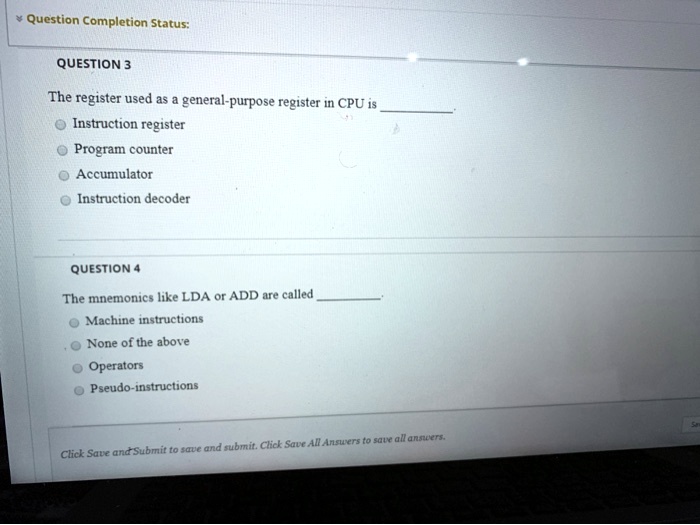
Unleashing the Hidden Power of Program Counter: A Comprehensive Guide to the General Purpose Register