The Yolandi Visser Paradox: Unpacking The Radical Persona And The Duality Of Die Antwoord
The Yolandi Visser Paradox: Unpacking The Radical Persona And The Duality Of Die Antwoord
Yolandi Visser is the hyper-stylized, androgynous, and fiercely provocative frontwoman of the South African rap-rave group Die Antwoord, whose global impact is defined as much by her unsettling aesthetic as by the controversial themes of poverty, identity, and performance art embedded in the group's work. As a central architect of the Zef counter-culture, her persona challenges conventional notions of femininity, celebrity, and morality in the digital age, leaving critics and fans to grapple with whether she is a revolutionary artist or a perpetuation of harmful stereotypes.
Since the explosive international rise of Die Antwoord in the late 2000s, Visser has remained an enigma, a carefully constructed icon whose very existence forces a confrontation with the uncomfortable realities of South Africa’s deep-seated inequalities. Her career, built on a foundation of shock value and subversion, has provided a unique lens through which to examine the intersection of art, exploitation, and authenticity in the 21st century. This article delves into the multifaceted world of Yolandi Visser, exploring her origins, the ideological core of Die Antwoord, and the complex legacy of a figure who refuses to be easily defined.
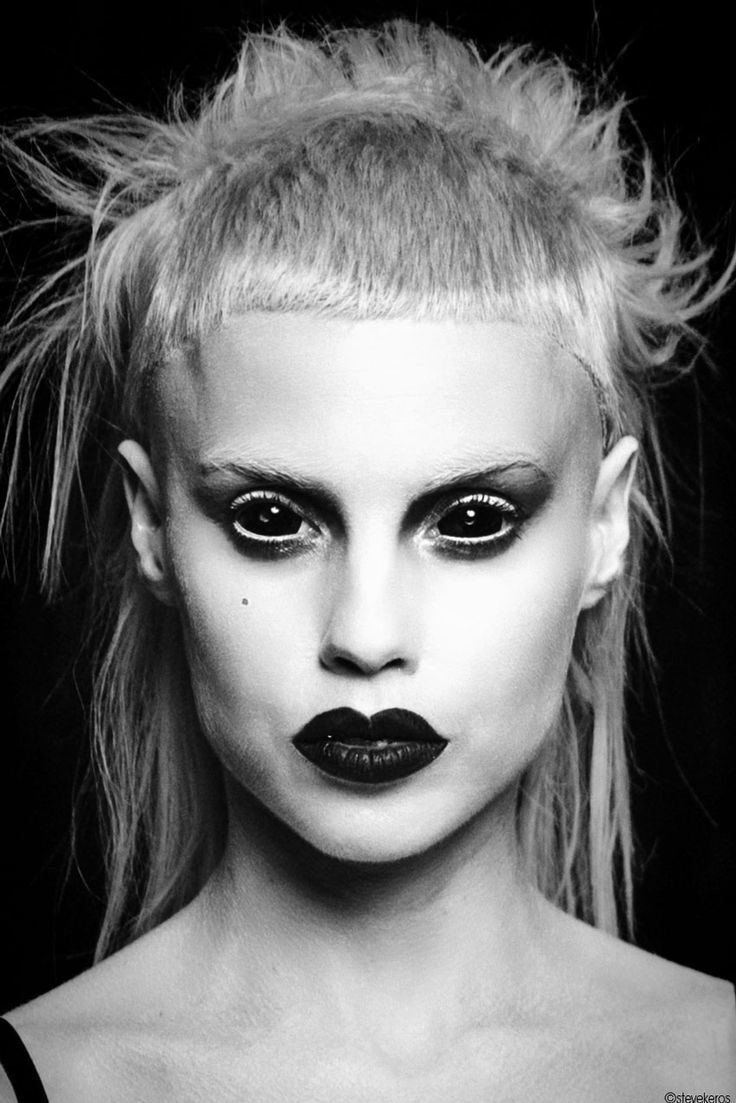
The narrative of Yolandi Visser is intrinsically linked to the birth and evolution of Die Antwoord, a project that emerged from the South African underground music scene with a mission to dismantle artistic and social norms. The group, spearheaded by Ninja (Watkin Tudor Jones) and Visser, coined the term "Zef" to describe a cultural movement that embraced trashiness, irony, and a defiant rejection of middle-class aspirations. Zef was, in many ways, a reclamation of the marginalized, a celebration of the grotesque and the inadequate as a form of resistance against a society that often ignored its underbelly. Visser’s role within this framework was not merely that of a singer, but of a living, breathing embodiment of the Zef ethos. Her appearance—characterized by multicolored hair, exaggerated makeup, contact lenses that create a disturbingly blank or predatory stare, and a wardrobe mixing childish prints with hyper-sexualized elements—was a visual manifesto. It challenged traditional beauty standards and forced audiences to question their own perceptions of gender and presentation. She was the chaotic energy, the dark fairy tale princess juxtaposed with the street-smart rebel, creating a persona that was simultaneously unsettling and captivating.
Die Antwoord’s music and visual aesthetic are saturated with provocative and often deeply uncomfortable themes, and Visser’s persona is central to their delivery. Their work frequently explores the cyclical nature of poverty and violence, particularly in the townships of South Africa, but does so through a lens of hyper-stylization and dark humor. This approach has been a primary source of criticism, with many accusing the group of exploiting the very suffering they claim to depict. The charge of "poverty porn" has lingered over their career, suggesting that their art serves more to titillate and shock international audiences than to offer a genuine critique of social structures. Visser, however, has often framed the group’s work as a form of performance art and a deliberate blurring of reality and fiction. In a 2013 interview with Noisey, she articulated a perspective that underscores this deliberate ambiguity, stating, **"We are not a gimmick. We are a serious art project. The line between what is real and what is not is what we are exploring."** This statement highlights the core of the Yolandi Visser paradox: the assertion of artistic and intellectual rigor behind a facade that is, on its surface, deliberately grotesque and commercially manipulative.
The exploration of Yolandi Visser’s impact requires a closer look at the specific elements that constitute her iconic image. These are not arbitrary choices but carefully curated symbols that contribute to a larger narrative.
* **The Visual Language:** Her signature look is a weapon. The stark white and black contact lenses render her gaze inhuman and haunting, stripping away empathy and creating a sense of otherworldly detachment. The colorful hair and heavy kawaii-inspired clothing clash with darker, hyper-sexualized elements, creating a visual tension that mirrors the group’s thematic conflicts.
* **The Performance of Identity:** Visser consistently refuses to be pinned down as simply "female." Her persona is fluid, incorporating elements of the child, the monster, the seductress, and the warrior. This fluidity is a powerful commentary on the limitations of gender roles, particularly within a cultural context where such roles can be rigidly defined.
* **The Narrative of Childbirth:** A recurring and deeply controversial motif in Die Antwoord’s work is the theme of childbirth, often depicted in graphic and surreal ways. Visser has portrayed a pregnant teenager, a mother of a "chappie" (a grotesque doll-like creature), and a figure engaged in a deeply unsettling birthing scene in the video for "Enter the Ninja." This imagery is central to the Zef narrative, representing a raw, unfiltered, and grotesque form of creation and rebirth that directly challenges sanitized Western notions of family and morality.
The global reach of Die Antwoord, and by extension Yolandi Visser’s influence, is a testament to the peculiar alchemy of their art. They became unlikely sensations on platforms like YouTube, their music videos amassing millions of views long before the term "viral" was fully defined. They collaborated with major brands and artists, and their aesthetic permeated fashion and pop culture. This mainstream success, however, only amplified the controversy. Critics argued that their exploitation of South Africa's brutal realities was being packaged and sold to a Western audience as edgy, exotic entertainment. The line between critique and consumption became perilously thin. Visser found herself at the center of this maelstrom, her image and persona becoming synonymous with a globalized, hyper-mediated form of rebellion that was simultaneously celebrated and condemned. Her presence forced a conversation about who gets to tell which stories, and from what perspective.
Ultimately, the legacy of Yolandi Visser is inextricable from the legacy of Die Antwoord itself: a legacy defined by brilliant provocation and profound ethical ambiguity. She succeeded in creating a space where the abject and the beautiful coexist, where the critique of poverty is inextricably linked to the commodification of that poverty. She remains a figure who inspires fierce debate, challenging audiences to confront their own complicity in consuming art born from struggle. Whether viewed as a pioneer of anti-art, a victim of a system she helped create, or a complex artist navigating the treacherous waters of fame and exploitation, Yolandi Visser is a phenomenon that refuses to be ignored. Her work, for better or worse, has left an indelible mark on the cultural landscape, ensuring that the questions she raises about identity, representation, and the nature of art itself will continue to resonate long after the strobe lights fade.
Related Post
What You Should Know About Yolandi Visser's Daughter: An Exclusive Interview

Yolandi Visser's Quest For Greatness In 2024: A Year of Music, Action, and Revolution

Yolandi Visser: Unlocking Surprising Revelations Behind the Scenes of Die Antwoord
Yolandi Visser 2024: The Rapper's Resurgence is Here