Time Zone In California: The Definitive Guide To Pacific Standard Time And Its Impact
Time Zone In California: The Definitive Guide To Pacific Standard Time And Its Impact
California operates on Pacific Time, observing Daylight Saving Time to shift between Standard and Daylight variants. This system aligns the state with the sun for optimal daylight hours during summer and conserves energy. Understanding this framework is essential for coordination across the Pacific coast and the nation.
The time zone of California is a fundamental aspect of its infrastructure, governing everything from broadcast schedules to stock market hours. As the most populous state on the West Coast, its temporal location dictates the rhythm of commerce and communication for a significant portion of the nation. This article provides a detailed examination of how Pacific Time functions within California, the rationale behind its adjustments, and the practical implications for residents and businesses.
Throughout history, time zones were established to standardize train schedules, resolving chaos caused by local solar time. In the modern era, the system persists to synchronize digital networks, international trade, and daily life. California’s adherence to this structure highlights the balance between natural daylight and industrial efficiency.
**The Mechanics of Pacific Time**
At its core, the time in California is defined by its longitudinal position relative to the Prime Meridian. The state spans a wide geographical area, yet the entire jurisdiction adheres to a single time zone for simplicity and unity.
* **Standard Time:** During the cooler months, California observes Pacific Standard Time (PST), which is UTC-8. This means the state is eight hours behind Coordinated Universal Time (UTC).
* **Daylight Time:** When the days lengthen, the state switches to Pacific Daylight Time (PDT), which is UTC-7. This shift effectively moves one hour of daylight from the morning to the evening.
The transition between these two states is not arbitrary; it is dictated by a federally recognized schedule. The Uniform Time Act of 1966, as amended, provides the legal basis for these changes.
**The Schedule of Shifts**
The adjustment between Standard and Daylight Time follows a precise algorithm designed to maximize evening sunlight. This schedule has been standardized nationally to avoid confusion.
1. **Spring Forward:** On the second Sunday in March, clocks are set forward by one hour at 2:00 AM local time. Clocks jump from 1:59 AM to 3:00 AM, effectively losing an hour of sleep but gaining evening light.
2. **Fall Back:** On the first Sunday in November, clocks are set back by one hour at 2:00 AM local time. Clocks revert from 2:00 AM to 1:00 AM, granting an extra hour of rest but reducing evening illumination.
This bi-annual ritual affects digital calendars, computer systems, and atomic clocks worldwide. For the average citizen, it is a simple reminder to change the smoke detector battery and adjust their internal rhythms.
**Geographic and Practical Implications**
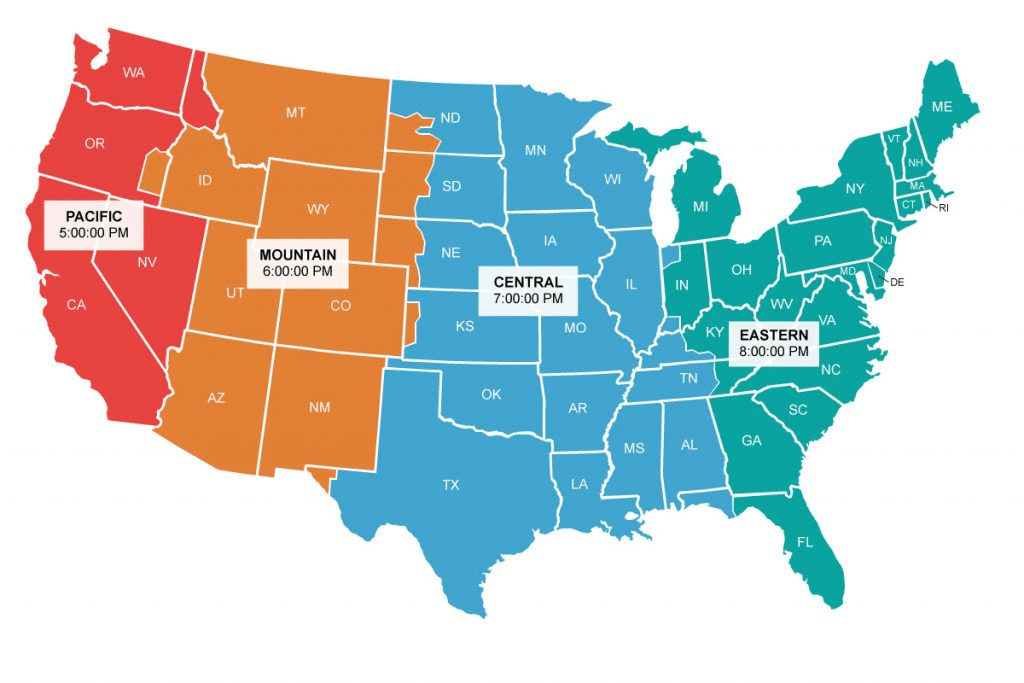
While the time zone map suggests neat divisions, the reality on the ground is more complex. California borders Nevada to the east, Oregon to the north, and Arizona to the east. However, Arizona (with the exception of the Navajo Nation) does not observe Daylight Saving Time, creating a curious patchwork of time just east of the Sierra Nevada.
This geographic quirk has real-world consequences. A business call between Los Angeles and Phoenix must account for a one-hour difference during the winter months, but the gap disappears in the summer. Similarly, travelers moving between coastal and inland regions must remain vigilant regarding the local observance of the time.
**The Digital and Scientific Framework**
In the digital age, time is not merely a human construct but a critical data point. Computer networks, financial transactions, and global navigation systems rely on precise timekeeping. California, as a hub of technological innovation, is deeply embedded in this infrastructure.
Internet Protocol (IP) timestamps, server logs, and database entries all use Coordinated Universal Time (UTC) as a neutral reference. When a user in Los Angeles checks their email at 9:00 AM PDT, the server records the event as 16:00 UTC. This abstraction layer ensures consistency across international borders.
**Expert Perspectives**
To understand the significance of this temporal structure, it is helpful to consider the views of those who study time and its relationship to society. Historians and sociologists often note that time zones represent a victory of standardization over nature.
"The implementation of uniform time zones was less about telling time and more about organizing society," explains a historian specializing in industrialization. "It allowed for the synchronization of markets, the coordination of transportation, and the unification of national markets. California, being a major economic engine, was a prime example of this necessity."
Furthermore, the debate regarding Daylight Saving Time continues among researchers. While the original intent was to conserve energy, modern studies suggest the energy savings are marginal, if they exist at all. The impact on public health, however, is clearer; the spring transition is associated with a slight increase in heart attacks and traffic accidents due to sleep disruption.
**Global Context and Communication**
For international relations and global business, the time zone in California is a fixed variable. When it is noon in Los Angeles, it is 8:00 PM in London (GMT) and 4:00 AM the next day in Tokyo (JST). This makes California a crucial junction for trans-Pacific trade and diplomacy.
Major stock exchanges like the NASDAQ and the New York Stock Exchange open and close based on Eastern Time, which is derived from Pacific Time. A trader in San Francisco must be acutely aware of the temporal offset to execute timely buy and sell orders.
**Looking Ahead**
The future of timekeeping in California remains tied to the national framework. While some legislators have periodically proposed abolishing the bi-annual time change in favor of permanent Daylight Saving Time, such changes require federal approval. Until then, the state will continue its rhythmic dance between PST and PDT.
Understanding this system is more than a matter of trivia; it is a practical skill. Whether scheduling a conference call with an international partner or planning a trip across time zones, the awareness of California’s temporal position is a valuable asset in navigating the complexities of a connected world.
Related Post
What Is Our Time Zone In California: Navigating Pacific Standard Time and Daylight Saving Shifts
The Unseen Choice: How California’s Time Zone Shapes Time, Life, and Legacy
What Is The Time Zone In California: Understanding Pacific Standard Time And Daylight Saving

Kicking the Comedian's Wheel at 50: Understanding the Fierce Career and Legacy of Bobby Lee Age


