Unlock the Secrets of Zillow Rent Estimate: Your Ultimate Guide to Rental Valuation
Unlock the Secrets of Zillow Rent Estimate: Your Ultimate Guide to Rental Valuation
Navigating the complex landscape of rental pricing can be a daunting task for both tenants and landlords. Zillow Rent Estimate emerges as a pivotal tool in this arena, offering a data-driven approximation of market value for residential properties. This article delves into the mechanics, benefits, and limitations of this algorithm, providing a clear understanding of how it determines fair market rent.
The Mechanics Behind the Algorithm
At its core, Zillow Rent Estimate is a sophisticated piece of data analysis. It does not rely on a single factor but rather synthesizes a multitude of data points to generate a figure. Understanding these components is crucial for interpreting the results effectively.
Data Aggregation and Analysis
The foundation of the estimate is vast troves of public and proprietary data. Zillow aggregates information from county records, multiple listing services, and its own historical database of rental transactions. This comprehensive approach allows the algorithm to identify trends and patterns specific to a hyper-local area.
- Property Characteristics: The number of bedrooms, square footage, the presence of a garage, or updated kitchen appliances significantly influence the valuation.
- Location Metrics: Proximity to schools, public transportation, grocery stores, and employment centers are weighted heavily. A property half a mile from a subway station will typically command a higher estimate than one a mile away.
- Market Dynamics: The system analyzes current rental listings and recently leased properties to gauge supply and demand in real-time.
Computational Modeling
Once the data is collected, proprietary machine learning models go to work. These models compare the subject property to similar units, known as "comps," that have rented in the recent past. It adjusts for variables such as year built, square footage differential, and amenities like in-unit laundry or a dishwasher.
"The goal is to provide a snapshot of what a typical landlord might receive and a typical tenant might pay," explains a property analytics expert familiar with municipal data strategies. "It's about creating a standard benchmark in a market that is often opaque."
Leveraging the Estimate for Landlords
For property owners and managers, Zillow Rent Estimate serves as a strategic tool. Setting the right price is a balancing act: pricing too high can lead to vacancies, while pricing too low leaves money on the table.
Pricing Strategy and Market Positioning
Landlords can use the estimate to position their listing competitively. If the estimate is $2,500, a landlord might price at $2,450 to attract more attention or $2,550 if the property offers superior finishes.
- Initial Pricing: Use the estimate as a starting point, not a final number.
- Competitive Analysis: Manually check listings of similar homes within a one-mile radius to validate the algorithm's number.
- Adjusting for Premiums: Factor in renovations or unique features that the algorithm might not fully capture.
Utilizing the Estimate for Tenants
Tenants often feel powerless in rental negotiations. However, a Zillow Rent Estimate empowers renters with knowledge. Armed with data, a potential tenant can negotiate from a position of strength.
Negotiation and Budgeting
If a landlord lists a property significantly above the estimate, a tenant can politely reference the Zillow data to request a reduction or justify a counter-offer. Conversely, if the property is listed below estimate, the tenant can verify if there are hidden deficiencies in the unit.
It acts as a shield against unfair pricing. In a competitive market where demand outstrips supply, tenants who understand the valuation are less likely to be overcharged.
Limitations and Criticisms
Despite its utility, it is vital to approach Zillow Rent Estimate with a critical eye. The algorithm is not infallible and can sometimes be inaccurate.
Common Discrepancies
Users frequently report variances, particularly in rapidly developing neighborhoods or for uniquely customized homes. The algorithm struggles with subjectivity.
- Condition of Unit: The estimate cannot account for a freshly painted apartment versus one that needs repainting.
- View and Layout: A unit with a balcony or a desirable floor plan might rent for more than the estimate suggests.
- Turn-off Factors: Proximity to negative amenities like crime hotspots, noise pollution, or undesirable neighbors might not be fully factored in.
Maximizing Accuracy
To get the most reliable number, users must interact intelligently with the tool. Blindly accepting the figure as gospel is a mistake.
- Refine the Search: Ensure the property type selected matches the actual unit (e.g., selecting "Apartment" vs. "Condo" if applicable).
- Verify Comps: Look at the comparable rentals the tool suggests. Are they truly similar in quality and location?
- Check Timing: Rental markets fluctuate seasonally. Estimates in winter might differ significantly from summer estimates.
Conclusion: A Tool, Not a Tyrant
Zillow Rent Estimate is a powerful resource in the modern rental ecosystem. It demystifies pricing, bringing transparency to an often-opaque transaction. However, it is merely a guide—a data point in a sea of variables.
Smart renters and landlords use it as a baseline for discussion, combining algorithmic data with human insight regarding property condition and market nuances. In doing so, they transform a simple estimate into a precise negotiation instrument.
Related Post
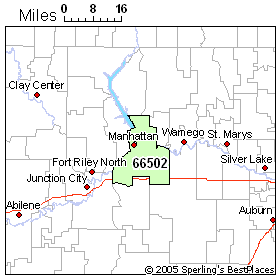
The Ultimate Guide to Manhattan, Kansas Zip Code: All You Need to Know

Unleashing the Potential of Property Search Miami: A Comprehensive Guide

Exploring the Ocean Depths: What's 47 Meters?

Uncovering the Best of Global Journalism: Top 10 International News Channels You Need to Know