Unlocking the Secrets of HCN: The Definitive Guide to the Hcn Lewis Dot Structure and Its Chemical Mastery
Unlocking the Secrets of HCN: The Definitive Guide to the Hcn Lewis Dot Structure and Its Chemical Mastery
Hydrogen cyanide, commonly known as HCN, presents a deceptively simple molecular arrangement that belies its complex chemical behavior and industrial significance. This linear triatomic molecule, central to numerous industrial processes and biochemical pathways, derives its stability and reactivity from a precise electron configuration best understood through Lewis dot structures. By visually mapping the valence electrons and formal charges of hydrogen, carbon, and nitrogen, the HCN Lewis dot structure provides an essential blueprint for predicting its bonding geometry, polarity, and role as a crucial precursor in synthesizing everything as diverse as nylon and pharmaceuticals.
To grasp the architecture of HCN, one must first deconstruct its constituent atoms and their inherent valence electrons. Hydrogen, the simplest element, possesses a single electron in its outermost shell, seeking to pair up to achieve the stable configuration of the nearest noble gas, helium. Carbon, with an atomic number of six, has four valence electrons, yearning to form four bonds to complete its octet. Nitrogen, atomic number seven, brings five valence electrons to the table, striving to complete its octet with three additional electrons. The magic of HCN lies in how these three disparate atoms achieve stability through a sophisticated sharing of electrons, a process meticulously illustrated by the Lewis dot formalism.
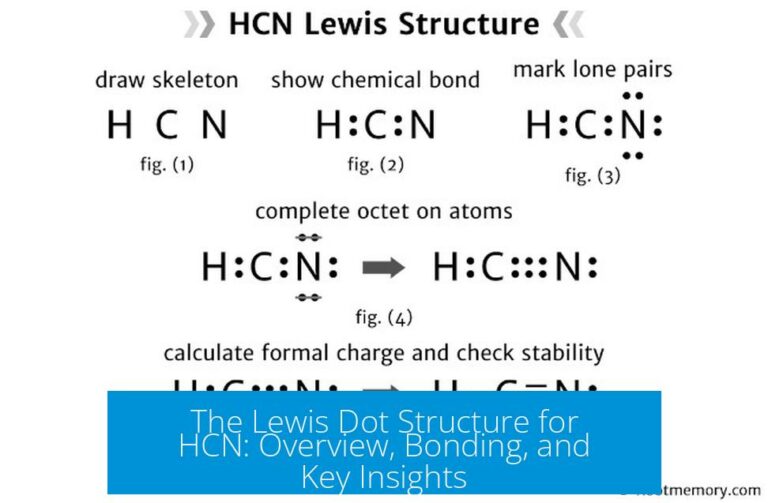
The construction of the HCN Lewis dot structure follows a systematic logic that prioritizes the placement of the central atom and the satisfaction of the octet rule. In linear molecules like HCN, the carbon atom invariably assumes the central position, flanked by hydrogen on one end and nitrogen on the other. The process begins by calculating the total number of valence electrons available for bonding. Hydrogen contributes 1, carbon contributes 4, and nitrogen contributes 5, resulting in a total of 10 valence electrons for the entire molecule. The challenge is to arrange these electrons in bonds and lone pairs such that hydrogen has a duet (2 electrons) and both carbon and nitrogen achieve a full octet (8 electrons), while also minimizing formal charges to create the most stable resonance structure.
The journey to the final HCN Lewis dot structure involves several critical steps, each guided by the fundamental principles of chemical bonding. First, a skeletal framework is drawn, with carbon bonded to hydrogen and nitrogen by single lines representing shared electron pairs. This initial configuration uses 2 electrons for the H-C bond and 2 for the C-N bond, leaving 6 electrons remaining. These remaining electrons are then distributed as lone pairs, beginning with the nitrogen atom, which is highly electronegative and readily accepts electrons. Nititrogen is assigned three lone pairs, accounting for 6 electrons and completing its octet. At this stage, hydrogen possesses its required 2 electrons, and nitrogen possesses its octet, but carbon is still deficient, possessing only 4 electrons from its single bond to nitrogen. To resolve this, a multiple bond must form. A triple bond is created between carbon and nitrogen, involving the sharing of three pairs of electrons. This transformation not only completes carbon's octet but also satisfies nitrogen's octet with a formal charge of zero, resulting in the iconic structure of HCN: H-C≡N.
The significance of the HCN Lewis dot structure extends far beyond a mere academic exercise; it is a predictive tool that explains the molecule's tangible properties and behavior. The linear geometry deduced from the Lewis structure—where bond angles are 180 degrees—has been confirmed by advanced spectroscopic techniques, aligning perfectly with VSEPR theory. Furthermore, the presence of a polar triple bond, combined with the molecule's asymmetry, imbues HCN with a significant dipole moment. The Lewis dot structure visually represents this polarity, showing the nitrogen end carrying a partial negative charge and the hydrogen end a partial positive charge. This polarity is a direct consequence of the electron distribution depicted in the diagram, where the highly electronegative nitrogen pulls the bonding electrons closer to itself. Understanding this electronic distribution is critical for predicting how HCN will interact with solvents, react with other chemicals, and permeate biological membranes.
The practical applications of HCN, rooted in its Lewis structure, underscore its importance across multiple industries. In organic synthesis, HCN serves as a cornerstone for the formation of more complex carbon-based molecules. Through a reaction known as the Strecker synthesis, the carbon-nitrogen triple bond of HCN acts as a powerful electrophile, allowing for the construction of amino acids, the building blocks of proteins. This process is fundamental to the production of pharmaceuticals and agricultural chemicals. Moreover, HCN is a vital precursor in the manufacturing of adiponitrile, a key intermediate in the production of nylon 6,6, a ubiquitous polymer found in textiles, carpets, and countless plastic products. The precise reactivity of the nitrile group (-C≡N), clearly defined by the Lewis structure, dictates these transformative chemical processes.
Despite its utility, hydrogen cyanide is infamous as a potent toxin, a fact that is also explicable through its molecular structure. The simplicity of the HCN Lewis dot structure, featuring a hydrogen atom bonded to a highly reactive carbon, creates a volatile molecule capable of disrupting cellular respiration. It inhibits the enzyme cytochrome c oxidase within the mitochondria, effectively halting the electron transport chain and bringing biological energy production to a standstill. This lethality necessitates stringent safety protocols in any industrial setting where HCN is produced or handled. Its use in fumigation and electroplating, therefore, represents a careful balancing act between its powerful chemical utility and its inherent danger, a balance understood only through a deep comprehension of its bonding and electronic structure as depicted in the Lewis diagram.
For students and chemists alike, mastering the HCN Lewis dot structure is a rite of passage that builds a foundation for more advanced concepts in chemistry. It is a quintessential example of how to apply the octet rule, calculate formal charges, and determine molecular geometry. The structure serves as a reference point for comparing and contrasting with other cyanide-containing compounds and for understanding the isoelectronic principle—how atoms and molecules with the same number of valence electrons, like nitrogen gas (N₂) and carbon monoxide (CO), exhibit similar bonding patterns. The triple bond in HCN is a subject of particular fascination, representing one of the strongest types of covalent bonds and a prime example of how atoms strive for noble gas configurations. The ability to draw and interpret this structure is, in essence, the ability to speak the language of molecules.
In the realm of computational chemistry and modern molecular modeling, the classical HCN Lewis dot structure remains a vital starting point. While advanced theories like molecular orbital theory provide a more nuanced picture of electron delocalization, the Lewis structure offers an intuitive and accessible model. It encapsulates the core electronic interactions in a format that is easily communicated and understood. As one chemist noted in a discussion on fundamental chemical principles, "The Lewis structure is the map, the essential guide that allows us to navigate the complex terrain of molecular geometry and reactivity, even as we develop more sophisticated tools to explore the terrain itself." It is this enduring utility that ensures the HCN Lewis dot structure remains a fundamental concept taught in chemistry classrooms worldwide.
The evolution of chemical education has seen the integration of digital tools and 3D modeling software, yet the humble Lewis dot structure persists as an indispensable component of the curriculum. For HCN, drawing the structure with a linear arrangement, a triple bond, and appropriate lone pairs reinforces spatial reasoning and the connection between 2D diagrams and 3D molecular reality. Interactive simulations allow students to visualize the electron density around the molecule, confirming the polarity inferred from the Lewis diagram. This blend of traditional notation and modern technology provides a comprehensive learning experience, ensuring that the next generation of scientists understands not just the "how" but the "why" behind molecular bonding. The HCN Lewis dot structure, therefore, is not just a static image but a dynamic pedagogical tool.
Ultimately, the HCN Lewis dot structure is far more than a textbook diagram; it is a concise representation of a molecule with a dual identity. It is both a fundamental building block of modern industry and a potent chemical weapon, a facilitator of life-sustaining pharmaceuticals and a agent of toxicity. Its linear form, its triple bond, and its polar nature are all captured in a few simple lines and dots, telling a story of electron sharing and atomic stability. By mastering the interpretation of the HCN Lewis dot structure, one gains a deeper appreciation for the intricate dance of electrons that governs the material world, unlocking insights into reactivity, structure, and the very essence of chemical interaction.
Related Post
Unlocking Molecular Secrets: The Critical Role of HCN Lewis Dot Structure in Chemistry

Unlocking Molecular Secrets: The Critical Role of HCN’s Lewis Dot Structure in Chemical Reactivity

Unveiling the Truth: A Comprehensive Guide to Dob Inspection - Separating Myth from Reality

Stefania Ferrario Nude


