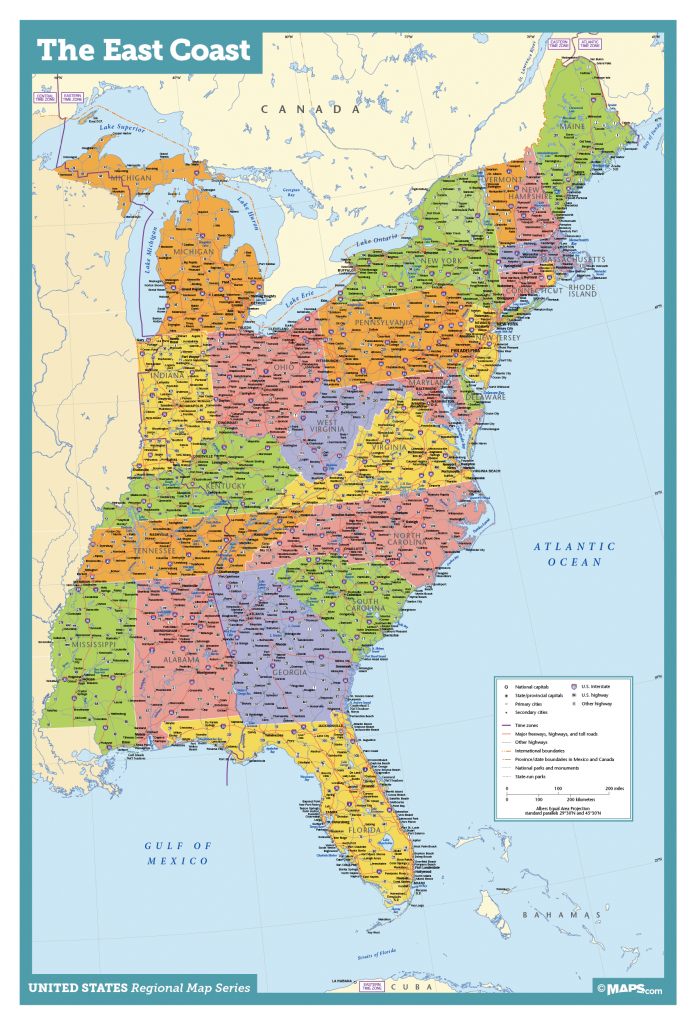
US East Coast Faces Perfect Storm: Climate Shocks, Infrastructure Debt, and the $30 Trillion Question
US East Coast Faces Perfect Storm: Climate Shocks, Infrastructure Debt, and the $30 Trillion Question
The US East Coast stands at a convergence point where accelerating climate impacts, century-old infrastructure, and constrained public finances are forcing a fundamental rethink of risk and resilience. From recurring tidal flooding in Norfolk and Baltimore to heat domes over New York and Philadelphia, the region is experiencing an intensifying blend of chronic and acute hazards. With sea levels rising faster than global averages and storm tracks shifting, municipal leaders, federal agencies, and private investors are being pushed to answer a single, daunting question: how will the East Coast fund and execute a transformation at the scale and speed required? This article examines the physical, fiscal, and governance drivers reshaping the region’s vulnerability and the emerging pathways, and hard choices, that define its adaptation frontier.
The physical forces reshaping the East Coast are not hypothetical scenarios but lived realities documented in flood maps, tide charts, and disaster declarations. Relative sea level rise along the Mid-Atlantic and Northeast is running at three to four times the global average, driven by land subsidence, ocean currents, and thermal expansion. In Norfolk, parts of the city sink up to five millimeters a year, effectively amplifying even modest increases in ocean height. The result is a sharp uptick in sunny-day flooding, where high tides back up drainage systems in the absence of any storm. According to the National Oceanic and Atmospheric Administration, the number of flood days in Annapolis, Baltimore, and Washington has doubled since 2000. At the same time, extreme precipitation events have grown heavier, overwhelming aging combined sewer systems in cities from Philadelphia to Providence. Hurricane Ida in 2021, while making landfall in Louisiana, spun off torrential rains that killed people in New York and New Jersey, exposing how inland rivers and aging urban infrastructure can become death traps when rainfall intensities exceed design standards. Heatwaves, too, are becoming more frequent and intense. In July 2023, New York City recorded temperatures above 100 degrees Fahrenheit for the first time in its history, pushing the electrical grid to the brink and highlighting how heat compounds risks to health, water systems, and energy reliability. These physical shifts are not distributed evenly. Lower-income neighborhoods often sit in floodplains or heat islands, lacking tree cover and access to cooling, while critical infrastructure such as transit tunnels and power substations lie in low-lying areas built for a past climate.
The economic and fiscal implications of these changes are staggering, touching not only emergency response and recovery but also the long-term value of real estate, insurance markets, and regional competitiveness. A 2023 analysis by the First Street Foundation projected that properties along the East Coast currently exposed to substantial coastal flood risk are underinsured by hundreds of billions of dollars, with losses increasingly falling on homeowners rather than on large commercial players. As private insurers retreat from high-risk coastal areas, state-run residual markets are struggling to keep pace, and premiums are climbing even for properties with relatively low historic claims. Moody’s and other credit rating agencies have begun factoring climate risk into their assessments of municipal finance, raising the cost of borrowing for cities that fail to demonstrate proactive risk management. The American Society of Civil Engineers gives US infrastructure a grade in the low D range, with much of the East Coast’s water, sewer, transportation, and energy systems dating from the mid-20th century or earlier. In coastal cities, much of this infrastructure was designed for sea levels that no longer exist. The costs of inaction are already visible in unplanned outages, service disruptions, and productivity losses from flooding and heat. On the other hand, investment in resilient design, nature-based solutions such as wetlands and urban forests, and modernized grids can yield substantial returns. Studies from the National Institute of Standards and Technology suggest that every dollar invested in hazard mitigation can save society four to six dollars in recovery costs, a ratio that becomes even more compelling when life-safety and health benefits are included. Public transit agencies, for example, are recalculating design elevations, relocating critical equipment, and hardening substations, while utilities are burying lines, adding microgrids, and using data analytics to anticipate fault points under extreme conditions.
The governance and policy landscape across the US East Coast is fragmented, reflecting a patchwork of state regulations, municipal capacities, and federal incentives that can either accelerate or slow adaptation. Some states, such as New York and Massachusetts, have established dedicated climate funds, imposed stricter building codes in coastal zones, and invested heavily in resiliency planning for ports and transit. New York’s Climate Leadership and Community Protection Act sets ambitious targets that implicitly require hardening infrastructure and retrofitting buildings, although progress on funding and implementation remains uneven. Maryland and Virginia have advanced plans to manage coastal retreat in vulnerable areas, tying land-use decisions to updated flood maps and sea-level rise projections. At the federal level, the Bipartisan Infrastructure Law and Inflation Reduction Act have unlocked hundreds of billions for transportation, water, and clean energy projects, with specific programs targeting climate resilience. Yet these funds compete with entrenched priorities, and eligibility requirements can be complex, leaving smaller municipalities at a disadvantage. Beyond formal policy, adaptation is increasingly shaped by litigation and disclosure. Property owners, institutional investors, and advocacy groups are using environmental regulations, public records requests, and shareholder resolutions to push for more transparent risk reporting and more ambitious action. In cities from Charleston to New Haven, residents have filed lawsuits demanding that governments account for climate risks in planning and budgeting, arguing that failure to act violates public trust and equal protection principles. This evolving legal environment is prompting planners to document assumptions, model multiple futures, and engage communities directly to ensure that adaptation decisions reflect local needs and knowledge.
Looking ahead, the question for the US East Coast is not whether to adapt, but how to adapt in ways that are equitable, financially sustainable, and technically sound. That requires integrating climate science with fiscal realities, prioritizing projects that address multiple hazards at once, and designing systems that can be upgraded over time as risks evolve. Nature-based solutions, such as restoring wetlands, expanding urban tree canopy, and reinforcing dunes, offer co-benefits for biodiversity, heat mitigation, and recreation, while often costing less than purely engineered approaches. Hard infrastructure, such as sea walls, pump stations, and upgraded stormwater systems, will remain necessary in many high-risk corridors, but must be sited and designed to avoid shifting risks to neighboring communities. Equitable adaptation demands that low-income households, renters, and vulnerable populations receive direct support, whether through targeted subsidies, community land trusts, or inclusive planning processes that give residents a voice in decisions affecting their homes and streets. The private sector also has a role, from real estate developers incorporating resilience standards to financial institutions aligning lending practices with long-term climate risks. Cities that align land-use, housing, transportation, and emergency management policies will be better positioned to channel investment toward outcomes that reduce exposure and enhance adaptive capacity. Ultimately, the East Coast’s path forward will be defined by its ability to treat resilience not as a one-time project but as an ongoing process of learning, adjusting, and cooperating across jurisdictions and sectors. The costs of delay are measured not only in dollars but in lives disrupted and ecosystems lost, making the next decade decisive for a region that remains the economic and cultural engine of the United States.
Related Post