Walgreens TB Test: Fast, Reliable Screening Available at Your Local Pharmacy
Walgreens TB Test: Fast, Reliable Screening Available at Your Local Pharmacy
Millions of Americans are exposed to tuberculosis each year, yet many carry latent infection without knowing it. Walgreens now offers a tuberculin skin test at thousands of locations, providing a convenient way to identify risk before symptoms develop. This article explains how the test works, what the results mean, and how pharmacy-based testing fits into public health strategy.
Tuberculosis remains a serious global health concern, even in countries with low overall rates. The disease spreads through airborne particles and can lie dormant for years before becoming active. In the United States, public health authorities rely on targeted screening to reduce transmission and protect vulnerable populations.
Walgreens has positioned itself as a participant in this effort by expanding access to TB testing. Customers can visit a local store, receive a qualified injection, and return for a follow-up reading within the standard timeframe. The approach mirrors services offered by health departments and private clinics, with the convenience of extended pharmacy hours.
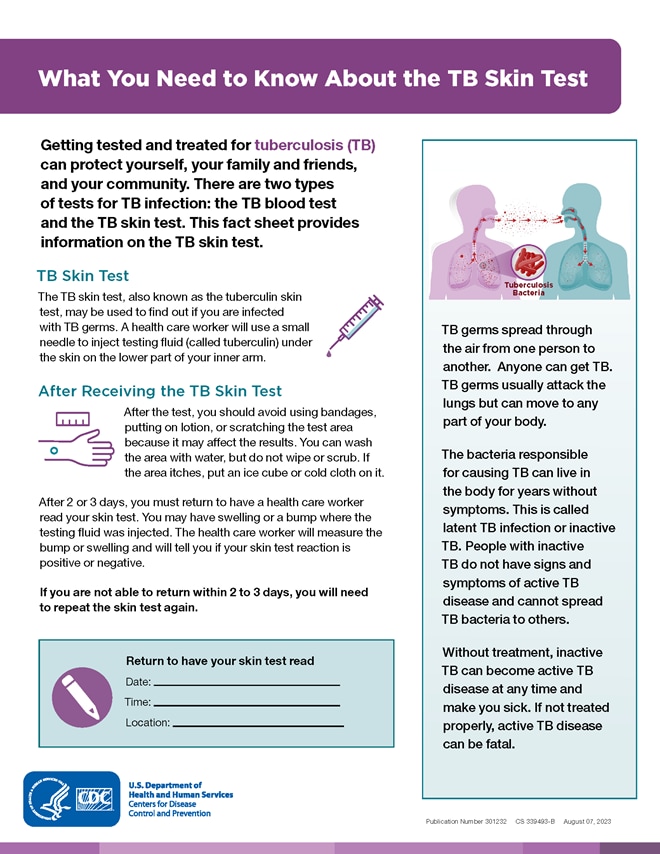
The standard method used by Walgreens is the Mantoux tuberculin skin test, sometimes referred to as the PPD. A small amount of purified protein derivative is injected just under the surface of the skin on the forearm. Because the injection does not contain live bacteria, it cannot cause tuberculosis disease.
After the injection, the patient must return between 48 and 72 hours to have the test site examined. A healthcare professional measures any swelling or induration, which is a firm raised area under the skin. The size of the reaction, combined with individual risk factors, determines whether the result is considered positive or negative.
Not every bump or redness indicates infection. The interpretation depends on specific guidelines published by the Centers for Disease Control and Prevention. For people with no known risk factors, a larger induration is required for a positive result. For others, even a small reaction may warrant further evaluation.
A positive tuberculin skin test does not mean a person has active disease. Instead, it signals that the immune system has been exposed to tuberculosis bacteria at some point. The next step usually involves a chest X-ray and a medical evaluation to determine whether the infection is latent or active.
Latent tuberculosis infection can be treated with a course of antibiotics, often taken for several months. Treating latent infection reduces the chance that it will progress to active disease, which can be serious and contagious. By offering the skin test in a pharmacy setting, Walgreens helps connect these individuals to care earlier.
In many communities, access to public health services can be limited. Scheduling an appointment at a health department may require time off work or long-distance travel. Pharmacy-based testing offers an alternative that fits into everyday routines, such as a quick stop after work or school.
Some Walgreens locations also provide a QuantiFERON-TB Gold blood test as an alternative to the skin test. This laboratory-based test measures immune response to tuberculosis antigens and does not require a return visit. Results are typically available within a few days, and the process avoids the need for a second appointment.
Each testing method has its advantages and limitations. The skin test is well established and recommended for certain age groups and populations. The blood test may be preferred for individuals who have received the bacille Calmette-Guérin, or BCG, vaccine. Pharmacists can often help customers understand which option is most appropriate based on their history.
For employers and organizations, pharmacy-based testing can simplify workplace screening programs. Walgreens has worked with businesses to accommodate group visits during off-hours. This approach can streamline compliance with occupational health requirements while minimizing disruptions.
Public health experts emphasize that testing is only one part of tuberculosis control. Infection control measures, such as ventilation improvements and prompt treatment of active cases, remain essential. Outreach and education help ensure that people who test positive understand the next steps and follow through with recommended care.
Pharmacy-based TB testing also highlights the evolving role of retail clinics. What began with simple immunizations and seasonal flu shots has expanded to include more complex preventive services. By leveraging their networks and staff training, chains like Walgreens contribute to broader public health goals.
Patients who receive a positive result are not left to navigate the process alone. Walgreens staff typically provide written information and help arrange follow-up with a primary care provider or local health department. This coordination can be especially important for individuals who lack regular medical care.
Cost is another factor that influences access to testing. Many insurance plans cover TB screening when it is medically necessary. Walgreens often participates in these plans, although coverage details can vary by location and policy. Uninsured customers may pay a flat fee, which can be more affordable than similar services elsewhere.
Privacy and professionalism are central to the pharmacy experience. Testing is conducted in a discreet manner, and results are handled according to strict health information rules. Customers can ask questions in a private counseling area, which may reduce barriers to care.
Community health workers and pharmacists note that convenience can increase testing uptake. When services are easy to reach, more people complete the process, from initial screening to final follow-up. This trend is particularly important in areas with high rates of tuberculosis exposure.
As with any medical procedure, there are situations where the skin test should be delayed or repeated. Recent vaccination, certain skin conditions, and a history of severe reactions can all affect interpretation. Walgreens staff are trained to identify these cases and refer customers to a physician when needed.
Clear communication plays a key role in ensuring that patients understand the process. Many Walgreens locations provide printed materials in multiple languages. These resources explain the timing of the test, what to expect, and how results should be used.
The expansion of TB testing in pharmacies reflects broader changes in how preventive care is delivered. Consumers increasingly expect quick, transparent, and affordable options for common health services. Meeting that expectation requires investment in training, quality control, and partnerships with public health agencies.
For individuals concerned about tuberculosis exposure, Walgreens TB testing offers a practical option. It bridges the gap between awareness and action, turning a potentially intimidating process into a routine visit. With consistent messaging and reliable follow-up, pharmacy-based screening can help reduce the burden of disease in local communities.
Related Post
Walgreens TB Test Cost: Clear Pricing, Fast Results, and What to Expect
Walgreens TB Test Costs Insurance And What To Expect: A Clear Guide To Pricing, Coverage, and Process
Get Tested, Get Convenient: Walgreens TB Test Availability, Cost, and What to Expect


