What Are The Advantages Of Recombination During Meiosis: How Shuffling Genes Fuels Evolution And Health
What Are The Advantages Of Recombination During Meiosis: How Shuffling Genes Fuels Evolution And Health
Recombination during meiosis is the fundamental mechanism that reshuffles parental DNA, generating unique combinations of alleles in every gamete. This biological shuffling not only drives genetic diversity within populations but also purges harmful mutations and builds fitter genotypes. Understanding these advantages reveals why sexual reproduction, powered by recombination, has dominated complex life on Earth.
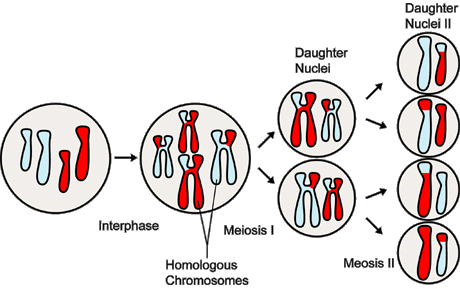
In the intricate dance of meiosis, homologous chromosomes pair up and exchange segments in a process known as crossing over. This physical swapping of DNA occurs in prophase I and ensures that offspring inherit a mosaic of genes from each parent, rather than a simple clone. While the basic mechanics have been understood for decades, modern genomics is revealing in ever-greater detail how recombination shapes genomes, influences disease risk, and powers adaptation.
The primary evolutionary advantage of recombination is the generation of genetic variation upon which natural selection can act. Without recombination, alleles would remain linked in fixed combinations, drastically slowing the rate at which beneficial mutations spread or detrimental ones are purged. By breaking up these linkages, recombination produces novel genotypes that may be better suited to shifting environments, pathogens, and ecological niches. As evolutionary biologist Professor Sarah Otto of the University of British Columbia has explained, “Recombination allows beneficial mutations to combine in individuals and helps purge deleterious mutations more effectively. It is the key to generating the variation that adaptation acts upon.” This genetic diversity is the raw material for evolution, enabling populations to survive new challenges and avoid the pitfalls of genetic uniformity.
Beyond long-term evolutionary dynamics, recombination provides immediate advantages at the individual and population level. It reduces the likelihood that harmful mutations accumulate in a genome, a process known as Muller’s ratchet in asexual populations. In humans, for example, recombination hotspots actively shuffle regions of DNA, which minimizes the chance that dangerous variants near essential genes will be inherited together. This process contributes to population robustness by ensuring that no individual carries a heavy burden of deleterious alleles.
Recombination also fine-tunes the architecture of genomes during evolution. When a beneficial mutation arises, recombination can combine it with other favorable alleles from different parts of the genome, creating a “supergenome” that outperforms its predecessors. Conversely, it can separate beneficial mutations that occur on the same chromosome, allowing natural selection to test and select among them independently. Consider the case of agricultural pathogens, where recombination within a population can rapidly generate strains with new combinations of virulence factors. This ability to recombine accelerates the emergence of variants capable of overcoming host resistance, demonstrating both the power and the complexity of the recombination advantage.
At the molecular level, recombination is carefully regulated to optimize its benefits while minimizing harmful errors. In many organisms, recombination events do not occur randomly; they are concentrated at specific hotspots. In humans, the PRDM9 protein binds to specific DNA sequences and initiates the formation of double-strand breaks, which are then repaired using the homologous chromosome as a template. This targeted approach ensures that recombination occurs in locations that maximize genetic diversity without disrupting essential genes. When these mechanisms fail, the consequences can be severe, leading to infertility, miscarriage, or genetic disorders. Thus, the advantages of recombination are intricately linked to the precision with which the process is controlled.
The importance of recombination extends into medicine and agriculture, where understanding these advantages has tangible applications. In cancer research, for instance, tumors often exhibit highly rearranged genomes. Mapping recombination patterns in cancer cells helps identify drivers of tumor evolution and points to vulnerabilities that can be targeted therapeutically. Similarly, in breeding programs, recombination is the cornerstone of creating crop varieties with improved yield, disease resistance, and climate resilience. Geneticists deliberately cross plants or animals to shuffle desirable traits, relying on the natural power of recombination to generate superior combinations. As geneticist Dr. Sarah McClean has noted, “Every hybrid seed we plant is a testament to the power of recombination. It allows us to capture the best of both parents in a way that selection alone cannot achieve.”
However, the advantages of recombination are not absolute. The process requires energy and cellular machinery, and in some stable environments, asexual reproduction can be more efficient. Yet for most complex, long-lived organisms, the benefits of recombination in adapting to change outweigh these costs. The continual reshuffling of alleles means that populations are always “one step ahead” of emerging threats, whether they are new viruses, environmental stressors, or changing habitats.
In the human context, recombination is a guardian of genetic health. It ensures that each sperm and egg cell carries a unique set of genes, which not only promotes species resilience but also helps reduce the expression of harmful recessive traits. By mixing alleles, recombination can prevent the inheritance of two copies of a deleterious mutation, offering a layer of protection against genetic disease. Large-scale studies of human genomes have consistently shown that regions with higher recombination rates tend to harbor fewer disease-causing variants, underscoring the protective role of this process.
Modern technology has allowed scientists to map recombination with unprecedented resolution. By sequencing the DNA of thousands of individuals, researchers can identify hotspots where crossing over occurs with high frequency and understand how these patterns differ among people. This work has revealed that recombination rates themselves can evolve, shaped by natural selection in ways that optimize the balance between diversity and stability. The resulting maps are now essential tools for tracing human history, understanding population migrations, and identifying genes associated with complex traits.
Ultimately, the advantages of recombination during meiosis lie in its dual role as a creator of diversity and a sorter of fitness. It fuels the engine of evolution by generating endless genetic permutations, while simultaneously acting as a quality control mechanism that enhances the survival of the fittest. In a world that is constantly changing, this biological process ensures that life not only persists but thrives. From the microbes in our oceans to the mammals in our backyards, recombination remains nature’s most powerful strategy for building a resilient and dynamic web of life.
Related Post
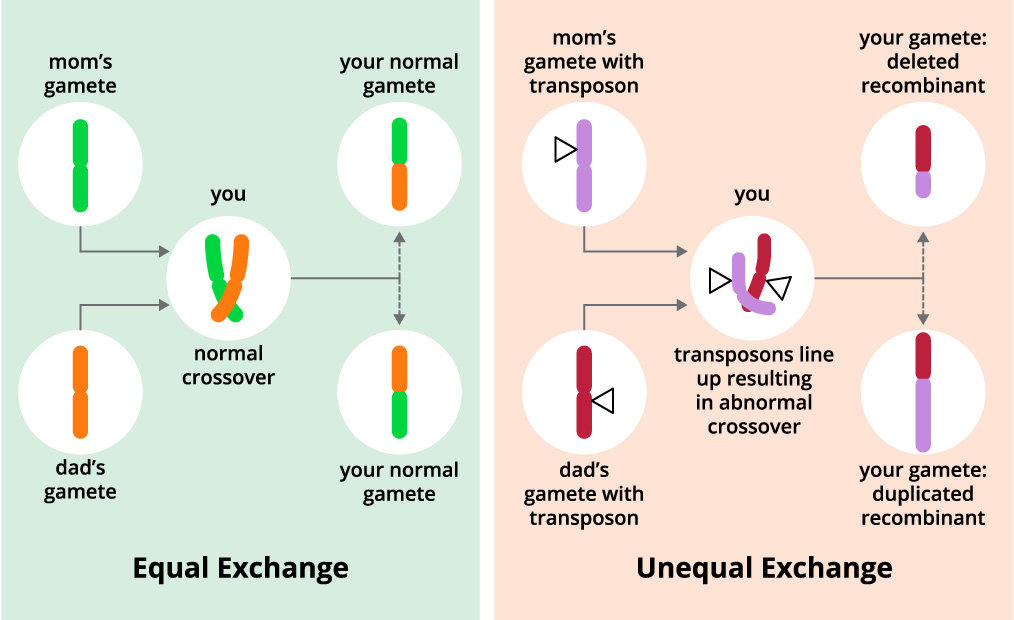
What Are The Advantages Of Recombination During Meiosis? The Genetic Engine Behind Diversity