What Is A Roman Numeral L: History, Rules, And Modern Usage
What Is A Roman Numeral L: History, Rules, And Modern Usage
The Roman numeral L represents the number fifty and is part of a numeric system rooted in ancient Rome, still visible today in clocks, book chapters, and movie credits. This article explores the origin, structure, and rules of Roman numerals, with a focused examination of L and its role in both historical and contemporary contexts. By understanding how L functions within the system, readers can better interpret and apply Roman numerals in practical scenarios.
Roman numerals emerged as a standard counting method in ancient Rome, evolving from Etrusonic symbols and later refined into the familiar set of letters used to represent specific values. Unlike the Hindu-Arabic numeral system, which is positional and includes zero, Roman numerals are additive and subtractive, built from combinations of letters. The numeral L stands out as a key symbol, marking the value fifty and serving as a midpoint in the sequence of Roman numerals. Its presence in modern usage reflects a continued interest in classical design, tradition, and formal numbering.
The origins of Roman numerals are tied to the need for a reliable system of record-keeping and accounting in the Roman Empire. Traders, tax collectors, and officials required a method to denote quantities, leading to the adoption of symbols derived from familiar objects. According to historical accounts, the earliest forms of these numerals were etched into wood and stone, often following simple logic based on the number of strokes. Over time, the system stabilized around seven primary letters, each corresponding to a specific value, with L positioned centrally as a marker of fifty.
Understanding how Roman numerals are constructed helps explain the role of L within the system. Values are formed by combining letters and adding their values, with certain rules governing placement to avoid ambiguity. When a smaller numeral appears before a larger one, it is subtracted; otherwise, values are added. L itself never appears in a subtractive context, as it represents a mid-range value with no smaller numeral positioned before it in standard usage. This stability makes L a reliable and consistent element in Roman numeral notation.
The numeral L is formed from a single symbol, L, which is derived from a modified Greek letter, lambda. The exact evolution of this symbol is subject to scholarly debate, but it is widely accepted that the Romans adapted existing alphabetic characters for numeric purposes. Each letter was assigned a fixed value, and combinations of these letters allowed for the expression of a wide range of numbers. L, representing fifty, fits neatly into this framework, sitting between X (ten) and C (one hundred) in both position and value.
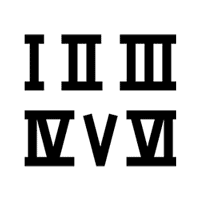
In practice, Roman numerals are constructed using a set of core symbols, each with a distinct value. The following list outlines the primary letters and their corresponding numbers:
- I – one
- V – five
- X – ten
- L – fifty
- C – one hundred
- D – five hundred
- M – one thousand
These symbols can be combined following specific rules. For instance, L appears in combinations such as LI (51), LII (52), and LX (60), where it is followed by smaller numerals to build toward the next milestone, in this case, one hundred.
The usage of L in historical documents provides insight into how Roman society managed numerical tasks. Inscriptions on monuments, legal texts, and military records often included Roman numerals to denote dates, quantities, and sequences. L might appear in the context of marking the fiftieth year of a reign, the fiftieth unit in a shipment, or the fiftieth position in a list. These applications highlight the practical importance of a clear and standardized system.
In the modern era, Roman numerals continue to hold cultural and functional significance, with L appearing in various contexts. Clocks often use IIII for four and V for five, but L appears regularly to mark the fiftieth minute. In book publishing, chapters and volumes are sometimes numbered using Roman numerals, especially in prefatory sections. Movie sequels and events also employ this practice, reinforcing a sense of tradition and continuity.
The use of Roman numerals in contemporary settings is largely ceremonial, though some specialized fields still rely on them for clarity or tradition. For example:
- Outlines and legal documents may use Roman numerals for major sections.
- Monarchs and popes are numbered using Roman numerals to distinguish between rulers with the same name.
- Sporting events, such as the Super Bowl, use Roman numerals to denote edition numbers.
In these cases, L would denote the fiftieth instance of an event or the fiftieth position in a sequence, maintaining its relevance in a digital age.
Despite the dominance of Arabic numerals in mathematics, science, and commerce, Roman numerals retain a unique cultural resonance. They evoke a connection to the past and are often chosen for their aesthetic or symbolic value. L, as a representation of fifty, carries a sense of balance and completeness, marking a significant halfway point in many sequences. This enduring appeal ensures that Roman numerals, including L, remain a familiar and respected part of modern notation.
Educational systems continue to teach Roman numerals as part of historical and linguistic studies, ensuring that students understand their structure and usage. Learning to read and write numbers such as L helps build number sense and familiarity with non-decimal systems. It also provides insight into how early societies solved practical problems without the benefit of modern computational tools. As a result, L serves not only as a numeral but also as a gateway to understanding ancient numerical thought.
The rules governing Roman numerals ensure consistency and prevent confusion, particularly when dealing with larger numbers. Certain principles apply universally:
- Symbols are generally written from largest to smallest from left to right.
- No symbol can be repeated more than three times in succession.
- Subtractive notation is used for numbers like four (IV) and nine (IX), but not for L.
- L can precede C to form numbers such as XXXXLXXXX, though this is nonstandard; proper usage would typically rely on simpler forms.
These rules help maintain clarity, especially in formal inscriptions and documents where precision is essential.
In summary, the Roman numeral L represents the number fifty and is a fundamental component of a historic numbering system that persists in modern culture. Its origins in ancient Rome, structural role within the numeral system, and continued use in contemporary applications demonstrate its lasting significance. By understanding what L is and how it functions, individuals gain a deeper appreciation for the evolution of numerical representation and its ongoing influence.
Related Post

What Is A Roman Numeral L Tracing the Legacy of a Timeless Numerical Symbol
What Is A Roman Numeral L? The Enduring Symbol of Power and Precision

Inside the Sssniperwolf Leaks Controversy: How a Hidden Network Campaign Unfolded in Fire

The Inspiring And Enigmatic Wife Of NBA Star Brook Lopez: Quiet Strength Behind A Elite’s Spotlight


