What Is PDT Time: Decoding Pacific Daylight Time for Global Professionals
What Is PDT Time: Decoding Pacific Daylight Time for Global Professionals
Pacific Daylight Time is the UTC-7 time zone observed during daylight saving time by regions in North America, primarily impacting the western United States and western Canada. It represents a significant shift in the temporal landscape for over 100 million residents, influencing everything from stock market openings to prime-time television broadcasts. This article provides a precise examination of PDT, its operational mechanics, and its critical role in the interconnected global economy.
The concept of time zones, and specifically the adjustment of Daylight Saving Time (DST), is a human construct designed to optimize the utilization of daylight. PDT is not a static entity but a seasonal designation that demands vigilance and awareness. Misunderstanding these shifts can lead to significant operational failures in logistics, finance, and communication.
The Mechanics of PDT: Science and Schedule
At its core, PDT is a civil implementation of a geographical standard. It is based on the solar time at the 120th meridian west of the Greenwich Meridian. Unlike Coordinated Universal Time (UTC), which is a stable atomic time standard, PDT is a dynamic offset that changes with the seasons.
The transition into and out of PDT follows a federally mandated schedule in the United States, established by the Energy Policy Act of 2005. This schedule aims to maximize evening daylight during the warmer months. The observance is not universal, however, and creates a patchwork of time zones even within a single country.
* **Start Date:** The second Sunday in March. At 2:00 AM standard time, clocks are moved forward to 3:00 AM daylight time. This is often referred to as "spring forward."
* **End Date:** The first Sunday in November. At 2:00 AM daylight time, clocks are moved back to 1:00 AM standard time. This is known as "fall back."
For example, when Eastern Daylight Time (EDT) is at 12:00 PM (noon) on a date in July, PDT will be 9:00 AM. This three-hour difference is a constant factor for professionals coordinating cross-country teams.
Geographic Reach and Jurisdictions
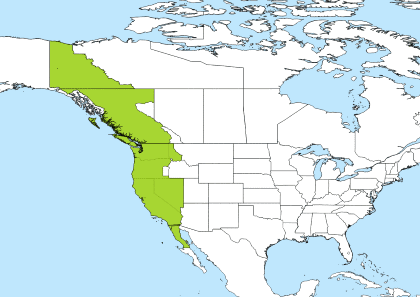
The primary jurisdictions observing PDT are located in the Pacific Time Zone. This encompasses a diverse and economically significant portion of North America. The time zone affects major population centers and industries that drive the North American market.
The following regions observe PDT during the summer months:
1. **Western Coast of the United States:** This includes the states of California, Washington, and Oregon. These are home to some of the world's most influential technology hubs and entertainment industries.
2. **Western Canada:** The province of British Columbia operates on PDT during the summer, aligning its business hours with its southern neighbors.
3. **Other Territories:** Certain territories in Mexico, most notably Baja California, also observe this time zone.
It is crucial to note that not all locations within these states or provinces observe PDT. The Navajo Nation, for instance, observes DST but does not switch to a "Pacific" variant, maintaining its own designated time zone. Additionally, the State of Arizona (with the exception of the Navajo Nation) and Hawaii do not observe DST at all, remaining on Pacific Standard Time (PST) and Hawaii-Aleutian Standard Time (HST) year-round.
PDT in the Global Economy
In an era of instantaneous digital communication, the significance of time zones might seem diminished. However, PDT remains a critical axis around which the global economy rotates. Its position relative to other major time zones creates specific windows of overlapping business hours, often referred to as "golden hours" for international trade.
For instance, the stock market in Los Angeles opens at 6:30 PM GMT during PDT. This creates a unique overlap with the London market, which is closing, and the Asian markets, which are just beginning their day. Financial analysts and traders must account for this temporal gap when executing high-frequency trades or analyzing market trends.
> "The temporal distance between New York and Los Angeles is not just a matter of geography; it's a fundamental variable in our risk management models. A miscalculated PDT timestamp can cascade into significant financial miscalculations," states a senior quantitative analyst at a leading investment firm, who wished to remain anonymous.
The technology sector is particularly sensitive to PDT. Silicon Valley, the epicenter of global innovation, operates primarily on PDT. This means that major product launches, earnings calls, and press conferences are scheduled with this time zone as a primary reference. Teams in Europe and Asia must carefully calibrate their schedules to align with the west coast working day.
Practical Applications and Daily Life
Beyond the boardroom and the trading floor, PDT permeates the fabric of daily life for its residents. The shift in daylight hours impacts energy consumption, public safety, and recreational activities.
During PDT, the sun sets later in the evening, reducing the need for residential lighting and, theoretically, lowering energy demand. However, this extended daylight can also lead to increased air conditioning usage as temperatures remain warm into the evening.
For the average citizen, the practical implication is a change in routine. Parents adjust school schedules, athletes modify training times, and television networks alter their broadcast timings. The phrase "Pacific Time" is often used as a colloquialism for "flexible" or "not definitive," reflecting the historical casualness associated with the west coast schedule. However, in the modern professional world, this flexibility has been largely standardized to meet global demands.
Pacific Daylight Time vs. Other Zones
Understanding PDT requires placing it in context with other major time zones. The relationship between these zones is the key to navigating international coordination.
* **vs. Eastern Daylight Time (EDT):** PDT is always 3 hours behind EDT. When it is noon in New York, it is 9:00 AM in Los Angeles.
* **vs. Greenwich Mean Time (GMT):** During PDT, the offset is UTC-7. This means GMT is 7 hours ahead of Pacific Daylight Time.
* **vs. Central European Summer Time (CEST):** CEST is UTC+2, making it 9 hours ahead of PDT. A business meeting scheduled for 9:00 AM in Frankfurt would correspond to 12:00 AM (midnight) in Los Angeles.
Technological Infrastructure and TimekeepingI
Modern society relies on a complex technological infrastructure to maintain temporal accuracy. Network Time Protocol (NTP) servers, GPS signals, and cellular network broadcasts continuously disseminate the correct time, accounting for time zones and DST transitions.
Operating systems and applications are programmed to automatically adjust for PDT. When a device updates its internal clock, it references a database of global time zones maintained by a community of developers. This ensures that a calendar event created in New York correctly appears at the appropriate hour for a user in Seattle.
However, technological reliance also creates vulnerabilities. In 2012, a bug in a major Australian time zone database caused widespread scheduling failures for businesses and operating systems that had not updated their software. This serves as a reminder that while technology mitigates human error in timekeeping, it is not infallible.
The Future of PDT and Time Zone Management
The practice of observing DST, and by extension PDT, is a subject of ongoing debate. Proponents argue that it saves energy and reduces traffic accidents by providing more light in the evening. Critics contend that the health impacts, such as disruptions to sleep patterns, outweigh the benefits.
Several U.S. states have passed legislation to abolish the bi-annual clock change, opting to remain on permanent Daylight Saving Time. However, federal law currently requires states to obtain congressional approval to make such a change. Until federal legislation is passed, the established schedule remains the standard.
As the world becomes more interconnected, the precision of timekeeping will only increase. The definition of PDT, while seemingly simple, is a cornerstone of the global temporal architecture. For the professional navigating the 24-hour cycle, a clear understanding of what PDT is—and when it applies—is an essential skill. It is the invisible thread that synchronizes a vast and diverse region, ensuring that the world operates in harmony, one second at a time.
Related Post