What Is The Time Zone For New York City Usa: Understanding Eastern Standard Time
What Is The Time Zone For New York City Usa: Understanding Eastern Standard Time
New York City operates on Eastern Time, shifting between Eastern Standard Time (EST) and Eastern Daylight Time (EDT) annually. This article explains the specific UTC offsets, exact transition dates, and practical implications for coordination. Understanding these mechanics is essential for scheduling, travel, and digital synchronization across the region and globe.
New York City, a global financial and cultural hub, relies on a standardized temporal framework shared with the eastern half of the United States. This framework, known as Eastern Time, provides a consistent reference for business operations, transportation, broadcasting, and personal communication. The specific designation alternates between Eastern Standard Time during the darker months and Eastern Daylight Time as daylight extends into the evening. For residents and visitors alike, clarity on these adjustments prevents missed appointments and logistical confusion. The following sections detail the technical specifications, historical context, and real-world applications of New York’s timekeeping system.
The technical foundation of New York City time is rooted in its longitudinal position relative to the Prime Meridian. Time zones are essentially east-west strips where the same standard time is used, designed primarily for convenience in an interconnected world.
* **Primary Time Zone:** Eastern Time (ET)
* **Standard Time Offset:** UTC-5 (5 hours behind Coordinated Universal Time)
* **Daylight Saving Time Offset:** UTC-4 (4 hours behind Coordinated Universal Time)
* **Daylight Saving Period:** Second Sunday in March to first Sunday in November
Within the broader ET framework, New York City aligns with the uniformity expected of a major metropolitan area. This alignment ensures that Wall Street trading hours, television broadcast schedules, and airline departure times remain predictable across the region. The city does not observe any local variations or exceptions to the state and federal time zone rules.
The biannual ritual of setting clocks forward or backward is not arbitrary but follows a precisely calculated schedule established by the Energy Policy Act of 2005. This schedule dictates the exact moments when the time shifts, impacting digital calendars, computer systems, and analog clocks alike.
1. **Spring Forward:** On the second Sunday in March, clocks move ahead from 2:00 AM EST to 3:00 AM EDT. This transition effectively "loses" an hour of sleep but extends evening daylight.
2. **Fall Back:** On the first Sunday in November, clocks move back from 2:00 AM EDT to 1:00 AM EST. This regains an hour of sleep and returns morning light to earlier hours.
These transitions create a temporary state of temporal ambiguity in the fall, where the same wall-clock time occurs twice. Conversely, in the spring, a hour is skipped entirely, a phenomenon that often requires manual adjustment of older devices.
The adoption of standardized time zones in the United States was a response to the chaos of local solar time, particularly for the railroads in the 19th century. Before this standardization, towns would set their clocks by the sun’s position, leading to significant variations even short distances apart. The need for precise scheduling made this system untenable.
The implementation of time zones, including Eastern Time, was a landmark event for national coordination. As author and historian David Prerau notes in his exploration of time regulation, the move towards standardized time was "a decision driven by efficiency, commerce, and the desire for a more organized society." New York City, as the nation's primary metropolis at the time, was a central participant in this unification, cementing its role in the new temporal order.
The practical effects of New York's time zone ripple far beyond the city limits, influencing global finance, media consumption, and international collaboration.
**Financial Markets**
Wall Street's trading hours are anchored in Eastern Time. The New York Stock Exchange and NASDAQ operate from 9:30 AM to 4:00 PM ET. This creates a specific window of activity that dictates global market movements, as traders in Asia conclude their day and those in Europe begin theirs.
**Broadcasting and Media**
Prime-time television viewing in the Eastern and Central time zones constitutes the largest advertising market in the world. Consequently, major network shows are scheduled with ET primacy in mind, often leading to variations in airtimes for viewers in the Pacific Time zone.
**Digital Infrastructure**
Modern computer systems rely on Network Time Protocol (NTP) servers that sync to atomic clocks and account for time zone data. Operating systems store the user's time zone settings, ensuring that timestamps on emails, files, and logs reflect the correct local time even as the underlying universal time (UTC) remains constant. For a user in New York, this means their calendar automatically adjusts for the switch between EST and EDT without requiring manual input.
Travel between New York City and other regions requires careful attention to time differences to avoid confusion. The duration of the journey often determines whether one is merely adjusting their watch or experiencing significant jet lag.
When comparing New York to other major cities, the offset is the key variable:
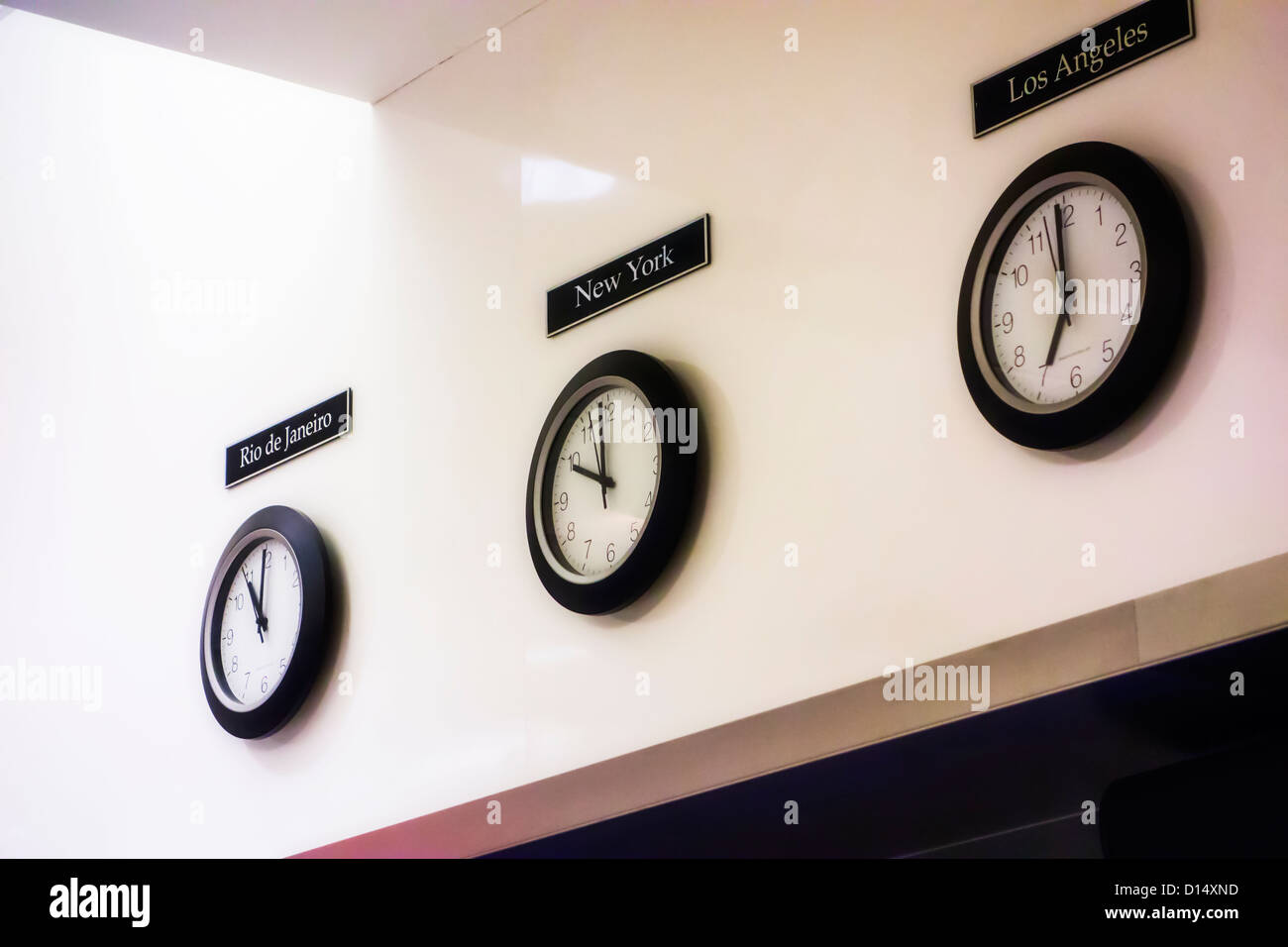
* **vs. Los Angeles (Pacific Time):** 3 hours ahead (PST is UTC-8; EDT is UTC-4).
* **vs. London (GMT/BST):** Typically 5 hours behind during EST (GMT is UTC+0), and 5 hours ahead during EDT (BST is UTC+1).
* **vs. Tokyo (Japan Standard Time):** 14 hours ahead (JST is UTC+9).
For business professionals, the distinction between EST and EDT is critical. Scheduling a call with a colleague in London at 2:00 PM New York time requires knowing whether that 2:00 PM falls in EST or EDT to calculate the correct corresponding time in the UK. Misinterpreting this can lead to missed connections in international deals or project coordination. Technology provides tools to mitigate this, with calendar applications automatically converting times based on the participant's time zone settings. However, a foundational understanding remains the best defense against error.
Related Post

What Is the Time Zone for New York City? The Essential Guide to Eastern Time in the Heart of the U.S.