What Time Zone Is California In: Understanding Pacific Standard And Daylight Saving Time
What Time Zone Is California In: Understanding Pacific Standard And Daylight Saving Time
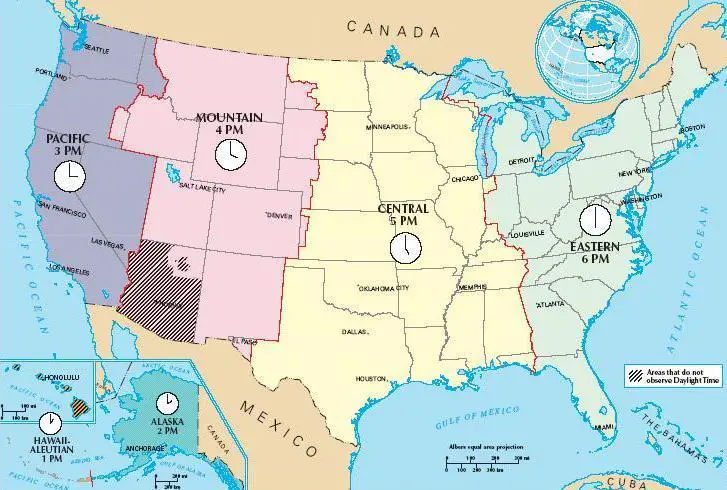
California operates on Pacific Time, alternating between Pacific Standard Time (PST) in winter and Pacific Daylight Time (PDT) in summer. This means the state is typically three hours behind Eastern Standard Time and eight hours behind Coordinated Universal Time during standard time, shifting to seven hours behind during daylight saving. The timekeeping framework follows the United States’ broader system designed to synchronize clocks across regions while accounting for seasonal sunlight variations. Understanding this system is essential for coordinating activities across the country and globe.
Pacific Time is one of four time zones that make up the contiguous United States, along with Eastern, Central, and Mountain. The zone derives its name from the Pacific region and is observed not only in California but also in parts of Oregon, Washington, and Nevada. Within the international context, Pacific Time aligns with specific offsets from Coordinated Universal Time, the global timescale used to regulate clocks. The transition between standard and daylight saving time occurs on predetermined Sundays, a practice that has itself been the subject of ongoing debate.
The Mechanics Behind Pacific Time
Time zones are established based on longitudinal divisions, with each zone generally spanning 15 degrees of longitude. Pacific Time sits at 120 degrees west of the Prime Meridian, placing it eight hours behind Coordinated Universal Time (UTC-8) during standard time. This positioning means that when it is noon in Greenwich, England, it is early morning in California. The system allows for a logical progression of time as the sun moves across the sky from east to west.
The implementation of daylight saving time adjusts this offset by one hour, moving California to UTC-7. This shift effectively moves an hour of daylight from the morning to the evening during the warmer months. The change is not universal worldwide, and its observance varies by country and region. Within California, the change is automatic, affecting clocks in homes, businesses, and infrastructure.
* **Standard Time:** Pacific Standard Time (PST) is observed from early November to mid-March. During this period, the sun rises later and sets earlier, resulting in shorter daylight hours.
* **Daylight Saving Time:** Pacific Daylight Time (PDT) is observed from mid-March to early November. The clock shift extends evening daylight, impacting energy usage, traffic patterns, and recreational activities.
* **The Shift:** The move between PST and PDT happens at 2:00 a.m. local time. Clocks spring forward one hour in March and fall back one hour in November.
Historical Context and Uniformity
The adoption of standardized time zones in the United States was driven by the needs of railroads in the late 19th century. Before this system, cities operated on local solar time, leading to confusion in scheduling. The Pacific Time Zone was formalized to create a uniform method for conducting business across vast distances. As noted in historical analyses of American infrastructure, the need for a consistent framework was paramount for the growth of industry and transportation.
The specific dates for daylight saving time have changed over the years. The Energy Policy Act of 2005 extended the period of daylight saving to conserve energy, a move that remains controversial. While the federal government sets the framework, individual states have some latitude in how they observe the change. Understanding this history helps explain why the current system exists and how it continues to evolve.
Impacts on Daily Life and Technology
For residents and visitors, the time zone dictates the rhythm of daily life. Television schedules, school start times, and work hours are all set according to Pacific Time. Businesses operating with partners on the East Coast must constantly account for the three-hour difference. This synchronization is crucial for meetings, deadlines, and logistical planning.
Technology has largely simplified the management of time zones. Operating systems and devices automatically adjust for daylight saving time, reducing the potential for error. However, manual adjustments are sometimes required for older systems or specific software. Global communication platforms often display multiple time zones simultaneously, helping users in California coordinate with colleagues in New York or London. The seamless integration of timekeeping technology ensures that the transition between PST and PDT occurs with minimal disruption.
Global Coordination and Misconceptions
Internationally, Pacific Time is often referred to as a reference point for scheduling calls or events. It is one of the earlier zones on the American west coast, making it a bridge between Asian time zones and those in the east. When comparing global time, the abbreviation PST is used in winter, while PDT applies in summer. Confusion sometimes arises because the term "Pacific Time" is used colloquially to refer to the entire span, regardless of the season.
A common misconception is that all of California adheres strictly to Pacific Time. While the vast majority of the state follows this zone, there are minor exceptions in certain regions. These deviations are rare and usually occur in areas with unique geographical or cultural considerations. For the most part, the time zone provides a reliable and consistent framework for the entire state.
Navigating Time Differences
For those traveling or communicating across the country, understanding the offset is critical. During standard time, California is three hours behind the Eastern Time Zone. This gap narrows to two hours when daylight saving is active on both coasts. Travelers flying between regions often experience jet lag, which is the body’s natural response to a shift in circadian rhythms. Managing this involves adjusting sleep schedules before the trip and staying hydrated during travel.
Here is a quick reference for common time differences from California:
* **Eastern Time:** 3 hours ahead (PST), 2 hours ahead (PDT)
* **Central Time:** 2 hours ahead (PST), 1 hour ahead (PDT)
* **Mountain Time:** 1 hour ahead (PST), same time (PDT)
* **Coordinated Universal Time:** 8 hours ahead (PST), 7 hours ahead (PDT)
The Future of Timekeeping in California
Debates surrounding daylight saving time continue to surface in legislative bodies. Some argue for making standard time permanent, citing health benefits, while others prefer permanent daylight saving for extended evening activity. These discussions reflect the ongoing tension between tradition and modern lifestyle preferences. As of now, California observes the federal guidelines, maintaining the cycle of switching between PST and PDT.
The state’s adherence to Pacific Time remains a stable element of its infrastructure. It connects California to national and global rhythms. Whether scheduling a business call or planning a vacation, the knowledge of what time zone the region is in serves as a fundamental tool. This system, rooted in practicality, continues to serve a complex, interconnected world.
Related Post