What Time Zone Is Houston? Clarifying the Standard and Daylight Time for the Bayou City
What Time Zone Is Houston? Clarifying the Standard and Daylight Time for the Bayou City
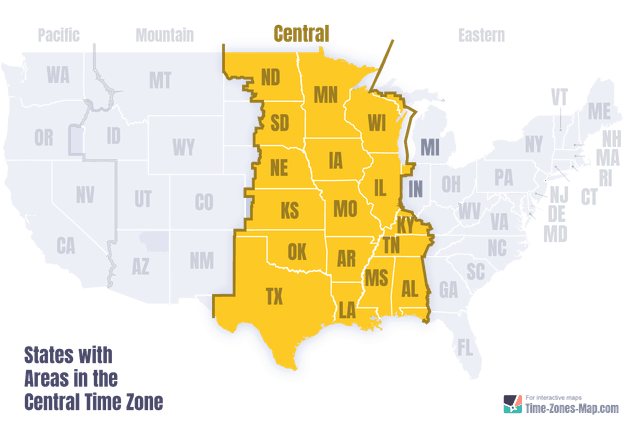
Houston operates on Central Time, alternating between Central Standard Time and Central Daylight Time. This places the city one hour ahead of Mountain Time and one hour behind Eastern Time for the majority of the year. Understanding this shift is essential for scheduling calls, planning travel, and coordinating with partners across the country.
The geographic location of Houston dictates its temporal placement. Situated near the central meridian of the North American continent, the city aligns with the broader region historically known as the Central Time Zone. This zone encompasses a significant portion of the central United States, creating a shared temporal framework for commerce and communication. The consistency of this system relies on the steady application of rules established by governing bodies.
### The Mechanics of Timekeeping
Time zones are divisions of the globe that standardize time within a region. They are primarily based on longitudinal lines, or meridians, spaced approximately 15 degrees apart. Each zone generally adopts the mean solar time of a central meridian. For Houston, this reference point is the 90th meridian west. This standardization allows for a logical and predictable system for tracking the hour of the day across vast distances.
The implementation of this system, however, is not without its quirks. The boundaries of time zones are often influenced by political borders, geographical features, and economic considerations rather than strict adherence to longitude. As a result, the map of time zones resembles a patchwork quilt rather than a series of neat, orderly lines. Houston finds itself firmly within the Central Time Zone, but the surrounding areas sometimes create a complex temporal landscape.
### Standard Time vs. Daylight Time
The primary temporal variation Houston experiences is the shift between Standard Time and Daylight Time. This change is not arbitrary but is governed by a federally mandated schedule designed to maximize daylight hours during the evening. The Energy Policy Act of 2005 established the current framework, which has been in effect since 2007.
During the colder months, the city observes Central Standard Time (CST), which is UTC-6. This means Houston is six hours behind Coordinated Universal Time, the primary time standard used in telecommunications and aviation. As the weather warms and the days lengthen, the schedule shifts.
* **Start of Daylight Time:** On the second Sunday in March, clocks are set forward by one hour at 2:00 AM. This jump moves the time to Central Daylight Time (CDT), which is UTC-5.
* **End of Daylight Time:** On the first Sunday in November, clocks are set back by one hour at 2:00 AM, returning the city to CST.
This biannual adjustment can cause confusion, particularly for individuals unaccustomed to the practice. The "spring forward" in March results in the loss of an hour of sleep, while the "fall back" in November provides an extra hour of rest. For Houston residents, this ritual is as much a part of the seasonal rhythm as the changing leaves or the summer heat.
### Historical Context and Regional Variations
The establishment of time zones in the United States is a relatively recent phenomenon. Before the standardization of railroad time in the 1880s, cities maintained local mean time based on the position of the sun. This led to a confusing array of times across the country, complicating train schedules and commercial transactions. The need for a uniform system became pressing, leading to the adoption of standard time zones by the railroads in 1883.
While the Central Time Zone serves Houston well, it is important to note that not all of Texas adheres to this standard. Two notable exceptions exist within the state. The westernmost county, El Paso, lies within the Mountain Time Zone, aligning it with cities like Denver and Phoenix. Furthermore, the Navajo Nation, an indigenous territory that extends into Texas, observes Daylight Time, a practice that differs from the state of Arizona, which generally does not. These exceptions highlight the complex interplay between geography, culture, and legislation that shapes temporal boundaries.
### Practical Applications and Global Coordination
For the average Houstonian, the time zone primarily impacts interactions with other regions. When conducting business with colleagues on the East Coast, it is crucial to remember the one-hour difference. A meeting scheduled for 10:00 AM in Houston is an 11:00 AM event in New York. Miscommunication regarding time zones can lead to missed flights, delayed shipments, and professional embarrassment.
In the digital age, the significance of time zones extends beyond physical geography. Computer networks and global financial markets operate on Coordinated Universal Time (UTC). Software applications must accurately convert UTC to the local time zone to display the correct time to users. For a city like Houston, which is a hub for energy, aerospace, and healthcare, precise timekeeping is not a trivial matter. It underpins the functionality of critical infrastructure and the reliability of digital services.
The question "What Time Zone Is Houston?" is more than a geographical trivia; it is a gateway to understanding the complex systems that govern our modern world. From the historical standardization of railroads to the digital synchronization of global networks, Houston's placement in the Central Time Zone is a fundamental aspect of its identity. By adhering to the rhythm of Central Standard and Central Daylight Time, the city remains synchronized with the broader American continent, facilitating the flow of commerce, communication, and daily life.
Related Post
What Time Zone Is Houston In: Understanding The CST Difference

Decoding Daylight Saving: What Time Zone Is Houston Right Now?

What Time Zone Is Houston: The Rhythm of Central Time in America’s Energy Hub