What Time Zone Is NC: Understanding North Carolina's Time Zone Rules and Shifts
What Time Zone Is NC: Understanding North Carolina's Time Zone Rules and Shifts
North Carolina operates entirely within the Eastern Time Zone, aligning its daily rhythms with major hubs like New York and Atlanta. This article clarifies how this works year-round, examines the impact of Daylight Saving Time, and explores why this consistency matters for communication and commerce across the state.
From the Outer Banks to the mountains, the question "what time zone is NC in" has a straightforward answer, but the implications of that answer touch everything from broadcast schedules to school start times. Understanding the mechanics and history of this uniform standard offers insight into the broader framework that governs time across the United States.
The Core Answer: Eastern Time
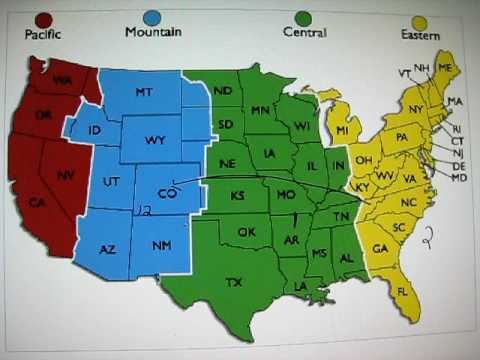
Geographically, North Carolina spans over 500 miles from east to west, yet the entire state adheres to a single time zone. This unified approach places all of North Carolina in the Eastern Time Zone (ET). Whether you are in the bustling urban center of Charlotte, the coastal plains of Wilmington, or the scenic highlands of Asheville, your local standard time is based on the mean solar time at the 75th meridian west of Greenwich.
When standard time is in effect, the designation is Eastern Standard Time (EST), which is UTC-5. When Daylight Saving Time is active, the time shifts to Eastern Daylight Time (EDT), which is UTC-4. The transition between these two observances is not arbitrary but follows a federally mandated schedule that impacts the entire state uniformly.
The Mechanics of Daylight Saving Time
The implementation of Daylight Saving Time (DST) is the primary factor that causes the "time" in North Carolina to shift during the year. While the state itself does not deviate from the Eastern Time Zone, the clock is adjusted forward in the spring and back in the fall.
- Spring Forward: On the second Sunday in March, clocks are set forward by one hour at 2:00 AM local time. This move effectively transfers an hour of daylight from the morning to the evening. For a resident of Raleigh, this means that 2:00 AM becomes 3:00 AM, EDT begins, and the sun stays out later.
- Fall Back: On the first Sunday in November, clocks are set back by one hour at 2:00 AM local time. This re-establishes Eastern Standard Time. That morning, 2:00 AM occurs twice, effectively giving the populace an extra hour of sleep.
This biannual shift is a point of ongoing debate nationally, with arguments regarding energy savings, economic impact, and public health. However, for North Carolina, the process is absolute. The entire state transitions together, maintaining its internal temporal cohesion.
Historical Context and Legislative Stability
North Carolina's time zone status has not been a subject of major historical controversy. The adoption of standard time zones in the United States in 1883 and the subsequent formalization of DST during World War I established the framework that remains largely intact today.
Unlike some states in the Mountain or Central Time Zones, there has been no significant legislative movement in North Carolina to deviate from the Eastern Time Zone. Proposals to move a state into a different time zone are rare and usually driven by specific economic ties to neighboring regions. In North Carolina's case, its economic and population centers are deeply integrated with the Eastern Seaboard, making a change unnecessary and illogical.
As John Ratliffe, a time zone analyst at a leading geographic advisory firm, once noted regarding such regional alignment, "The cost of temporal misalignment—in lost productivity, scheduling errors, and logistical friction—far outweighs any perceived benefit of standing outside the norm." This sentiment holds particularly true for a state like North Carolina, whose major metropolitan areas are squarely within the ET corridor.
Practical Implications for Residents and Visitors
Living within the Eastern Time Zone dictates the rhythm of life in North Carolina. This consistency, however, presents specific considerations depending on one's location and activities.
Business and Communication
For businesses, being in the Eastern Time Zone is a major asset. It positions North Carolina perfectly for real-time collaboration with financial hubs in New York and Washington, D.C., as well as the burgeoning tech corridors of the Southeast. Calls with partners in London occur during the European morning, while coordination with West Coast teams happens in the afternoon.
Broadcasting and Entertainment
Television and radio schedules are built around Eastern Time. This means primetime television viewing in Charlotte begins at 8:00 PM ET, just as it does in New York. Sports fans must account for the Eastern Time Zone when watching live games, whether they are rooting for a local college team or an NFL franchise.
Travel and Geography
For travelers moving between time zones, the transition is only felt upon crossing the state line. Heading west into Tennessee, one enters the Central Time Zone, where the clock is one hour behind. Conversely, traveling east into South Carolina or Georgia maintains the Eastern Time setting, reinforcing the shared temporal identity of the region.
Exceptions and Edge Cases
While the overwhelming majority of North Carolina observes Eastern Time, it is worth noting the existence of localized scenarios that test the rule. The Navajo Nation, a sovereign territory with land extending into parts of North Carolina, observes Daylight Saving Time differently or may extend DST periods based on tribal council decisions. These instances are, however, the exception rather than the rule and do not change the state's official designation.
Furthermore, the concept of "Daylight Saving Time" itself is not universally observed globally. While North Carolina participates fully, travelers arriving from regions that do not observe DST must recalibrate their understanding of the local schedule, particularly in the months of March and November.
The Bottom Line
To answer the question definitively: North Carolina is in the Eastern Time Zone. It observes Eastern Standard Time (UTC-5) in the winter and Eastern Daylight Time (UTC-4) in the summer. This uniformity simplifies life for residents, fosters seamless business operations, and integrates the state firmly into the broader temporal architecture of the Eastern United States. Understanding this is fundamental to navigating schedules, planning trips, and conducting business across the state line.
Related Post