What Time Zone Is Texas? One State, Two Zones, and the Politics of Time
What Time Zone Is Texas? One State, Two Zones, and the Politics of Time
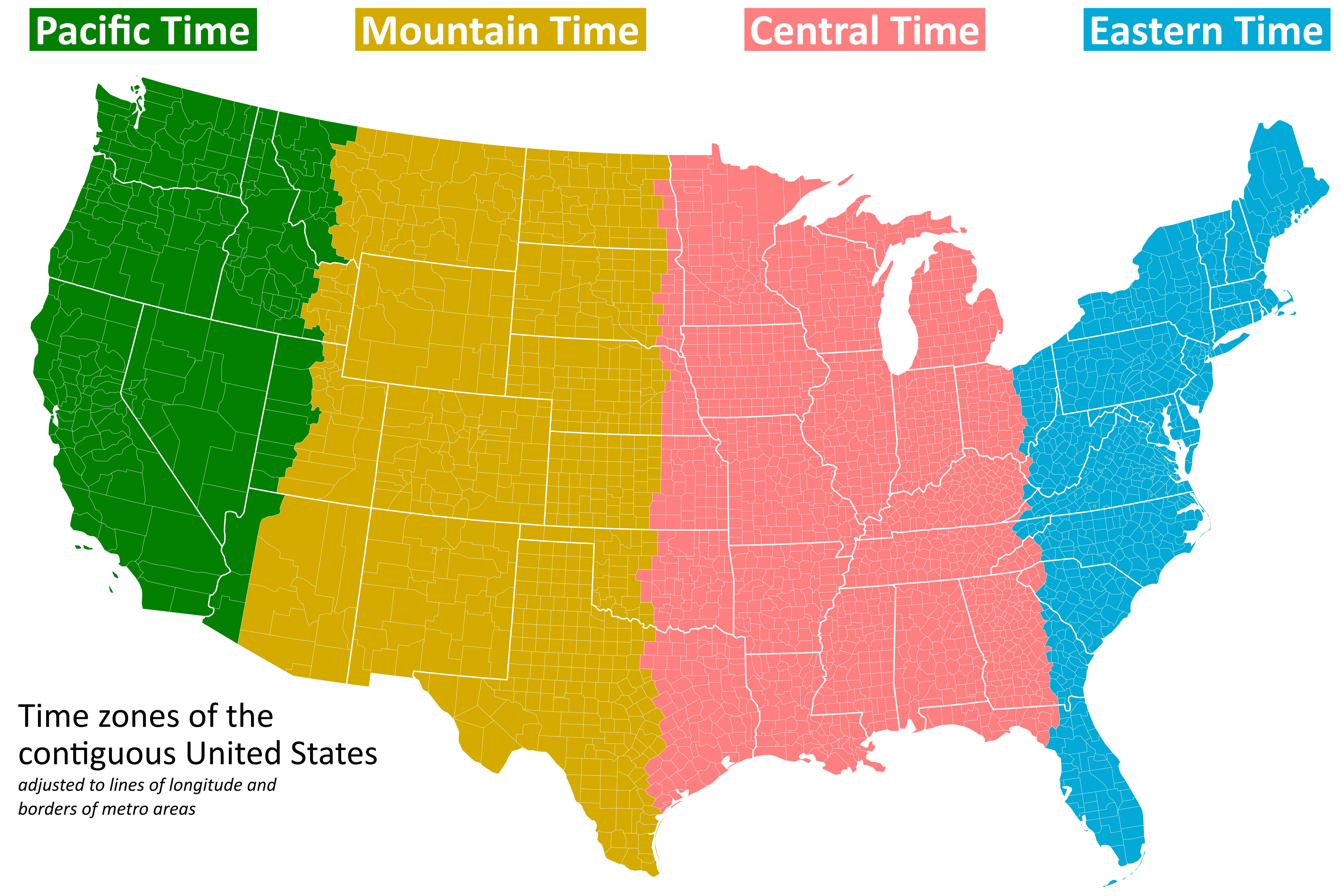
Texas spans two time zones, with the majority of its population observing Central Time and a smaller western portion observing Mountain Time. This geographic arrangement creates a patchwork of schedules, complicating everything from television broadcasts to business meetings across the state. The arrangement is a historical artifact of railroads and geography, but modern commerce and digital life continue to test its coherence.
The primary temporal divide in Texas runs through the center of the state, roughly following the boundary between the Central Time Zone and the Mountain Time Zone. Counties to the east of this line, including the major metropolitan areas of Dallas, Houston, San Antonio, and Austin, operate on Central Time. To the west, cities such as El Paso and Midland reside in the Mountain Time Zone. This division means that when it is 3:00 PM in Dallas, it is 2:00 PM in El Paso, a one-hour difference that is often overlooked until scheduling conflicts arise.
The current alignment is the result of decisions made in the late 19th century, long before the digital age complicated timekeeping. In 1883, the United States railroad industry adopted a system of standard time zones to coordinate train schedules and prevent collisions. Before this innovation, towns maintained local mean time based on the position of the sun, leading to a confusing patchwork of times that made rail travel perilous. Texas, like other large states, was divided to fit this new national grid. The Texas Legislature formally adopted Central Standard Time for most of the state in 1891, though the western areas retained Mountain Time.
From a practical standpoint, the time zone split functions for most residents. Daily life in the eastern two-thirds of the state proceeds without awareness of the boundary. However, the arrangement creates specific friction points for the western counties. For businesses with offices on both sides of the line, scheduling meetings requires constant vigilance. A project manager in Midland must always clarify whether a 10:00 AM call is Mountain or Central Time, a potential source of error that eastern colleagues do not face.
The issue of time zones periodically surfaces in political discourse, often tied to the broader concept of states' rights. Every few years, proposals emerge to place the entire state on a single time zone, most commonly Central Time. Proponents argue that a unified time zone would simplify commerce, reduce confusion for visitors, and align the state more cohesively with its economic partners. In 2017, a bill to make Texas entirely Central Time advanced to a committee vote in the state Senate. The legislation, while ultimately unsuccessful, highlighted the perennial debate.
Those opposed to a single time zone point to the practical difficulties of such a change. Moving the entire state to Central Time would mean the sun would rise and set significantly later in the western regions during the summer months. Advocates of Mountain Time in West Texas argue that their cities, which border New Mexico and Mexico, have stronger economic and cultural ties to the western mountain states than to the eastern part of their own state. They contend that the current arrangement, while imperfect, respects these regional identities and natural light patterns.
The impact of the divide is vividly illustrated in the realm of sports and media. National television networks schedule broadcasts based on Central Time, the dominant zone in the country. This means that football games featuring the Dallas Cowboys or the Houston Texans are prime-time entertainment for Central Time viewers, while Mountain Time viewers must adjust their evening plans by an hour. Similarly, radio stations on the eastern edge of the Mountain Zone must carefully manage their broadcast timing to avoid interfering with adjacent Central Zone stations.
Technological systems have mitigated some of the historical confusion of managing multiple time zones. Digital calendars, operating systems, and smartphones can automatically adjust for time zone differences, displaying the correct local time regardless of location. However, these tools are not foolproof. Manual entries, outdated systems, and human error continue to cause missed appointments and virtual meeting mishaps. The digital infrastructure supports the two-zone reality but does not eliminate the underlying complexity.
The geography of Texas reinforces its temporal duality. The state is enormous, spanning over 800 miles from east to west. This vastness means that the sun traverses a significant portion of the sky as it moves across the sky, a fact that early settlers and railroad planners could not ignore. The time zone line is a bureaucratic abstraction drawn over a landscape that naturally shifts throughout the day. There is a tangible difference in the quality of light between the two regions, particularly during the summer, a subtle reminder of the physical distance created by the one-hour gap.
Ultimately, the question "What time zone is Texas?" does not have a singular answer. It is a question defined by location. The state serves as a living case study in how historical infrastructure, geographic reality, and modern convenience collide. For the majority of Texans, the answer is Central Time, a fact embedded in their schedules and cultural rhythms. For those in the western reaches, the answer is Mountain Time, a connection to a different regional reality. The two zones coexist within a single political boundary, a persistent reminder that the simple measurement of time can never fully escape the complexities of geography and human organization.
Related Post
Navigating Central Time What Time Zone Is Texas
What Time Zone Is Texas? Unlocking the Sundial of Central Time