What Timezone Is Chicago? The Definitive Guide To Central Time In The Windy City
What Timezone Is Chicago? The Definitive Guide To Central Time In The Windy City
Chicago operates on Central Time, placing it six hours behind Coordinated Universal Time during Standard Time and five hours behind during Daylight Saving Time. This Midwestern metropolis follows the same temporal framework as dozens of other major North American cities, yet its position creates unique nuances for business, travel, and daily life. Understanding the exact mechanics of Chicago’s time zone is essential for anyone scheduling meetings, planning itineraries, or coordinating with the region.
The primary time zone governing Chicago is Central Standard Time (CST), which is UTC-6. When Daylight Saving Time is active, typically from the second Sunday in March to the first Sunday in November, the city observes Central Daylight Time (CDT), which is UTC-5. This bi-annual shift affects not only the clocks but also digital systems, international communications, and the psychological transition between seasons in a city known for its harsh winters and vibrant summers. To navigate the Windy City’s time, one must look at the legal definition, the practical applications, and the historical context that shaped this system.
### The Legal And Geographic Definition
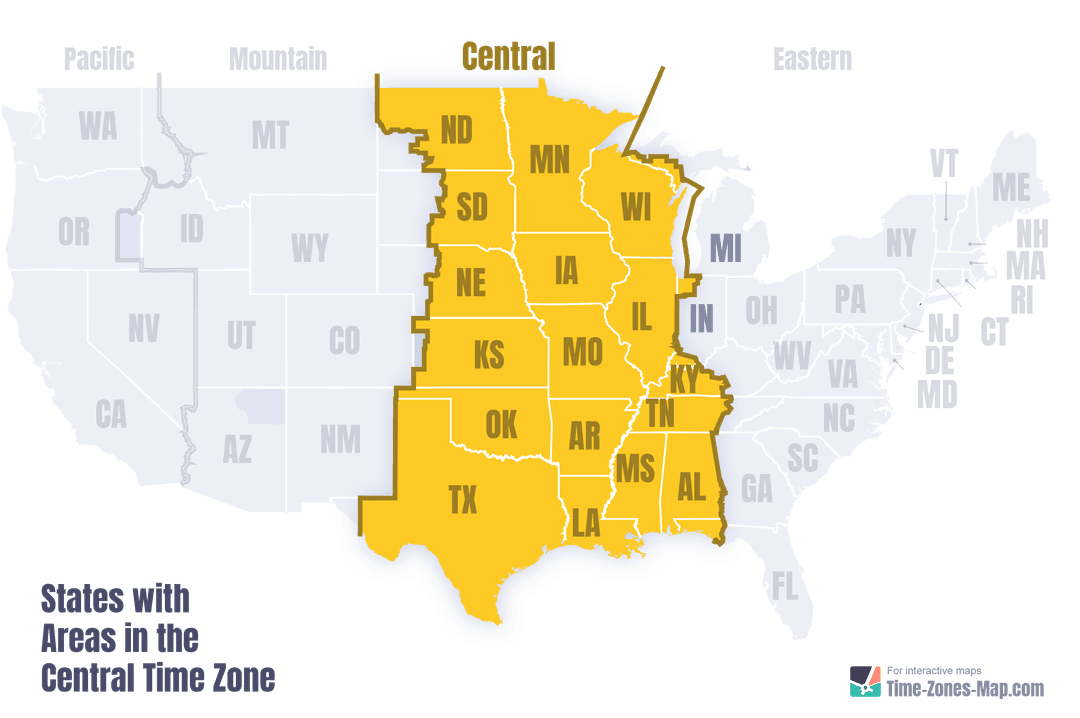
The United States is divided into four primary time zones: Eastern, Central, Mountain, and Pacific. Chicago falls squarely within the Central Time Zone. According to the Uniform Time Act of 1966, as amended, the standard time zone boundaries are determined by the Department of Transportation. Chicago, located in Cook County and parts of surrounding counties, adheres to the Central Time Zone without deviation.
* **Standard Time:** UTC-6 (Central Standard Time)
* **Daylight Time:** UTC-5 (Central Daylight Time)
* **Meridian:** Approximately 90 degrees West longitude.
This geographic placement means that the sun reaches its highest point in the sky—solar noon—approximately one hour later than it does in Eastern cities like New York. Consequently, Chicagoans often refer to their city as being "ahead of the coast" in terms of practicality, despite being "behind" in pure solar time.
### The Mechanics Of Daylight Saving Time
Daylight Saving Time (DST) is the practice of advancing clocks during warmer months to extend evening daylight. In Chicago, this results in a loss of one hour of sleep in the spring but the gain of an hour of light in the evening during the summer.
The specific dates for DST in Chicago, and the rest of the United States, follow a federal schedule:
1. **Spring Forward:** On the second Sunday in March, clocks are set forward by one hour at 2:00 AM local time. The time jumps to 3:00 AM.
2. **Fall Back:** On the first Sunday in November, clocks are set back by one hour at 2:00 AM local time. The time returns to 1:00 AM.
This creates a period from March to November where Chicago is on CDT. During the winter months, it reverts to CST. This cycle impacts energy consumption, traffic patterns, and even stock market hours, as Chicago is a major financial hub.
### The Impact On Transportation And Technology
For travelers and business professionals, understanding Chicago’s time zone is critical. The city is a major transportation hub, with O’Hare International Airport and Union Station serving as central nodes for national and international travel.
When booking flights, passengers must distinguish between CST and CDT. A flight listed as arriving at "15:00 CST" in winter will arrive at "15:00 CDT" in summer, although the actual sun time might feel similar. Furthermore, digital systems rely on Network Time Protocol (NTP) to sync with atomic clocks. Because Chicago shifts its offset twice a year, IT departments must ensure servers and devices are configured to handle the transition smoothly to avoid scheduling errors.
### Comparison With Adjacent Zones
Chicago’s position in the Central Time Zone places it in a unique temporal relationship with its neighbors:
* **vs. East Coast:** Chicago is one hour behind Eastern Time. When it is noon in Chicago, it is 1:00 PM in New York or Washington D.C.
* **vs. Mountain Time:** Chicago is one hour ahead of Mountain Time. When it is noon in Chicago, it is 11:00 AM in Denver or Phoenix (though Arizona largely does not observe DST).
* **vs. Pacific Time:** Chicago is two hours ahead of Pacific Time. When it is noon in Chicago, it is 10:00 AM in Los Angeles or Seattle.
This one-hour buffer with the Mountain Time Zone can create complex scheduling challenges for companies operating across the Kansas-Nebraska or Iowa borders, where local jurisdictions may not strictly adhere to the time zone map.
### Historical Context And Current Debates
Time zones were established in the United States primarily due to the expansion of the railroads in the 1880s. Before standardized time, cities used local solar time, which made train schedules confusing and dangerous. Chicago, being a major railroad center, was instrumental in the adoption of standardized time.
Today, the practice of changing the clocks is under scrutiny. Many states and medical professionals argue that the bi-annual shift disrupts sleep patterns and poses health risks. There have been legislative efforts to make DST permanent or to abolish the practice altogether. While no federal law has been passed to eliminate the time change, the debate highlights that the question of "What Timezone Is Chicago?" is not just about numbers on a clock, but about public policy and human health.
### Practical Applications For Residents And Visitors
For those living in or visiting Chicago, adjusting to the time zone is part of the acclimation process.
* **Business:** Chicago is squarely in the middle of the US business day. It is ideal for connecting with both East Coast morning meetings and West Coast afternoon deadlines.
* **Television and Sports:** Major broadcast networks schedule prime-time programming from 8:00 PM to 11:00 PM CDT. Sports fans must check if a game airing at 7:00 PM Eastern is actually starting at 6:00 PM Central.
* **Digital Life:** World clocks on phones and computers are essential. Travelers often use the "World Clock" feature to keep track of home time while enjoying the Chicago skyline.
Ultimately, Chicago’s time zone is a functional reality that underpins the rhythm of the city. Whether you are conducting international business, catching a flight, or simply watching the sunset over Lake Michigan, the understanding of Central Time is the invisible framework that organizes life in the Windy City.
Related Post
What Timezone Is Chicago? The Precise Guide to Central Time in the Windy City


