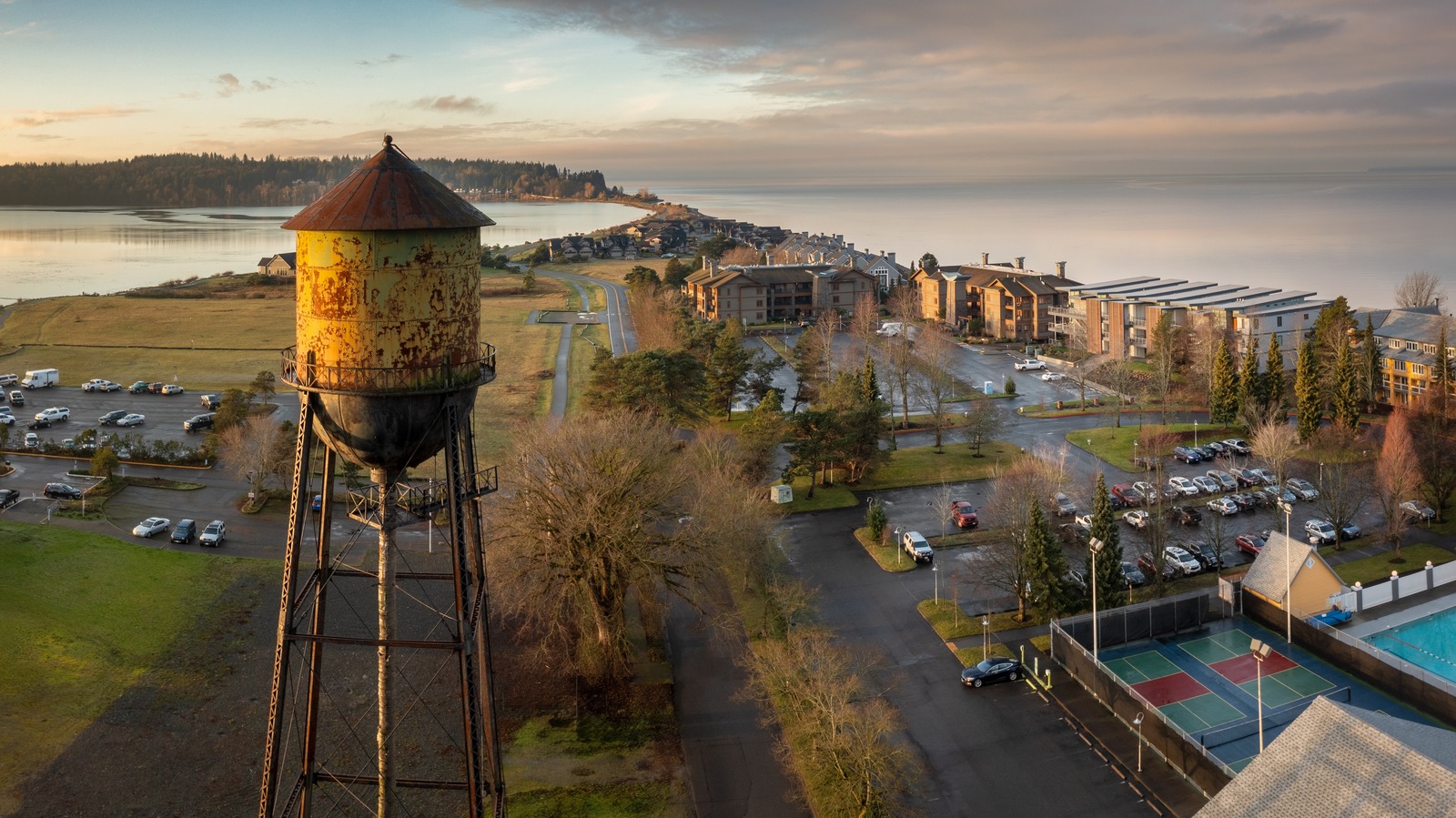
Where Is Washington: Unpacking the Geographic and Political Identity of the United States Capital
Where Is Washington: Unpacking the Geographic and Political Identity of the United States Capital
The question "Where is Washington" often arises from confusion between the state and the federal district, a distinction fundamental to understanding the American political and administrative landscape. Washington, the state, is a Pacific Northwest region defined by the Cascade Mountain Range and the Pacific coastline, while Washington, D.C., is the distinct federal capital district located on the East Coast along the Potomac River. This article clarifies the geographic, political, and functional differences between these two entities, providing a clear map of their respective roles and locations.
The geographic location of Washington state is defined by its position in the northwestern corner of the contiguous United States. Bordered by the Pacific Ocean to the west, Oregon to the south, Idaho to the east, and the Canadian province of British Columbia to the north, the state spans over 71,000 square miles. Its major cities, including Seattle, Spokane, and Tacoma, are clustered along the western side of the state, where the terrain transitions from coastal plains to the dramatic peaks of the Cascade Range.
In stark contrast, the location of Washington, D.C., is purposefully situated within the Mid-Atlantic region. As a federal district, it is not part of any state, lying between Maryland to the north and Virginia to the south along the Potomac River. Its coordinates place it approximately 38 degrees north latitude and 77 degrees west longitude, roughly 225 miles southwest of New York City. This specific placement was the result of the Residence Act of 1790, which mandated a capital district distinct from any state to avoid conflicts of interest for the federal government.
The distinction between the state and the federal district is critical to understanding governance in the United States. Washington state operates under its own constitution and elects officials to manage local affairs such as education, transportation, and natural resources. Washington, D.C., however, serves as the home of the three branches of the federal government: the Executive, Legislative, and Judicial. It is the epicenter of American political power, where laws are debated on Capitol Hill, enforced by the President at the White House, and interpreted by the Supreme Court.
Understanding this distinction is further clarified by examining the populations and infrastructures of each location. Washington state boasts a population of over 7.7 million people, with a diverse economy driven by technology, aerospace, and agriculture. The state’s infrastructure is designed to support a broad geographic area, from the ferry systems of Puget Sound to the agricultural hubs of eastern Washington.
Washington, D.C., with a population of approximately 700,000 residents, presents a completely different demographic and infrastructural profile. Its design is centralized around monumental architecture and federal security. Broad avenues, monumental buildings, and extensive security perimeters define the urban landscape, reflecting its function as the nerve center of the nation rather than a traditional residential city.
- **Washington State:** A sovereign entity with its own government, laws, and budget, managing resources for millions of residents across a vast and varied landscape.
- **Washington, D.C.:** A federal municipality under the exclusive jurisdiction of the U.S. Congress, housing the seats of all three branches of the federal government and serving as the stage for national and international diplomacy.
This functional separation is perhaps best illustrated by the experience of a visitor. "You're in Washington state to see mountains and forests, to hike and sail," explains travel writer Michael O'Sullivan. "You're in Washington, D.C., to understand the mechanism of the country itself; it's a city of monuments, museums, and power." The activities and environments reflect the core purpose of each location—one is a place of life and industry, the other is a place of governance and symbolism.
The naming convention itself is a frequent source of confusion, a result of the federal district being named in honor of the first President, George Washington, the same figure for whom the state was later named. This creates a homonym that requires context to resolve. When someone asks "Where is Washington?" the answer is entirely dependent on the preceding context. Are they asking about the Evergreen State, or the seat of the federal government? The question underscores the unique dual identity of the name within the American lexicon.
Geographically, the distance between the two Washingtons is significant, highlighting the vast scale of the country. The journey from Olympia, the capital of Washington state, to Washington, D.C., spans approximately 2,700 miles and crosses multiple time zones. This physical separation reinforces the administrative independence of the state from the federal government. The state legislature in Olympia operates under the authority of the Washington State Constitution, completely separate from the authority of the U.S. Congress meeting in the Capitol Building.
Security protocols further delineate the two locations. Washington state, like any other state, is policed by state and local law enforcement agencies. In contrast, Washington, D.C., is patrolled by a combination of the U.S. Park Police, the U.S. Capitol Police, and the Metropolitan Police Department, with coordination directly linked to federal security agencies. This layered security is a direct reflection of the city's status as a target and the need to protect the institutions located within it.
The economic engines of the two locations also differ substantially. Washington state benefits from a robust international trade presence facilitated by its deepwater ports and proximity to Asia. Major corporations in the tech and aircraft manufacturing sectors drive a high-tech economy. Washington, D.C., however, has an economy heavily centered on government contracts, lobbying, tourism, and non-profit organizations. The health of the D.C. economy is often a direct indicator of federal spending and political activity.
Ultimately, the answer to "Where is Washington?" is a lesson in American geography and federalism. It requires the respondent to identify the frame of reference. If the frame is the map of the United States showing the 48 contiguous states, "Washington" refers to the large state on the left coast. If the frame is the detailed urban plan of the nation's capital, "Washington" refers to a small, specific district on the East Coast. Recognizing this duality is essential for navigating discussions about policy, travel, and the structure of the American government, ensuring that the question is not just answered, but truly understood.
Related Post
Where Is Washington State: Discover the Natural Beauty and Diversity of the Evergreen State
Unlock the Secrets of the Evergreen State: Where Is Washington State Located In The Usa?
Unlock the Pacific Northwest: Where Is Washington State Located In The Us

Unraveling the Mystery of Where Is Washington: A Deep Dive into the History, Geography, and Cultural Significance of the United States' 42nd State