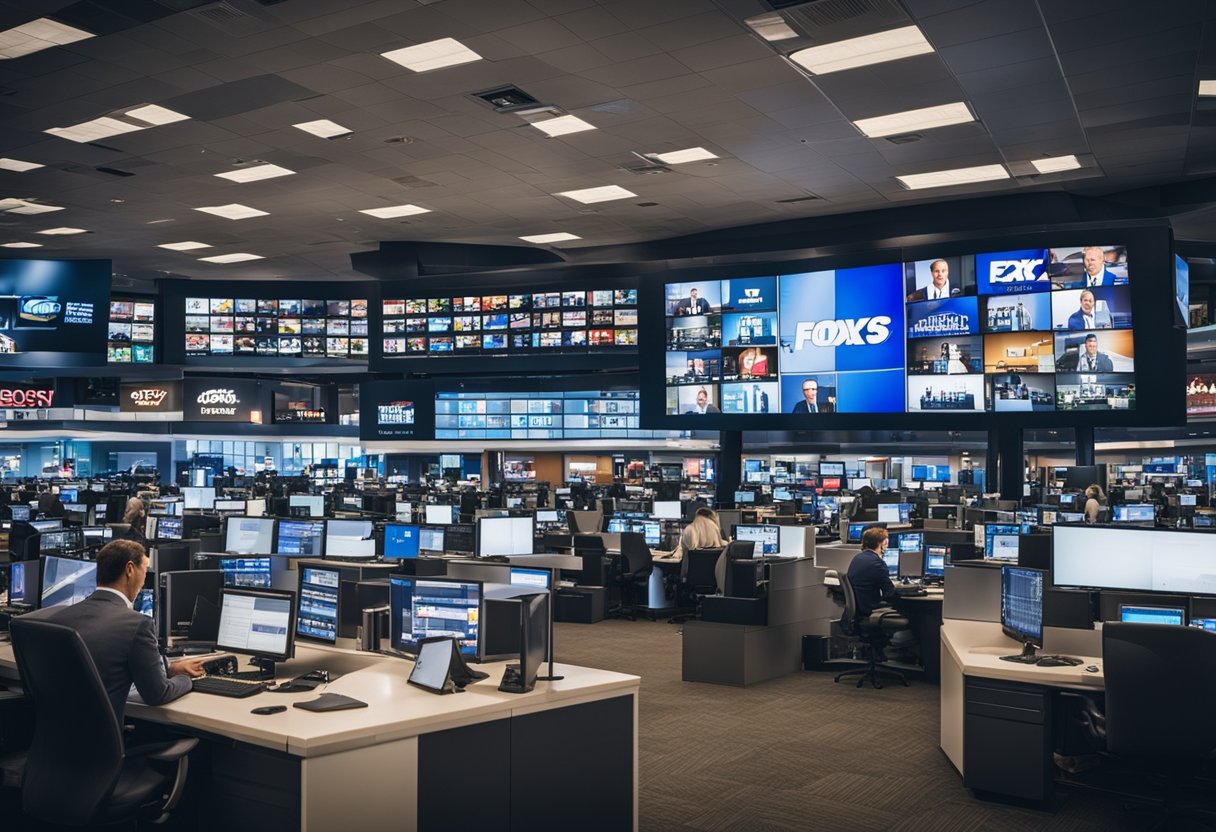
Who Owns Fox: The Corporate Battle for Rupert Murdoch's Global Media Empire
Who Owns Fox: The Corporate Battle for Rupert Murdoch's Global Media Empire
The question "who owns Fox" has evolved from a simple inquiry into a complex narrative of corporate inheritance, shareholder activism, and billion-dollar transactions. For decades, the Fox brand has been synonymous with global news, sports, and entertainment under the stewardship of Rupert Murdoch. Today, control of its most valuable assets is transitioning from the Murdoch family to a new generation of corporate giants and institutional investors.
The landscape of Fox is currently split between two distinct entities: Fox Corporation, the broadcast and streaming news company led by Murdoch's son Lachlan, and Fox Corporation's assets, including its valuable regional sports networks, being acquired by The Walt Disney Company. This article provides a definitive breakdown of the ownership structure, tracing the history of the empire and detailing the current players who hold the reins.
The story of Fox ownership begins with its namesake founder, Rupert Murdoch. Born in Australia in 1931, Murdoch built a vast international media conglomerate through strategic acquisitions and a philosophy of conservative, populist journalism. For decades, he served as the Chairman and CEO of News Corp, the parent company that controlled Fox News Channel, Fox Broadcasting Company, and a significant portfolio of international outlets. His control was absolute, directing the editorial vision of networks that often dominated cable news ratings.
Murdoch's empire was not a monolith, however. It was divided into two primary holding companies for operational and tax purposes: News Corp and 21st Century Fox. 21st Century Fox housed the entertainment assets, including the 20th Century Studios film studio, the cable channels FX and National Geographic, and a controlling stake in Hulu. News Corp retained the publishing assets like The Wall Street Journal and the core broadcast and news operations of Fox. This structure allowed the family to manage a global portfolio while navigating different regulatory environments.
The pivotal moment in modern Fox ownership came in 2017, when The Walt Disney Company announced its acquisition of key assets from 21st Century Fox. The deal, valued at over $71 billion, was one of the largest media mergers in history. It transferred the film studios, cable entertainment channels, and the international streaming service Hulu to Disney. This fundamentally altered the landscape of "who owns Fox" by stripping the company of its primary entertainment division, leaving behind the core news and broadcast operations.
Following the Disney-Fox assets acquisition, a new entity was formed to house the remaining news and broadcast properties. This led to the creation of Fox Corporation in 2019, a publicly traded company spun off from News Corp. The primary assets of this new Fox included the Fox News Channel, Fox Business Network, Fox Broadcasting Company, and the regional sports networks formerly part of 21st Century Fox. The question of who owns Fox Corporation is answered through its public shareholders, but the influence of the Murdoch family remains profound.
Today, the operational control of Fox Corporation rests with Lachlan Murdoch, the eldest son of Rupert Murdoch. He serves as the Executive Chairman of Fox Corporation, a position that grants him significant authority over strategy, content, and leadership appointments. While the company is publicly traded, with thousands of shareholders, Lachlan Murdoch controls a substantial voting bloc through his family’s shares. This structure ensures that the Murdoch ideology continues to shape the network’s direction, even as the legal ownership is distributed among the public.
Looking at the specific breakdown of ownership provides clarity on who truly holds the power. The largest shareholders of Fox Corporation are institutional investors, which manage money on behalf of millions of people. According to recent filings, the top three institutional shareholders typically include giants like The Vanguard Group, BlackRock, and State Street Corporation. These firms collectively own a significant portion of the company’s outstanding shares.
Alongside these institutional behemoths, the Murdoch family retains a formidable and controlling stake. Through a complex web of family trusts and direct holdings, the Murdogs maintain a bloc of shares that translates into outsized influence over corporate decisions. This dual-layer of ownership—public shareholders and a powerful family block—is a common feature of legacy media companies. The family does not necessarily need to own a majority of the shares to maintain control, as their voting rights, often attached to a specific class of stock, allow them to sway board elections and major strategic decisions.
Rupert Murdoch’s recent passing in 2023 marked the end of an era and prompted a formal transition of power. While he was the founder and long-time leader, he had largely ceded day-to-day control to his son Lachlan in the years prior. In his will and the subsequent restructuring of the family’s holdings, a significant portion of his News Corp and Fox Corporation shares were transferred to his children. This move was designed to ensure the family’s continued influence over the media assets he built.
The transition has solidified what was already evident: Lachlan Murdoch is the de facto owner of the Fox News empire. He has stated publicly that his focus is on building a "new chapter" for the network, emphasizing subscriber growth and technological innovation. The shift in ownership from the father to the son represents a generational handover, but the core business model and political alignment of the network are expected to remain consistent. As one media analyst noted, the change is less about a shift in ideology and more about a "succession plan" being executed within the Murdoch dynasty.
Beyond the corporate structure, the influence of Fox ownership extends into politics and culture. The network’s editorial stance has been a subject of intense debate, shaping public discourse on issues ranging from elections to public health. The ownership model, concentrated in the hands of a few individuals with specific worldviews, inevitably impacts the content produced for millions of viewers. The move by Disney to absorb the entertainment assets has further concentrated media ownership, leaving the news side of the Fox brand as a more distinct and potent political entity.
For the average viewer or investor, understanding "who owns Fox" is about recognizing the layers of corporate and familial control. The average person watching Fox News is consuming content produced by a company ultimately guided by the Murdoch family's legacy and the strategic decisions of its current chairman. For the shareholder, it is a calculation of value, influenced by the network's ability to retain viewers in a crowded streaming landscape. The ownership of Fox is no longer just a family affair, but a complex interplay of public markets, institutional power, and the enduring legacy of a media titan.
Related Post
Who Owns Fox Network: The Corporate Structure and Hidden Stakeholders Behind the Network

Who Owns Fox News? The Inside Story of a Media Empire Shaped by Power and Controversy
Fox Entertainment: Who Truly Owns the Media Giant Behind News, Sports, and Prime Time?
Who Owns Fox News Company? The Pulitzer-Recognized Media Giant and Its Complex Corporate Roots