Inside Walmart's Distribution Network: How the Company's Vast Hub System Powers Global Retail
Inside Walmart's Distribution Network: How the Company's Vast Hub System Powers Global Retail
Walmart’s distribution center network forms the invisible architecture of modern retail, a meticulously engineered system moving over $600 billion in goods annually to thousands of stores. These facilities operate with a precision that merges advanced logistics technology with a massive workforce to ensure consumers find products on shelves when they need them. This article provides a factual, inside look at how these hubs function, the technology deployed, and the economic footprint they leave on communities across the United States.
The scale of Walmart’s distribution footprint is staggering. The company operates more than 30 DCs in the United States alone, each a sprawling complex covering hundreds of thousands of square feet. These nodes are not mere warehouses; they are dynamic sorting and fulfillment centers designed to intake goods from thousands of suppliers, organize them by destination, and load them onto trucks for delivery to stores and customers with minimal delay.
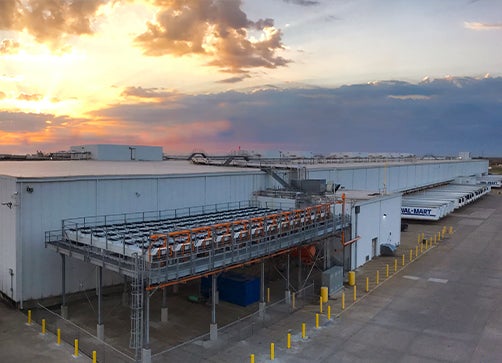
From the outside, a Walmart DC presents a landscape of corrugated steel, high bay shelving, and the constant rumble of conveyor systems. Stepping inside reveals a choreographed dance of machinery and personnel. Products enter the facility in bulk, often still on pallets, and are systematically scanned, sorted, and repacked for their next leg of the journey. The primary objective is simple on paper but complex in execution: move the right product, to the right store, at the right time, while minimizing damage and maximizing efficiency.
A significant driver of efficiency is Walmart’s proprietary technology infrastructure. The company has invested heavily in automated systems that reduce manual handling and human error. Advanced warehouse management systems (WMS) act as the central nervous system, tracking every item’s location in real-time and optimizing pick paths for workers.
Key technological components include:
* **Automated Storage and Retrieval Systems (AS/RS):** In these zones, robotic cranes move up and down vertically within high-bay racks, retrieving pallets or cases of product on command. This allows for dense storage and rapid access to high-turn items.
* **Conveyor Networks:** A web of belt and roller conveyors transports items from receiving to storage to picking to shipping. Directional sortation systems use barcode scans to divert products onto the correct outbound trailer, much like a highway interchange.
* **Radio-Frequency Identification (RFID):** While used across the supply chain, RFID tags in DCs provide a more precise inventory count than traditional barcodes, allowing for near-instantaneous stock verification and reducing the risk of out-of-stock items.
* **Data Analytics and AI:** Predictive algorithms analyze historical sales data, seasonal trends, and even local weather patterns to forecast product demand at individual stores. This data dictates what and how much is shipped to each location, aiming to keep shelves stocked but not overstocked.
The human element remains crucial within this high-tech environment. While automation handles repetitive tasks, employees perform roles that require dexterity, judgment, and adaptability. Workers, often referred to as "associates," are responsible for tasks such as quality checking incoming shipments, hand-picking items for e-commerce orders, and managing the equipment that keeps the center running.
A typical day for a warehouse associate might involve operating a forklift to move heavy pallets, working on a replenishment team to stock "spill" racks that feed the picking areas, or manually processing e-commerce orders in a designated zone. The physical demands are significant, and the pace is governed by the relentless rhythm of the conveyor belt.
Walmart has faced scrutiny regarding working conditions in its DCs, as have many large logistics employers. The company maintains that it offers competitive wages and benefits within the logistics sector and points to ongoing investments in training and safety. A Walmart spokesperson stated, "Our associates are the heart of our operations. We are committed to providing a safe environment, competitive pay, and opportunities for career development within our logistics network."
The economic impact of a Walmart DC extends beyond its walls. These facilities are major employers in rural and suburban areas, often providing hundreds of jobs per center. They also stimulate local economies through contracts with surrounding businesses for maintenance, security, and transportation services. The presence of a large DC can solidify a region’s status as a logistics and transportation hub.
However, this influence is not without controversy. The proliferation of massive distribution centers contributes to increased truck traffic on nearby highways, raising concerns about road infrastructure stress and local noise and air pollution. Municipalities often court these facilities with tax incentives, a practice that can shift the local tax burden to other residents while the economic benefits are sometimes debated.
Looking ahead, Walmart’s distribution strategy is evolving to meet changing consumer expectations, particularly the surge in e-commerce. The line between retail DCs and dedicated fulfillment centers is blurring. Many Walmart facilities now handle a significant portion of online orders, requiring layouts that support smaller, more frequent shipments directly to consumers. This hybrid model demands even greater flexibility from the technology and people within the network.
The company is also focusing on sustainability within its logistics operations. Initiatives include outfitting truck fleets with more fuel-efficient engines, optimizing delivery routes to reduce empty miles, and increasing the use of renewable energy sources at its facilities. These efforts are partly driven by corporate responsibility goals and partly by the practical need to manage long-term operational costs in the face of volatile fuel prices.
Ultimately, a Walmart distribution center is a testament to the complexity of supplying a global enterprise. It is a place where raw materials become finished goods on a shelf, where data translates into motion, and where the efficiency of a single hub can ripple out to affect the availability of products in stores across a state. As retail continues to evolve, these hubs will remain the critical, behind-the-scenes engines that power one of the world’s largest retail empires.
Related Post
Walmart Distribution Center Cocoa FL: How the Sunshine State Hub Powers Retail Across America
The Invisible Engine: How Walmart's Distribution Center Network Powers the World's Largest Retailer