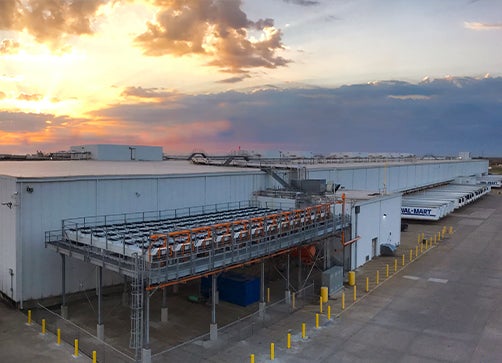
The Invisible Engine: How Walmart's Distribution Center Network Powers the World's Largest Retailer
The Invisible Engine: How Walmart's Distribution Center Network Powers the World's Largest Retailer
Beyond the gleaming shelves of neighborhood stores lies a hidden machinery of logistics, where algorithms meet pallets on concrete floors. Walmart's distribution center network operates as the central nervous system of the world's largest retailer, processing millions of units daily with military precision. This article explores how these facilities function as the critical backbone enabling the company's signature low prices and vast product availability.
The Scale and Scope of the Operation
To understand Walmart is to understand the sheer magnitude of its logistical footprint. The company operates a portfolio of facilities that reads like a map of American commerce, with each center serving a specific radius to ensure products reach stores efficiently.
Facility Types and Functions
Not all centers are created equal. The architecture of a Walmart logistics network includes several specialized nodes, each playing a distinct role in the flow of goods.
- Distribution Centers (DCs): These are the workhorses, receiving pallets from manufacturers, sorting them by store demand, and shipping them out within 24 to 48 hours.
- Fulfillment Centers: Increasingly vital for e-commerce, these facilities handle individual or small-quantity orders picked by automated systems for home delivery or in-store pickup.
- Cross-Dock Facilities: Designed for speed, these centers act as temporary holding areas where items from suppliers are quickly transferred to outbound trucks with minimal storage time.
Technology: The Digital Brain
Walking through a modern Walmart distribution center reveals a landscape dominated by technology rather than human muscle. The efficiency is not accidental; it is the result of billions of dollars invested in automation and data analytics.
The facility operates on a complex Warehouse Management System (WMS), a sophisticated software that dictates the flow of every item. From the moment a pallet of goods is scanned upon arrival, the system calculates the optimal storage location based on velocity—how fast the item sells—and destination. When a shelf in a store in Topeka needs restocking, the request doesn't come from a human manager's clipboard; it is generated by an algorithm analyzing real-time sales data.
Robotic systems are becoming standard. Autonomous floor scrubbers navigate the aisles, keeping the environment clean and safe. Automated storage and retrieval systems (AS/RS) use cranes to place and retrieve pallets high above ground, maximizing vertical space and reducing the need for wide aisles manned by forklifts.
Human Capital and Training
Despite the rise of machines, human workers remain the lynchpin of the operation. The physical environment of a distribution center is demanding, requiring stamina and precision. Consequently, talent management and scheduling are critical components of Walmart's strategy.
Shift scheduling is a sophisticated ballet. Managers use advanced workforce management software to predict demand based on historical sales, weather patterns, and local events. This ensures the right number of associates are on the floor at the right time to handle the ebb and flow of inventory. Training is equally rigorous. New hires undergo comprehensive certification processes to ensure they can operate equipment safely and understand the intricate layout of their specific center.
Supply Chain Resilience and Sustainability
Recent global events have tested the resilience of supply chains worldwide, and Walmart's distribution centers have been at the forefront of adaptation. The company has invested heavily in supply chain mapping and risk assessment to identify vulnerabilities in its network.
One of the key strategies employed is near-shoring and dual sourcing. Rather than relying on a single supplier in a distant region, Walmart is diversifying its supplier base to mitigate risks associated with geopolitical instability or natural disasters. Furthermore, Walmart has set ambitious goals regarding sustainability within its logistics network. This includes transitioning a portion of its fleet to alternative fuel vehicles and optimizing transportation routes to reduce carbon emissions. These initiatives are not merely ethical choices but are integral to the long-term efficiency and reputation of the operation.
The Economic Impact
The influence of a Walmart distribution center extends far beyond the loading dock, acting as an economic engine for the surrounding community. These facilities are major employers, offering a range of positions from skilled technicians to logistics managers.
Local governments often view the presence of a DC as a boon, citing the tax base it provides and the indirect jobs created with nearby vendors and service providers. The center becomes a hub, stimulating the regional economy by facilitating the movement of capital and goods. For Walmart, this symbiotic relationship ensures a steady flow of products and a cooperative local environment, allowing the retail giant to maintain its position as a dominant force in the marketplace.
Related Post
Walmart Distribution Center Cocoa FL: How the Sunshine State Hub Powers Retail Across America
Inside Walmart's Distribution Network: How the Company's Vast Hub System Powers Global Retail