Louis XV: The Monarch Who Embodied the Fatal Splendor of the French Bourbons
Louis XV: The Monarch Who Embodied the Fatal Splendor of the French Bourbons
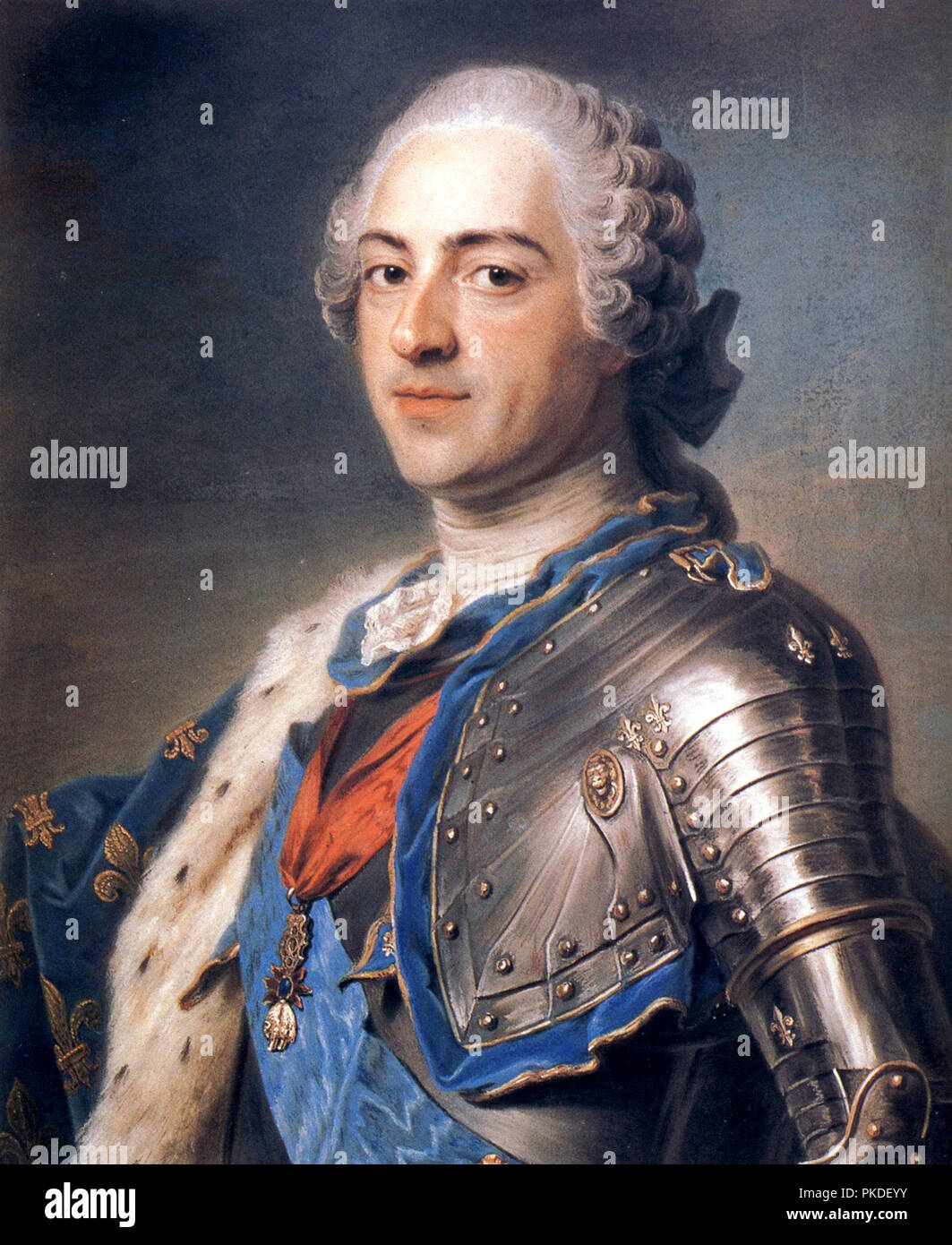
Louis XV, the "Sun King’s" great-grandson, ruled France for 59 years, presiding over an era of glittering cultural achievement and terminal fiscal decay. His reign, bookended by the death of Cardinal Fleury in 1743 and the financial collapse preceding the French Revolution, witnessed the zenith of Versailles and the nadir of royal authority. This is the story of a king who sought to embody grace but ultimately symbolized the debilitating inertia of a monarchy out of touch.
Born on February 15, 1710, Louis XV was the great-grandson of Louis XIV, inheriting a throne burdened by immense debt and an aristocracy hungry for influence. His childhood was marked by the death of his father, the Duke of Burgundy, and his older brother, placing him unexpectedly at the heart of the royal succession. When he ascended the throne at the tender age of five in 1715, a regency under the Duke of Orléans governed France. This period initiated a shift away from the rigid formality of the Sun King’s court toward a more intimate and mobile style of monarchy, a trend that would define much of Louis XV’s personal character and governance.
The early years of his personal rule, particularly the period from 1726 to 1743 under the guidance of his chief minister, André-Hercule de Fleury, represented a time of relative stability and administrative competence. Fleury, a former bishop, prioritized financial equilibrium and a policy of peace. He famously sought to extricate France from the costly and unwieldy alliances of the previous era. "I governed this state for twelve years," Fleury reportedly remarked, "and I have prevented France from embarking on a single new enterprise." His cautious approach allowed the royal debt to be reduced and the economy to experience a brief period of recovery.
The death of Fleury in 1743 marked a decisive turning point. Louis XV, determined to reassert the personal authority of the monarchy and guided by the influence of his mistress, Madame de Pompadour, abandoned his minister’s prudence. He involved France in a series of costly and strategically dubious conflicts, most notably the War of the Austrian Succession and the Seven Years’ War. The defeat in the Seven Years’ War, culminating in the loss of New France (Canada) and significant territories in India, was a profound national humiliation. It stripped France of its colonial empire and exposed the severe limitations of its military and financial resources. The scale of the mismanagement became apparent to contemporaries. As the Maréchal de Saxe observed in his "Rêveries upon the Art of War," the state was hemorrhaging resources "to defend colonies we do not know and to fight battles in countries where we are not even sure of having a single ally."
While foreign policy faltered, the cultural landscape of Louis XV’s reign flourished in a distinctly new direction. The grand, imposing architecture of Louis XIV gave way to the lighter, more intimate, and curvilinear Rococo style. This aesthetic, with its emphasis on asymmetry, pastel colors, and playful ornamentation, was perfectly suited to the private apartments of Versailles and the hôtels particuliers of the aristocracy. The King’s patronage of the arts was extensive. He established the French Academy in Rome, supported the Encyclopédistes—though often with contradictory intentions—and presided over a court that set the trends for European fashion and etiquette. The Palace of Versailles itself was transformed under his reign. The construction of the Petit Trianon, a small, elegant château built for Madame de Pompadour, and the redecoration of the Queen’s Hamlet are testaments to this shift towards personal refuge and refined intimacy, a world away from the courtly grandeur of his predecessor.
The social fabric of France, however, was becoming increasingly strained. Beneath the gilded surface of Versailles, the financial situation was dire. Decades of war, coupled with the cost of maintaining the splendor of the court and providing generous pensions to the nobility, had brought the state to the brink of bankruptcy. Attempts at fiscal reform, such as those proposed by ministers like Turgot and Necker, were consistently blocked by the privileged classes—the First and Second Estates—the Parlements, and a deeply entrenched aristocracy who viewed any challenge to their tax-exempt status as an existential threat. The King, caught between the need for financial solvency and the demands of a recalcitrant elite, lacked the will or the political acumen to impose the necessary reforms. His famous declaration, "Après moi, le déluge" ("After me, the flood"), though its authenticity is debated, perfectly encapsulated the profound indifference and short-sightedness of the monarchy’s final decades. He prioritized the preservation of royal privilege over the long-term health of the state, a fatal miscalculation.
Louis XV’s personal life also became a source of public scandal and political weakness. His overt reliance on a succession of mistresses, most notably Madame de Pompadour and later Madame du Barry, gave the court a reputation for moral laxity and allowed factions centered around these women to wield significant influence over appointments and policy. The King’s failure to produce a male heir for many years fueled public anxiety about the succession. The birth of the future Louis XVI in 1754 was met with widespread relief but did nothing to address the underlying financial and political crises. By the time of his death from smallpox at the Palace of Versailles on May 10, 1774, Louis XV was a deeply unpopular monarch. His body was carried through the streets of Paris, and the crowds, historically known for their loyalty, reportedly muttered, "À bas le roi!" ("Down with the king!").
The legacy of Louis XV is one of tragic contradiction. He was a patron of the arts who presided over a cultural golden age, yet his political failures sowed the seeds of the Revolution that would destroy the very society he cherished. He was a devoted family man who fathered many children, yet his private scandals eroded the moral authority of the crown. His reign demonstrates the peril of a monarchy that becomes divorced from the economic realities of its people. The efficiency and dynamism of his youth, exemplified by the Regency and the early ministry of Fleury, gave way to a stubborn inertia in the face of overwhelming fiscal and administrative challenges. Louis XV, the monarch who sought to be beloved, ultimately became a symbol of a system in terminal decline, his reign a long, shimmering sunset before the darkness of the Revolution.
Related Post
Louis XV of France: The Monarch, the Myth, and the Collapse of a Dynasty

Louis XV: The Sun King’s Fifth Year — Fire, Crisis, and the Decline of an Era
Louis XV of France: The Monarch Who Navigated a Kingdom on the Brink

Unlocking Your Community: The Power of 50 Mile Radius Around Me