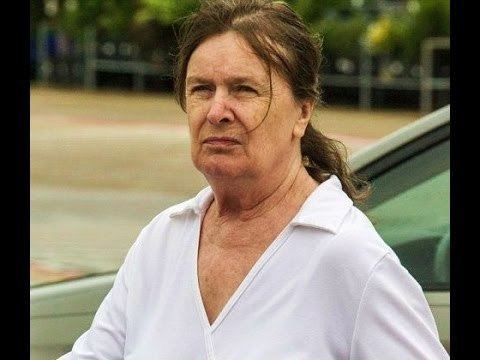
Marina Oswald: The Woman at the Center of JFK's Assassination and the Questions That Still Haunt Us
Marina Oswald: The Woman at the Center of JFK's Assassination and the Questions That Still Haunt Us
Marina Oswald arrived in Dallas as a young immigrant seeking a better life, only to become inextricably linked to one of the most consequential moments in American history. As the wife of Lee Harvey Oswald and the mother of his children, she found herself thrust into the global spotlight within hours of the President's assassination. Her complex relationship with Oswald, her movements in the weeks preceding the killing, and her testimony in the subsequent investigations have made her one of the most scrutinized—and misunderstood—figures in American history.
The story of Marina Oswald is one of dislocation and adaptation, suspicion and protection, profound tragedy and unwelcome notoriety. Living in the shadow of her enigmatic husband and the most analyzed assassination in modern history, Marina has navigated a lifetime of public attention and private grief that few could endure.
Marina Nikolayevna Prusakova was born on July 17, 1941, in the industrial city of Molotovsk (now Severodvinsk) in the Soviet Union. Her early life was marked by instability and loss; her father, a naval officer, died when she was just six months old, and her mother worked long hours as a pharmacy technician. Growing up in Soviet Ukraine during and after World War II, Marina experienced firsthand the harsh realities of life in Stalin's Soviet Union.
In 1957, at the age of 16, Marina followed her older sister Ella to Minsk, where she worked as a pharmacy apprentice. It was there, in 1960, that she met Lee Harvey Oswald, who was stationed in the Soviet Union after defecting to the USSR in 1959. Their relationship developed quickly—marriage followed in April 1961, when Marina was just 19 years old.
The couple's time in the Soviet Union was marked by poverty and increasing tension. After the birth of their daughter June in 1961, the U.S. Embassy denied Oswald's request for an exit visa, prompting him to escalate his threats and ultimately leading to their return to the United States in June 1962. American officials facilitated their departure, wary of the international incident that might ensue if an American citizen and his Soviet-born wife were held against their will.
"From the beginning, it was clear that Lee was a very difficult man," Marina would later recall in interviews. "But I thought—I was young, I thought I could change him, that love would overcome everything."
The Oswalds settled in Fort Worth, Texas, where Lee worked at a photographic printing company. Their relationship was strained—Lee was emotionally distant, increasingly absorbed in Marxist literature, and prone to angry outbursts. Marina, isolated and pregnant with their second child, grew increasingly dependent on her husband despite his volatility.
In April 1963, Lee was fired after a disruptive incident, and the family relocated to Dallas. Their circumstances worsened—Lee spent his days reading radical literature and listening to political lectures, while Marina struggled with poverty and loneliness in a new city where she knew no one.
By the fall of 1963, as President Kennedy's visit to Dallas was being planned, Marina and Lee had become permanent fixtures in the city's transient communist community. On November 22, 1963, Lee shot President Kennedy from a window of the Texas School Book Depository. After the assassination, Marina and her children were taken into protective custody, becoming both witnesses and suspects in the unfolding investigation.
The days following the assassination were a blur of intense scrutiny for Marina. While Lee hid and was eventually killed by nightclub owner Jack Ruby, Marina was interviewed repeatedly by the FBI and the Warren Commission. Her testimony proved crucial in establishing Lee's movements and ideological leanings, yet she remained an enigma to investigators.
In her testimony to the Warren Commission in July 1964, Marina provided details about Lee's state of mind in the months preceding the assassination. "He told me the people had made him mad, that he was sorry for what happened to Kennedy and that he wanted to do something about it," Marina testified, though she added that he showed no specific plans to act on these feelings.
Her most controversial moment came when she was shown a photograph of Lee holding a rifle that had been recovered from the Texas School Book Depository. After initially claiming she did not recognize the weapon, Marina later identified it as the rifle owned by her husband. This identification helped establish that Lee acted alone, though questions about the photograph's authenticity would persist for decades.
"I was afraid," Marina would later explain about her initial hesitation. "I was new in this country. I didn't understand the laws. I thought if I said it was his rifle, they would take me and my children away."
The Warren Commission concluded that Lee Harvey Oswald acted alone in assassinating President Kennedy, with Marina playing the role of witness rather than conspirator. However, this finding did little to quell the numerous conspiracy theories that emerged in the aftermath of the assassination.
Over the decades, Marina has largely remained out of the public eye, raising her two daughters in relative seclusion. She divorced in 1965 and eventually remarried, but the shadow of that day in Dallas continued to follow her. In rare interviews granted to select journalists and researchers, Marina has offered insights into the man she once loved and the tragedy that defined her life.
"I lived with a monster," Marina told author Priscilla Johnson McMillan in a 1993 interview. "But I also lived with a man who was complex and difficult and not at all what I had imagined when I married him."
Marina's story represents a unique perspective on the assassination—one that bridges the personal and the historical. As someone who knew Lee both in the Soviet Union and in America, she provides a window into the transformation of a man who went from defector to presidential assassin.
The questions surrounding that day in Dallas remain largely unanswered, but Marina Oswald's role is clear: she was both witness to history and a prisoner of it, a woman whose life was irrevocably altered by circumstances beyond her control.
As researchers and historians continue to examine the assassination of John F. Kennedy, the testimony and experiences of those closest to Lee Oswald remain vital components of understanding the full picture. For Marina Oswald, the legacy of that November day extends far beyond the conclusions of any official report—it has shaped every aspect of her life, for better or worse, in ways that continue to resonate more than half a century later.
Related Post
Marina Oswald Today: Confronting the Enduring Intrigue of a First Lady in Shadow
The Enigmatic Wife of Lee Harvey Oswald: Marina Oswald Porter’s Life, Truths, and the JFK Assassination

Marina Oswald Porter: The Enigmatic Figure Who Shaped a Controversial Legacy
<b>The Hidden Truth Behind Marina Oswald Porter’s Untold Story</b>