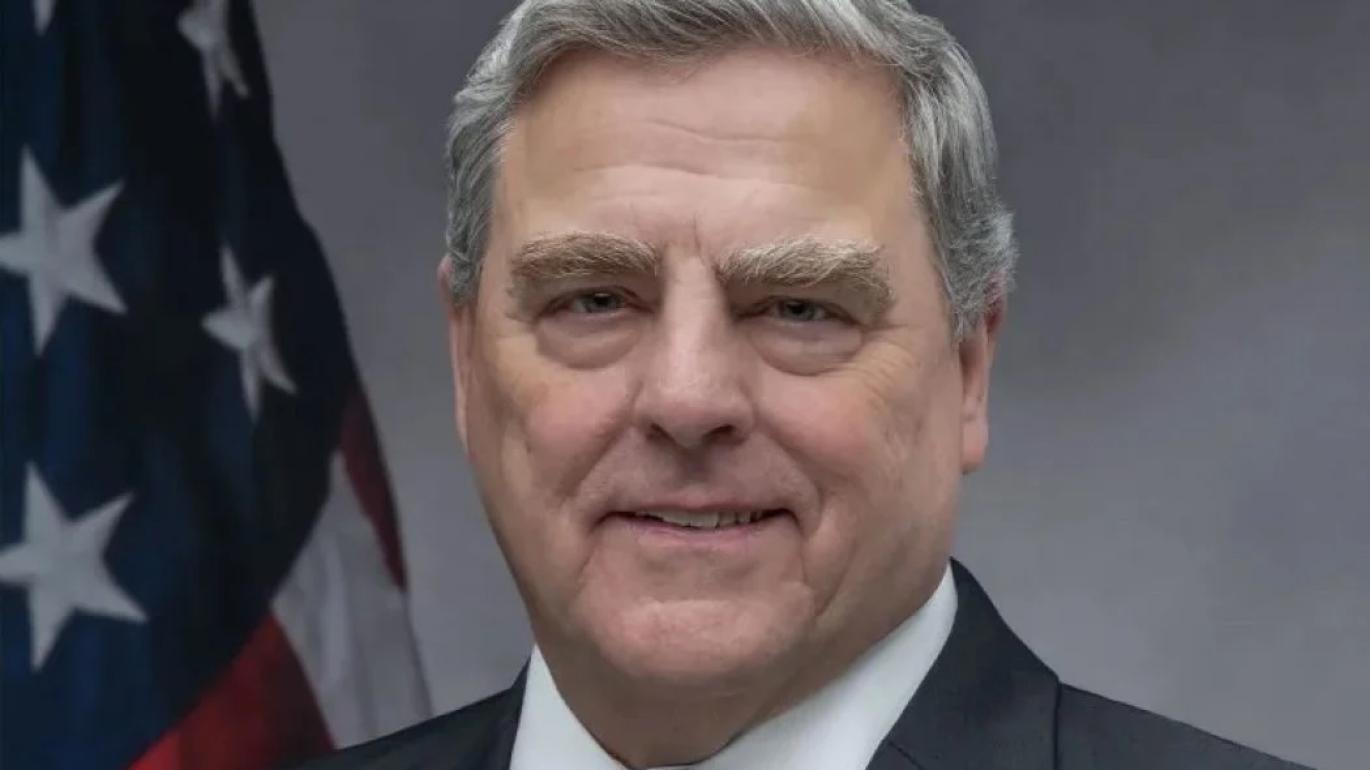
Mark Milley: The Unseen Architect of American Military Strategy in an Era of Great Power Rivalry
Mark Milley: The Unseen Architect of American Military Strategy in an Era of Great Power Rivalry
General Mark A. Milley, during his tenure as the 20th Chairman of the Joint Chiefs of Staff, stood at the epicenter of American national security. From 2019 to 2023, he navigated a complex and volatile geopolitical landscape, overseeing U.S. military responses to crises in Afghanistan, Syria, and the Pacific, while managing the strategic competition with China and Russia. His role, often operating behind the scenes, involved providing unvarnished military advice to multiple presidents and coordinating the largest and most technologically advanced military apparatus in the world.
Milley’s tenure was defined by a relentless focus on preparing the U.S. military for large-scale warfare, a paradigm shift from the two-decade-long focus on counterinsurgency. He became a vocal advocate for modernizing forces to confront near-peer adversaries, emphasizing concepts like multi-domain operations and long-range precision fires. His legacy is inextricably linked to the strategic recalibration of the U.S. military, a massive enterprise involving hundreds of billions of dollars and profound implications for global stability.
**The Weight of the Chair**
The Chairman of the Joint Chiefs of Staff is the nation’s highest-ranking military officer. While not in the direct chain of command—command authority resides with the President and the Secretary of Defense—the Chairman serves as the principal military advisor to the President, the National Security Council, and the Secretary of Defense. In this capacity, Milley’s primary responsibility was to assess the capabilities and readiness of the U.S. military and to advise on its strategic employment.
His office, the Pentagon’s Joint Staff, is a sprawling bureaucracy of uniformed and civilian personnel. It acts as a central nervous system, integrating the plans and operations of the Army, Navy, Air Force, Marine Corps, and, increasingly, the Space Force and Cyber Command. Milley’s daily intake of information was a torrent of intelligence reports, operational updates, and strategic assessments, which he synthesized into clear, decisive counsel for his civilian leaders.
**Strategic Pivot to Great Power Competition**
Upon assuming the chairmanship in 2019, Milley explicitly framed the primary challenge facing the U.S. military as a return to great power competition. In congressional testimonies and internal strategy sessions, he warned that America’s military edge was eroding against China and Russia. This marked a decisive turn from the counterterrorism and irregular warfare that had dominated the post-9/11 era.
* **Focus on China:** Milley frequently identified China as the "pacing challenge," the threat that would shape U.S. military planning for decades. He underscored the People’s Liberation Army’s (PLA) rapid modernization, particularly its advancements in hypersonic missiles, naval expansion, and cyber capabilities. This led to a significant shift in U.S. military doctrine, with a renewed emphasis on anti-access/area denial (A2/AD) strategies designed to deny China military dominance in the Western Pacific.
* **Russia as a Revanchist Power:** Simultaneously, Russia under Vladimir Johnson was cast as a revisionist power that threatened the European security order. Milley highlighted the Russian military’s shortcomings exposed in Ukraine but remained vigilant about its nuclear arsenal and its capacity to project power in Europe, particularly after the full-scale invasion of Ukraine in 2022.
This strategic recalibration manifested in concrete initiatives. The Pentagon’s budget priorities shifted toward long-range missiles, next-generation fighter aircraft like the F-35 and B-21, and enhanced naval and marine Corps capabilities in the Indo-Pacific. The concept of "Joint All-Domain Command and Control" (JADC2), which Milley championed, aimed to link sensors and shooters across all branches of the military into a unified network, creating a faster, more lethal decision-making loop.
**Operational Crises and Command**
Milley’s chairmanship was tested by a series of complex and often sudden crises around the globe. His role in these events showcased the immense burden of his office and the delicate balance between diplomacy and military readiness.
**The Afghanistan Withdrawal:** The chaotic withdrawal of U.S. forces from Afghanistan in August 2021 was the most significant operational challenge of his tenure. Amid the rapid collapse of the Afghan government, Milley worked with the Pentagon and the White House to coordinate the evacuation of thousands of American citizens and Afghan allies. In a now-famous and deeply controversial incident, Milley authorized a drone strike that killed 10 civilians, including seven children, outside Kabul airport. In a subsequent testimony, he expressed profound regret, stating, "I will never forget those visuals. I saw them literally every night for months."
**Countering Russian Aggression:** Following Russia's annexation of Crimea in 2014 and its ongoing support for separatists in eastern Ukraine, Milley oversaw a significant NATO reinforcement mission in Eastern Europe. This involved the deployment of multinational battlegroups to Poland and the Baltic states, a major logistical and diplomatic undertaking to deter further Russian aggression. He maintained direct communication with his Russian counterparts, a channel he deemed vital to prevent miscalculation.
**The Taiwan Strait and the Pacific:** Milley was a central figure in managing U.S. policy toward Taiwan. He consistently reaffirmed the U.S. commitment to its "One China" policy while emphasizing the need for peace and stability across the Taiwan Strait. He engaged in what became a notable series of off-peak communications with his Chinese counterpart, General Zhang Youxia, a practice he initiated to maintain a direct line of contact between the two militaries. These calls were often candid, with Milley directly addressing issues such as China's military activities near Taiwan.
**A Personal Diplomat:** Beyond high-level strategy, Milley cultivated a reputation for personal diplomacy, particularly with his counterparts in China and Russia. His multiple visits to Beijing and personal relationship with then-PLA Chief Zhang Youxia were seen as critical components of crisis management. He famously took a "deconfliction" phone call with Zhang on the evening of January 6, 2021, while the U.S. Capitol was under attack, a conversation aimed at ensuring Chinese forces did not exploit the U.S. domestic turmoil.
**The Legacy of Reform**
Mark Milley’s tenure will be remembered for his forceful advocacy for a military prepared for the 21st century. He successfully shifted the Pentagon’s focus and resources away from the wars of the past two decades and toward the defining challenges of the future. His leadership during the Afghanistan withdrawal, while fraught, demonstrated his commitment to protecting American lives even in the most difficult circumstances.
However, his tenure was not without controversy. The drone strike in Afghanistan and the perception of a U.S. retreat from the region drew sharp criticism from political opponents who argued it undermined American credibility. Nevertheless, Milley remained steadfast in his public message: the United States was repositioning its military for a more dangerous and competitive world. As he prepared to hand over the chairmanship to General Charles Q. Brown Jr. in November 2023, his legacy was a U.S. military doctrine and posture fundamentally reshaped for the era of great power rivalry.
Related Post

Mark Milley's Son: A Legacy Of Service Honoring the sacrifices and dedication of military families

General Mark Milley: The Rise of the Modern Military Strategist