The Power of Cos 45: Unlocking Precision in Math, Engineering, and Design
The Power of Cos 45: Unlocking Precision in Math, Engineering, and Design
The value of cos 45 degrees, precisely equal to √2/2 or approximately 0.7071, is far more than a textbook exercise; it is a fundamental constant that underpins precision across numerous technical fields. This specific angle, found in every isosceles right triangle, provides a critical baseline for calculations involving force, motion, and wave behavior. Understanding this exact value transforms abstract geometry into a practical tool for engineers, architects, and physicists.
The Geometry Foundation: The Isosceles Right Triangle
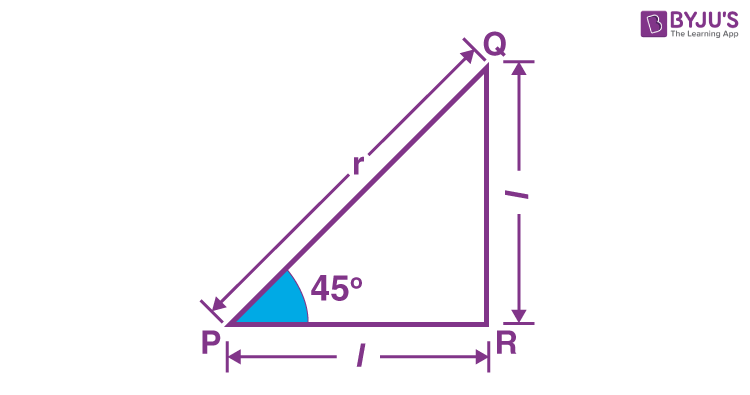
To grasp the significance of cos 45, one must first revisit the simple yet powerful geometry from which it derives. Unlike other angles, 45 degrees exists in a perfect symbiosis with 90 and 45 degrees, forming an isosceles right triangle. In this triangle, the two legs are of equal length, creating a unique ratio that mathematicians and scientists have relied upon for centuries.
The cosine of an angle in a right triangle is defined as the length of the adjacent side divided by the length of the hypotenuse. For the 45-degree angle, this calculation becomes exceptionally elegant. Because the legs are equal, if we assign a length of 1 to each, the hypotenuse must be √2 according to the Pythagorean theorem (1² + 1² = hypotenuse²). Therefore, the ratio simplifies to 1/√2, which rationalizes to √2/2.
- Equal Sides: The triangle features two legs of identical measurement.
- Hypotenuse Calculation: The hypotenuse is the leg length multiplied by the square root of 2.
- The Ratio: Adjacent (1) over Hypotenuse (√2) yields the exact value of cos 45.
Trigonometric Identity and the Unit Circle
Beyond the triangle, cos 45 holds its ground within the broader framework of the unit circle, a fundamental model in higher mathematics. On the unit circle, where the radius is one, the cosine of an angle corresponds precisely to the x-coordinate of the point where the terminal side of the angle intersects the circle. At 45 degrees, or π/4 radians, this point lies where x and y are equal, reinforcing the √2/2 value.
This value is also integral to one of the most famous identities in trigonometry: sin²θ + cos²θ = 1. Plugging in 45 degrees provides a perfect check of this relationship. Since sin 45 is also √2/2, the equation becomes (√2/2)² + (√2/2)², which equals 0.5 + 0.5, confirming the identity equals 1. This symmetry between sine and cosine at 45 degrees highlights the balance inherent in circular motion.
- Locate the angle of 45 degrees on the unit circle.
- Identify the coordinates of the intersection point, which are (√2/2, √2/2).
- Recognize that the x-coordinate represents the cosine value.
- Apply the Pythagorean identity to validate the result.
Applications in Engineering and Physics
The theoretical purity of cos 45 finds its most vital purpose in the applied sciences. Engineers and physicists use this constant to decompose forces and vectors into manageable components, a process essential for ensuring structural integrity and predicting motion.
Structural Engineering and Forces
In structural engineering, when a force acts at a 45-degree angle, such as a diagonal bracing in a bridge or a load on a shear wall, the resulting horizontal and vertical components are equal. This is because the cosine of 45 provides the multiplier for the force vector.
For example, if a steel cable is tensioned at 45 degrees with a force of 1000 Newtons, the horizontal pull is 1000 * cos 45, or approximately 707.1 Newtons. This precise calculation ensures that the supports and foundations are engineered to handle the correct load distribution, preventing catastrophic failure.
Electrical Engineering and AC Power
In alternating current (AC) electrical systems, the power waveform is sinusoidal. The cosine function models the instantaneous voltage. At the specific phase angle of 45 degrees, the voltage level is at 70.71% of its peak value. This is a critical data point for engineers analyzing phase angles, power factors, and designing circuits that require specific timing and synchronization.
Physics and Projectile Motion
When an object is launched at a 45-degree angle in a vacuum, it achieves the maximum possible range. This is a direct result of the trigonometric components of the initial velocity. The horizontal component relies on cos 45 to determine how much of the initial speed propels the object forward, while the vertical component uses the sine of 45 to determine its trajectory height. The equality of these components at 45 degrees is the reason for its optimality in physics problems involving projectiles.
Integration in Calculus and Beyond
The utility of cos 45 extends into the realm of calculus, particularly in integration techniques involving trigonometric functions. When solving integrals that feature expressions like a² - x², a trigonometric substitution involving x = a cos θ is often used. Evaluating these at θ = 45 degrees simplifies the algebra significantly, as the known value of cos 45 allows for straightforward computation of the resulting area under a curve.
Furthermore, in computer graphics and game development, the cosine of 45 degrees is a foundational constant for calculating lighting angles, reflection vectors, and camera rotations. The precision of √2/2 ensures that pixel calculations are accurate, leading to smooth visual rendering without the computational overhead of calculating the arccosine of arbitrary values.
Everyday Relevance and Practical Insight
While the average person may not calculate forces daily, the principles derived from cos 45 are embedded in the design of the world around them. From the roof of a house to the diagonal slicing of a pizza, the 45-degree angle is a symbol of efficiency and balance.
- Architecture: Roof pitches often utilize a 45-degree angle for efficient water runoff and structural simplicity, directly applying the principles derived from cos 45.
- Navigation: A ship or plane traveling northeast is moving at a 45-degree angle to the north and east meridians. Navigators must understand the trigonometric components to calculate precise headings and distances.
- Art and Design: The rule of thirds in photography and composition often aligns with angles close to 45 degrees, creating visually dynamic and balanced images that resonate with human perception.
The constant cos 45 serves as a quiet but powerful pillar of rational thought. It is a testament to the elegance of mathematics, demonstrating how a simple ratio derived from a triangle can echo through the complexities of the modern world, guiding the creation of everything from the smallest microchip to the tallest skyscraper.
Related Post
Cos 45: Unlocking the Exact Value and Real-World Applications of the 45-Degree Angle