Unlocking CMO Excellence: The Strategic Imperative Driving Modern Marketing Leadership
Unlocking CMO Excellence: The Strategic Imperative Driving Modern Marketing Leadership
The role of the Chief Marketing Officer has evolved from a primarily creative function into a critical driver of data-informed growth and customer-centric strategy. Today's CMO must navigate fragmented media landscapes, escalating customer expectations, and demanding board-level accountability for revenue impact. This article examines the expanding responsibilities of the modern CMO, the essential competencies required for success, and the measurable business outcomes associated with effective marketing leadership.
The contemporary CMO operates at the intersection of technology, creativity, and rigorous business analysis. Unlike predecessors who may have focused primarily on brand awareness and campaign execution, today's marketing leader is expected to demonstrate clear return on investment and directly influence the top and bottom lines. According to a report by the Marketing Leadership Council, nearly 65% of CMOs now report directly to the CEO, reflecting the strategic importance placed on the marketing function within the C-suite. This elevated position requires a blend of analytical prowess, technological fluency, and visionary thinking to align marketing initiatives with overarching corporate objectives.
The expanding scope of the CMO role encompasses several key areas that demand diverse skill sets. These responsibilities often include overseeing significant budget allocations, managing cross-functional collaboration with sales and product development, and leveraging data to guide strategic decisions. The modern CMO is no longer just the face of the brand but also its primary strategist and measurer of success.
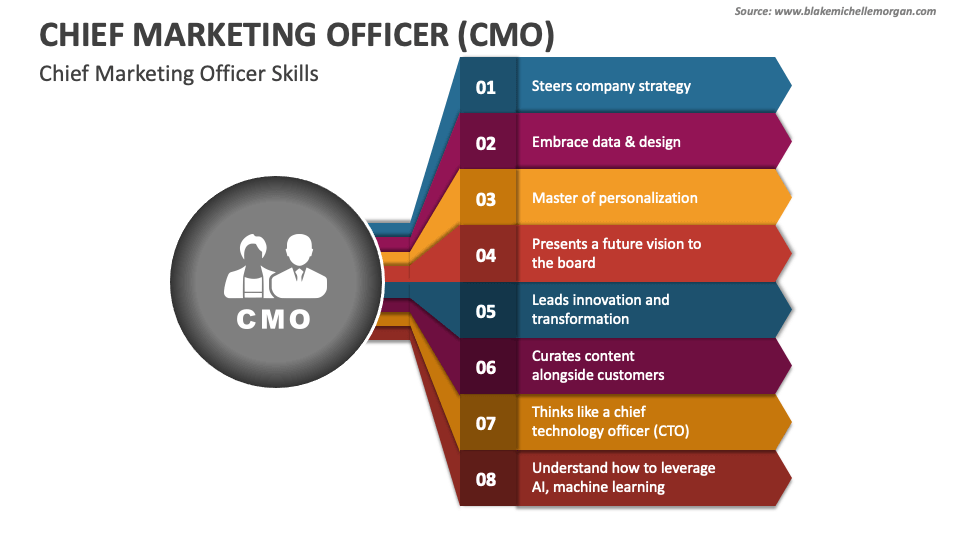
Key responsibilities of the modern CMO typically include:
- Driving revenue growth through customer acquisition and retention strategies
- Developing and executing comprehensive omnichannel marketing campaigns
- Utilizing data analytics to measure campaign performance and optimize marketing spend
- Leading digital transformation initiatives within the marketing department
- Serving as a key representative of the customer voice within the executive team
- Building and mentoring high-performing marketing teams
- Establishing brand positioning and messaging frameworks that resonate with target audiences
This multifaceted role necessitates a shift in required competencies. While creativity and communication remain foundational, technical knowledge has become increasingly vital. CMOs must now understand marketing technology stacks, data management platforms, and the fundamentals of marketing automation to effectively lead their teams and make informed decisions. A survey by the Chartered Institute of Marketing highlighted that digital skills gaps are a primary concern for marketing leaders, emphasizing the urgent need for continuous learning and adaptation within the function.
Technology serves as both a catalyst and a cornerstone of modern marketing effectiveness. CMOs are tasked with selecting, implementing, and optimizing a diverse array of tools designed to streamline processes, enhance customer experiences, and provide actionable insights. From customer relationship management (CRM) systems to marketing automation platforms and advanced analytics tools, the technological landscape offers both opportunities and challenges. The ability to navigate this complex ecosystem and extract meaningful value from data is a defining characteristic of successful marketing leadership in the current environment.
The impact of effective CMO leadership extends beyond departmental metrics, influencing overall organizational performance. Companies with strong marketing leadership often demonstrate greater market share growth, higher customer satisfaction scores, and improved brand equity. A study by Deloitte revealed that organizations with recognized marketing excellence were more likely to report above-average profitability and stronger customer loyalty. This correlation underscores the strategic value of the CMO role in driving sustainable business growth.
Leading CMOs emphasize the importance of aligning marketing strategies with broader business goals. This requires constant communication with other executive leaders, particularly Chief Revenue Officers and Chief Digital Officers, to ensure cohesive organizational efforts. The most effective marketing leaders position their function as a growth partner rather than a cost center, demonstrating how strategic initiatives contribute directly to revenue generation and long-term value creation.
The challenges facing today's CMOs are substantial and multifaceted. These include managing increasingly short consumer attention spans, adapting to privacy regulations that limit data usage, and proving the tangible value of marketing investments to skeptical stakeholders. The rise of artificial intelligence and automation further transforms the marketing landscape, requiring leaders to continuously evolve their approaches and team capabilities. As one Fortune 500 CMO noted in a recent industry interview, "The pace of change demands that we become more agile learners than ever before. We must anticipate trends, test quickly, and scale what works while having the courage to abandon strategies that no longer serve our customers or our business."
Looking ahead, the CMO role will likely continue its evolution toward greater integration with technology and data disciplines. The most successful marketing leaders will be those who can balance analytical insights with creative intuition, leveraging technology to enhance rather than replace human creativity. Organizations that invest in developing comprehensive marketing leadership capabilities and fostering collaborative executive environments are positioning themselves for sustained competitive advantage in an increasingly customer-centric marketplace. The CMO of tomorrow must be not only a marketing expert but also a business architect capable of driving innovation and delivering measurable growth in an ever-changing commercial landscape.
Related Post
Jackson County Jail Kcmo Inmate Search: Complete Guide to Locating Inmates