What Time Zone Is Ohio: The Complete Guide to Buckeye State Time Rules
What Time Zone Is Ohio: The Complete Guide to Buckeye State Time Rules
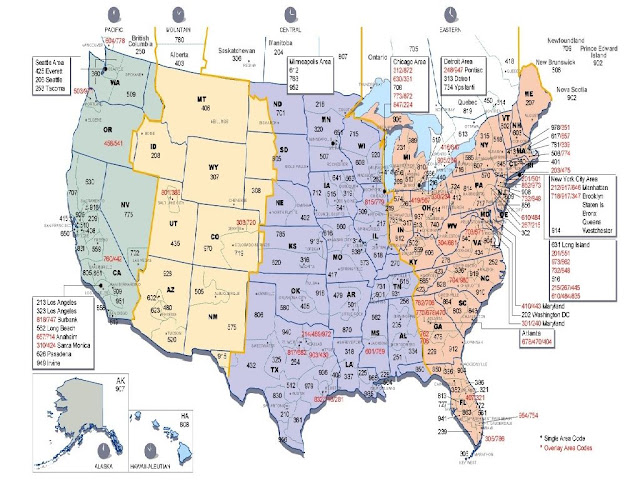
Ohio operates entirely within the Eastern Time Zone, aligning with major financial and media hubs on the East Coast. This uniformity simplifies coordination for business and travel, though the biannual shift between Eastern Standard Time and Eastern Daylight Time still demands attention. Understanding these rules is essential for scheduling, logistics, and avoiding costly timing errors.
The question "What time zone is Ohio in" has a straightforward answer on paper, but the reality of timekeeping involves history, legislation, and the practical challenges of regional coordination. While the state does not fractured across multiple zones, the implementation of Daylight Saving Time and the occasional debate over permanent time policy reveal how deeply time regulation is intertwined with modern life. This guide provides a comprehensive look at how Ohio keeps time, why it matters, and what the future of time observance might hold.
Ohio’s placement in the Eastern Time Zone means that during Standard Time, it shares the UTC-5 offset with cities like New York and Washington, D.C. When Daylight Saving Time is active, the state moves to UTC-4, matching the Eastern Daylight Time used by the eastern seaboard. This alignment is not arbitrary; it is rooted in the need for a synchronized time system to facilitate railroads, telecommunications, and commerce. Before the standardization of time zones in the United States in 1883, cities often operated on local solar time, leading to confusion for travelers and trains. The creation of time zones was a practical solution to keep schedules consistent across vast distances.
The Uniform Time Act of 1966 provided the federal framework for time zones and daylight saving observance, but it allowed states to opt out of Daylight Saving Time. Currently, Arizona and Hawaii do not observe the bi-annual clock change, though Arizona observes a form of daylight saving time in some tribal nations. Ohio has consistently observed Daylight Saving Time, moving its clocks forward one hour at 2:00 a.m. on the second Sunday in March and back one hour at 2:00 a.m. on the first Sunday in November.
This results in the following schedule for time transitions in Ohio:
In the spring, clocks jump from 1:59 a.m. to 3:00 a.m., effectively losing an hour of sleep. In the fall, clocks revert from 2:00 a.m. to 1:00 a.m., granting an extra hour of rest. These shifts are designed to maximize evening daylight during the warmer months. The practice of Daylight Saving Time dates back to World War I, when it was implemented to conserve fuel. Although the energy-saving benefits are debated today, the ritual remains a fixed part of the calendar.
For residents and businesses, the primary effect of being in the Eastern Time Zone is the synchronization with the economic and cultural centers of the Northeast. When the New York Stock Exchange opens, Ohio businesses are already in the middle of their workday. When major television events air live, Ohio viewers watch at the same time as audiences in Florida or Georgia. This consistency reduces the complexity of scheduling meetings, airing broadcasts, and coordinating logistics with partners in other states.
However, the debate over time policy is not absent in Ohio. Over the years, there have been legislative efforts to either abolish Daylight Saving Time or to move the state into the Central Time Zone. Proponents of moving to Central Time argue that it would better align Ohio’s economic activities with major trading partners in the Midwest, such as Chicago. They suggest that a later sunrise in winter would benefit schools and outdoor activities. These proposals highlight the ongoing tension between geographic location, economic integration, and personal preference.
In 2018, the Ohio General Assembly passed Senate Bill 257, which included provisions to put the state on permanent Daylight Saving Time, effectively doing away with the clock change. However, this move required federal approval, as the Uniform Time Act governs the dates and rules for time changes. As of now, no such federal authorization has been granted, leaving Ohio in the Eastern Time Zone with the traditional spring-forward, fall-back schedule. The discussion remains active, reflecting a broader national conversation about the relevance and utility of changing clocks.
Understanding the time zone is critical for specific sectors. For aviation, accurate timekeeping is a matter of safety, ensuring flight plans and air traffic control communications are synchronized. For digital services and computer networks, time is a universal standard; systems rely on precise timestamps for security, logging, and data transfer. An incorrect time setting can cause errors in transactions, authentication, and software updates. Ohio’s adherence to Eastern Time ensures compatibility with national and global systems.
For the average person, the most direct impact of the time zone is felt in media consumption and sports. Live television shows, streaming events, and sports broadcasts often air at the same moment across the East Coast. Fans in Ohio can watch major sporting events or award shows live, without the delay experienced by those in western states. News cycles also operate on Eastern Time, meaning that morning shows and breaking news updates are timed for the Eastern audience, with Ohioans accessing them an hour earlier than Central neighbors.
When traveling from Ohio, it is important to note that you remain in the Eastern Time Zone until you cross into Indiana, which is split between Eastern and Central, or Kentucky, which also straddles two zones. Crossing the border into Michigan or Pennsylvania keeps you in the same time zone, but crossing into Illinois or Tennessee shifts you into the Central Time Zone. This geographic context helps travelers plan calls and appointments across regions.
The question "What time zone is Ohio in" serves as a gateway to understanding how modern society organizes a fundamental aspect of life. It is a reminder that time, while a universal concept, is managed through a patchwork of local, state, and federal rules. Ohio’s position in the Eastern Time Zone provides stability and connection, even as the conversation about the clock’s changing role continues. Whether navigating a business deal, setting a calendar reminder, or planning a trip, knowing the local time is the first step toward precision.
Related Post

What Time Zone Dictates Ohio’s Clock: Unraveling the Accurate Standard of the Buckeye State